"This is a backyard that was made for a gentleman who is a highly decorated Vietnam War veteran—Army Ranger, Special Forces—who got beat up pretty bad,” says landscape architect Janice Parker. “Fifty years later, all of these injuries are coming home to roost.” After a pause, she adds a kicker that reframes everything: “That gentleman happens to be my husband.”
The mission for Parker, a landscape wizard and ICAA award winner primarily based in Greenwich, Connecticut, was to create a healing place she and her husband, Jim, could enjoy together. “I really wanted to give him two things: relaxation and recovery,” she says. Phoenix made logistical and emotional sense for the couple, who both travel frequently for work and find much to like about the Sonoran desert. “He loves the open sky and the desert at night, which is insanely beautiful,” says Parker. “The air gets clear. The stars are bright.”
There was just one issue: The backyard of the property they chose basically consisted of grass and a grapefruit tree—not the sanctuary of their dreams. Complicating matters was that the layout of the house forms a shallow L around the space, with multiple sliding doors facing it. “My goal was to not only make this really a therapy place, but also beautiful from all angles inside the house,” she says.
Parker’s solution borrows from her decades of pool design experience in the Northeast. Here, though, she had the bonus of Arizona’s often generous climate, which allowed for plantings like Arabian jasmine and Indian laurels by landscape contractor Whitfill Nursery. In addition, Parker wanted the pool itself to be “better than any you have ever been to in your life.” A raised bench clad in travertine wraps the circumference, allowing bathers to swing their legs in. “It’s very easy to get in and out,” she says. At 4 feet 6 inches deep (to allow for exercise), it is modest in scale, but that comes with a major perk for the snowbirds—it can be easily heated or cooled. Then there’s the water itself, with powerful sprays to treat lumbar and thoracic areas and more. “I have 24 hydrotherapy heads, which is an insane amount,” Parker says. “Basically when you get in, you can levitate.”
Low-maintenance living governed a lot of her decisions for the pool’s surrounds. In a place with haboobs (dust storms), upholstered furnishings were out; she opted instead for a durable polyethylene sofa that can be sprayed down. “Easy-peasy,” Parker says. She added her favorite trees, native palo breas, to add to the private feeling of the sanctuary and give hummingbirds a spot to nest. “These lovely trees do magic—they perform photosynthesis through their bark, not only their leaves, a true adaptation created to endure harsh desert conditions,” Parker says. “They are so delicate and sculptural, but they survive the worst environment: Haboobs. No water. Sun. High temperatures. And there they sit, being absolutely graceful.”
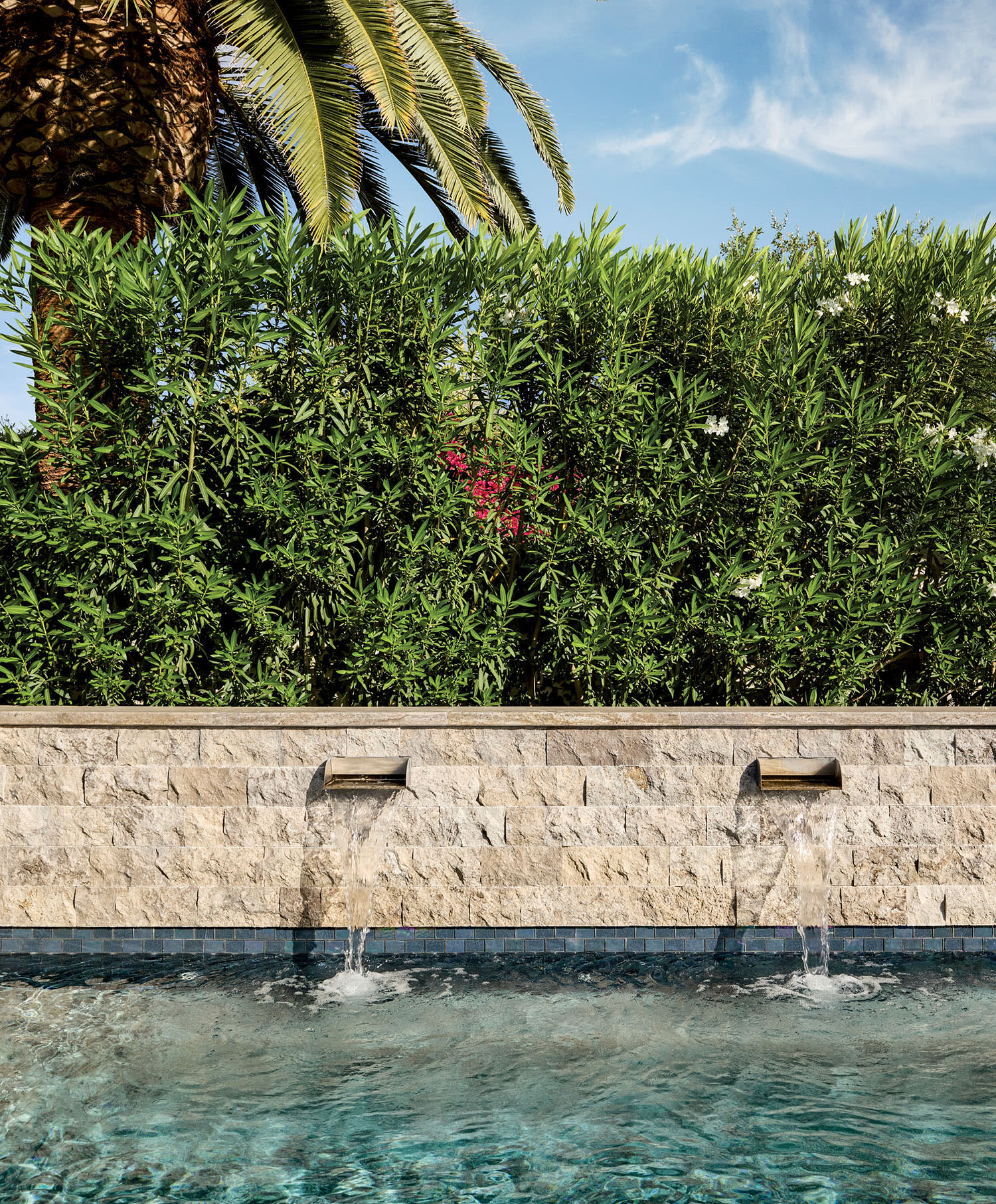
Landscape architect Janice Parker placed the pool where the couple could take in views of the neighbor’s towering palm tree. “At night, it reflects in the water, which is incredible,” she says. Supreme Pools & Saunas installed the pool, which has a travertine veneer and Nautical Thunder tile from QDI Surfaces.
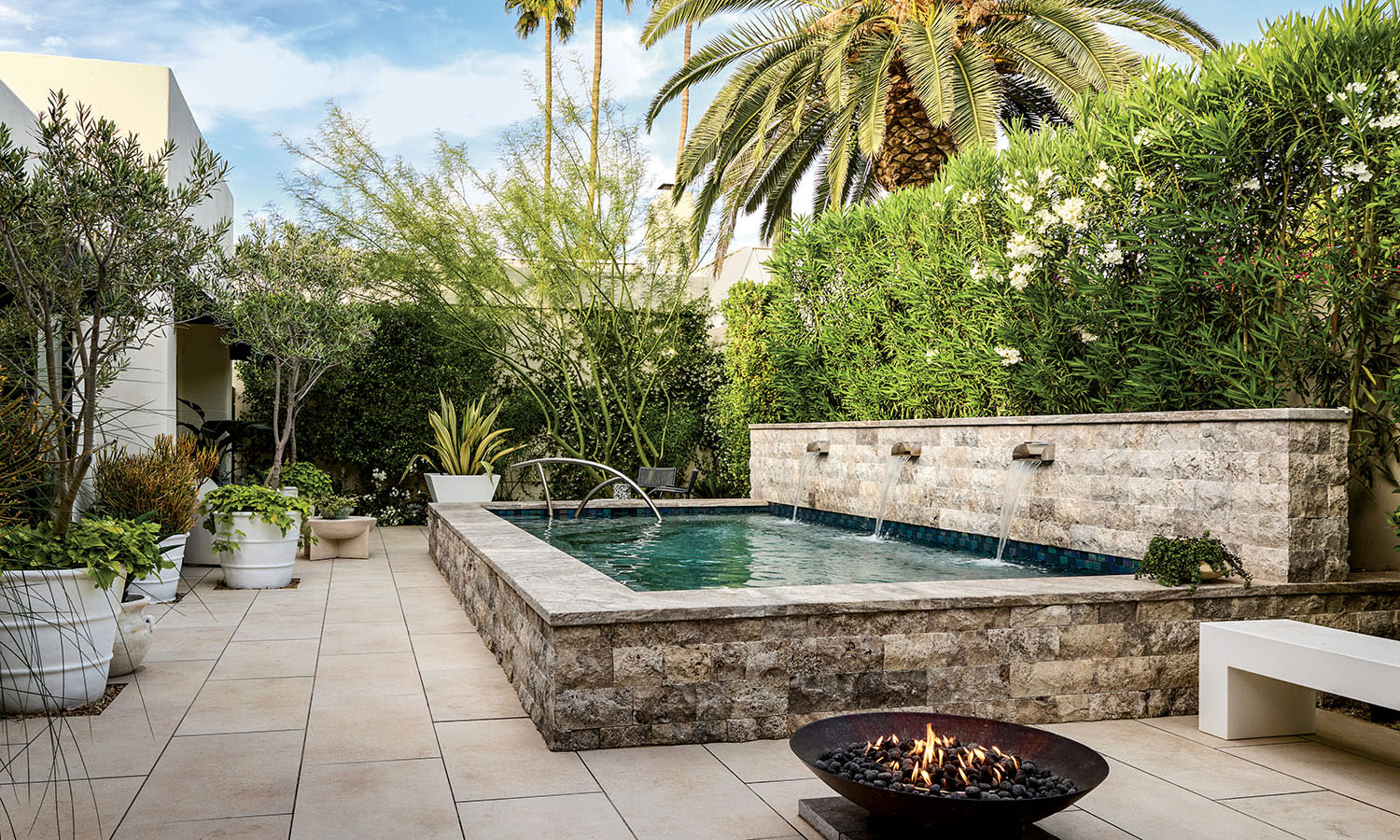
The corten steel fire bowl by FireFeatures provides elemental eye candy. The Vignelli bench is from 2Modern. Screening the area with fringes of green are a white oleander shrub (in the foreground of the bed) and Indian laurel hedge (at the back). Says Parker: “I live by a philosophy of Ellen Biddle Shipman, a landscape architect from the turn of the last century: Something is not a garden unless it is enclosed.”
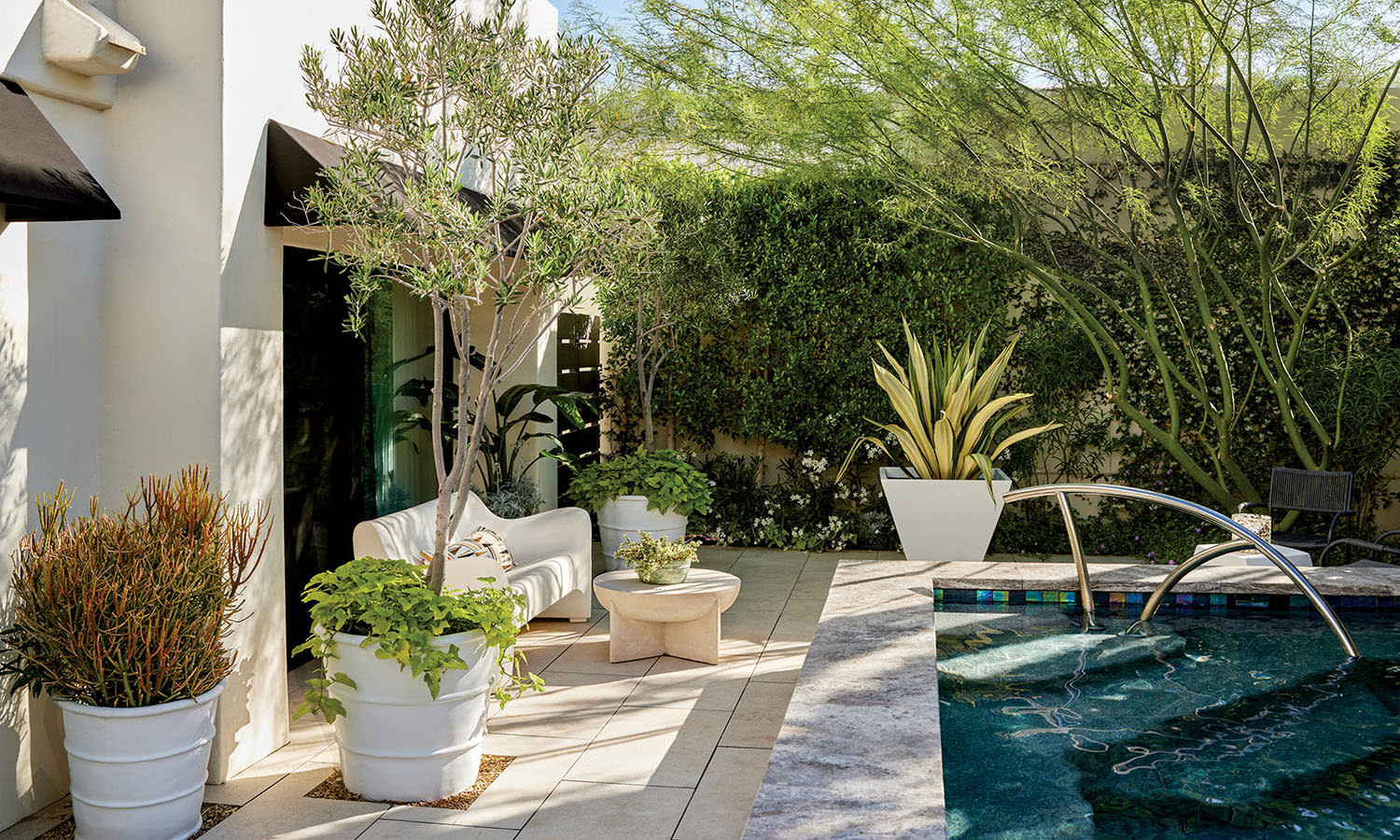
The Tokyo-Pop outdoor sofa from Driade was purchased at 2Modern; the coffee table is West Elm. The Jerusalem Avorio porcelain pavers are from QDI Surfaces and were installed by Bonilla’s Masonry.