A Cinematic Landscape Frames This Napa Valley Getaway
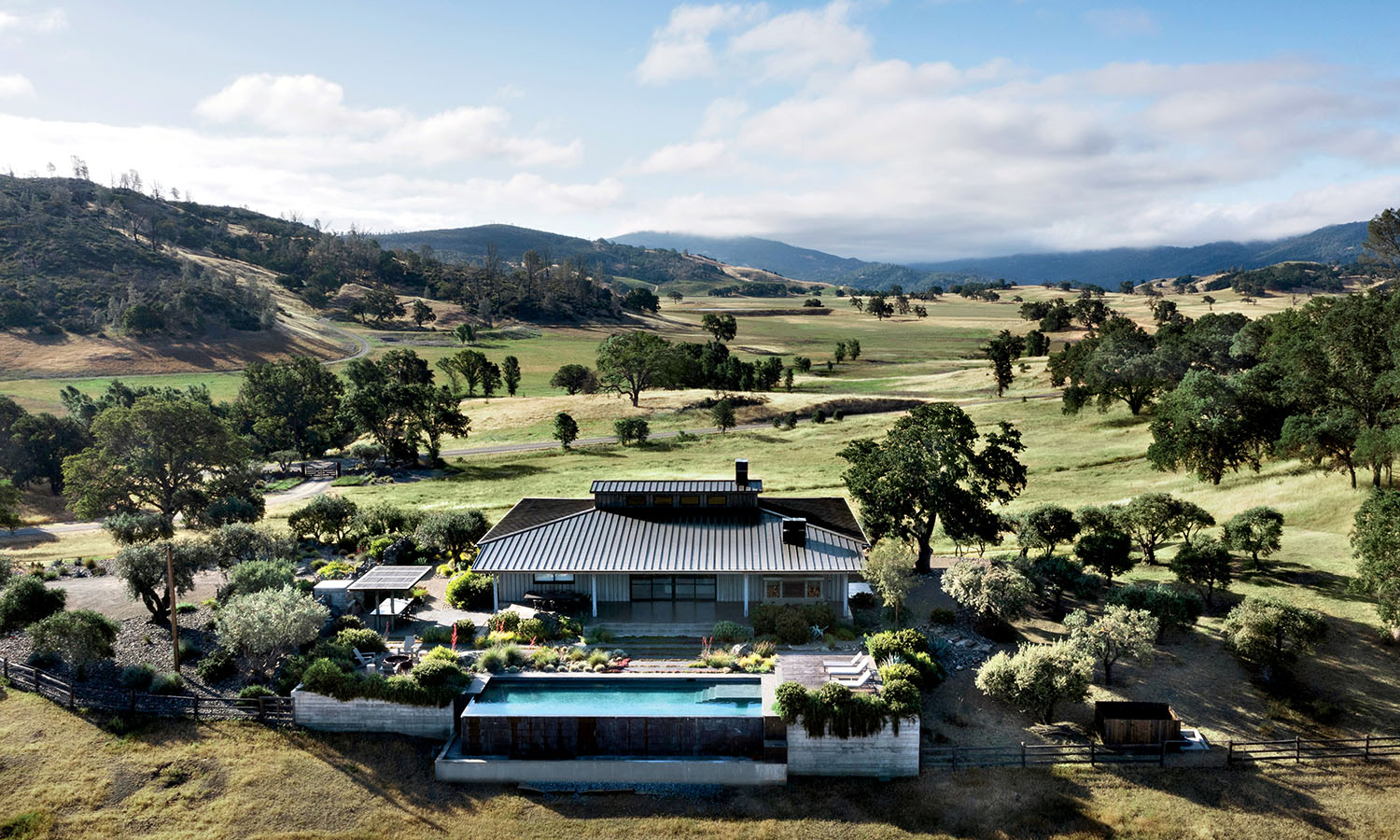
From overhead, the beauty of the home’s Pope Valley location is on full display. The siding is ReSawn Timber Co.’s Iruka, a charred cypress. Windows and doors by Optimum Window embrace the view.
Pope Valley is a rural, unincorporated area in Napa Valley that sits west of Lake Berryessa and seemingly far from the glamour of better-known wine country towns like St. Helena. It’s easy to imagine the sparsely populated region is little changed since 1841, when William Julian Pope staked his claim here and gave the place his name. That timeless nature appealed to the modern-day owners of a 45-acre property, who, as the husband says, love to come here to “step back in time and unwind.” When they purchased this ranch, they envisioned not just a vacation spot, but a compound recalling a bygone era where they could gather with family and friends.
Designer Claudia Juestel, a longtime collaborator of the couple’s, was the natural choice to create a collection of buildings whose styles range from contemporary to rustic, and she was joined by architectural designer George Bevan, landscape architect Todd Cole and the late builder Steve Richins. The main house sits on a small knoll, a spot the owners identified as the ideal location. “We talked about another site,” Juestel recalls. “But they ultimately chose this one for the views of the lake and the hilltop that would allow for the breeze to blow through the residence.”
The midcentury ranch-inspired main dwelling, realized by Bevan, is all about a sense of place. “You could film a classic Western out there,” he says. “The hills seem to go on forever, and the smell of warm grass is in the air. The goal for this house was to make it hard to decide where the built environment starts and the outdoors ends.”
Home Details
Architecture:
George Bevan, Bevan & Associates
Interior Design:
Claudia Juestel, Adeeni Design Group
Home Builder:
Steve Richins, Steve Richins Construction
Landscape Architecture:
Todd Cole, Strata Landscape Architecture
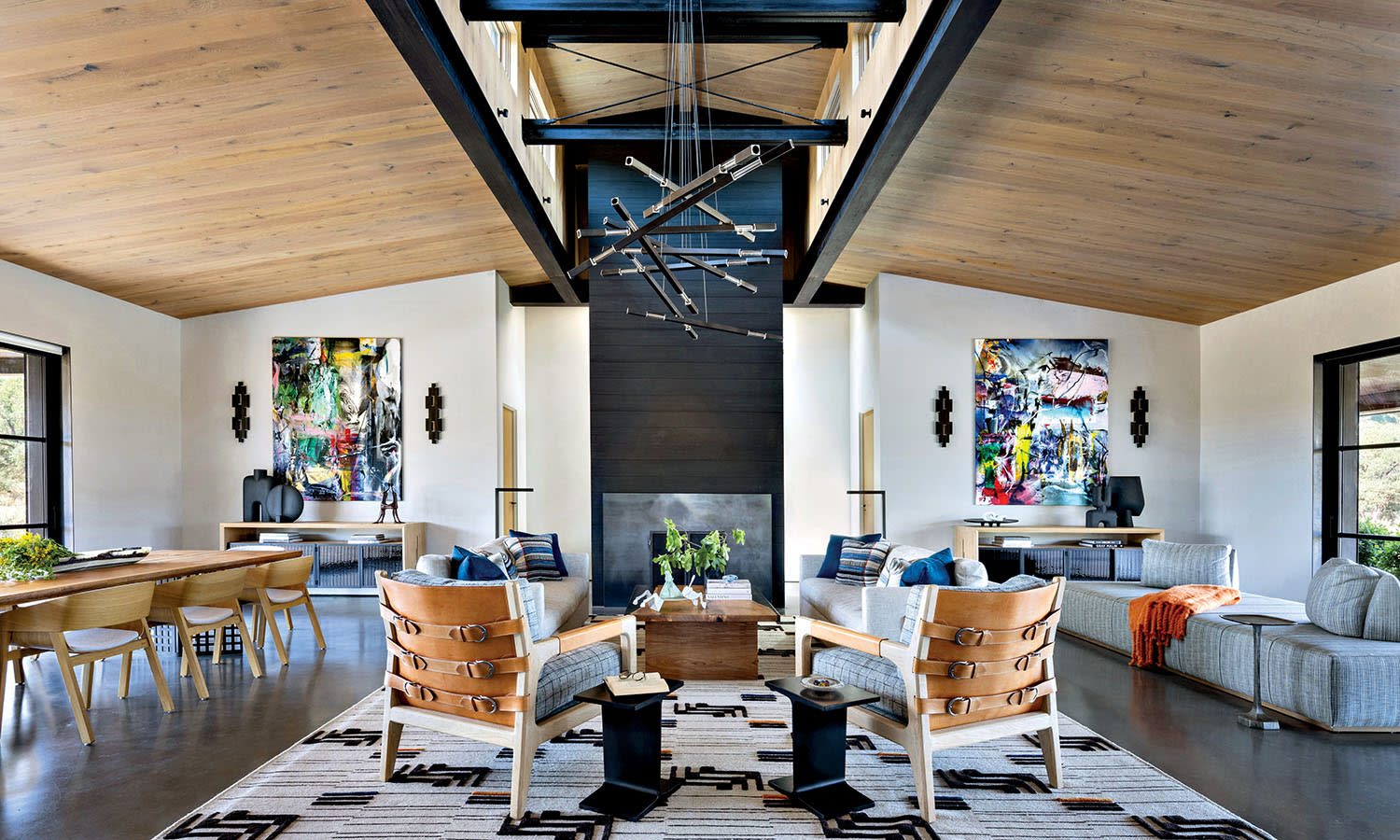
In the great room, much of the furniture was created by interior designer Claudia Juestel, including the sofas flanking the fireplace, a pair of leather-backed armchairs, the rug, the dining table and a double-sided lounge. The ceiling light fixture and sconces are by Daikon Studio, and the paintings are by Liam Everett.
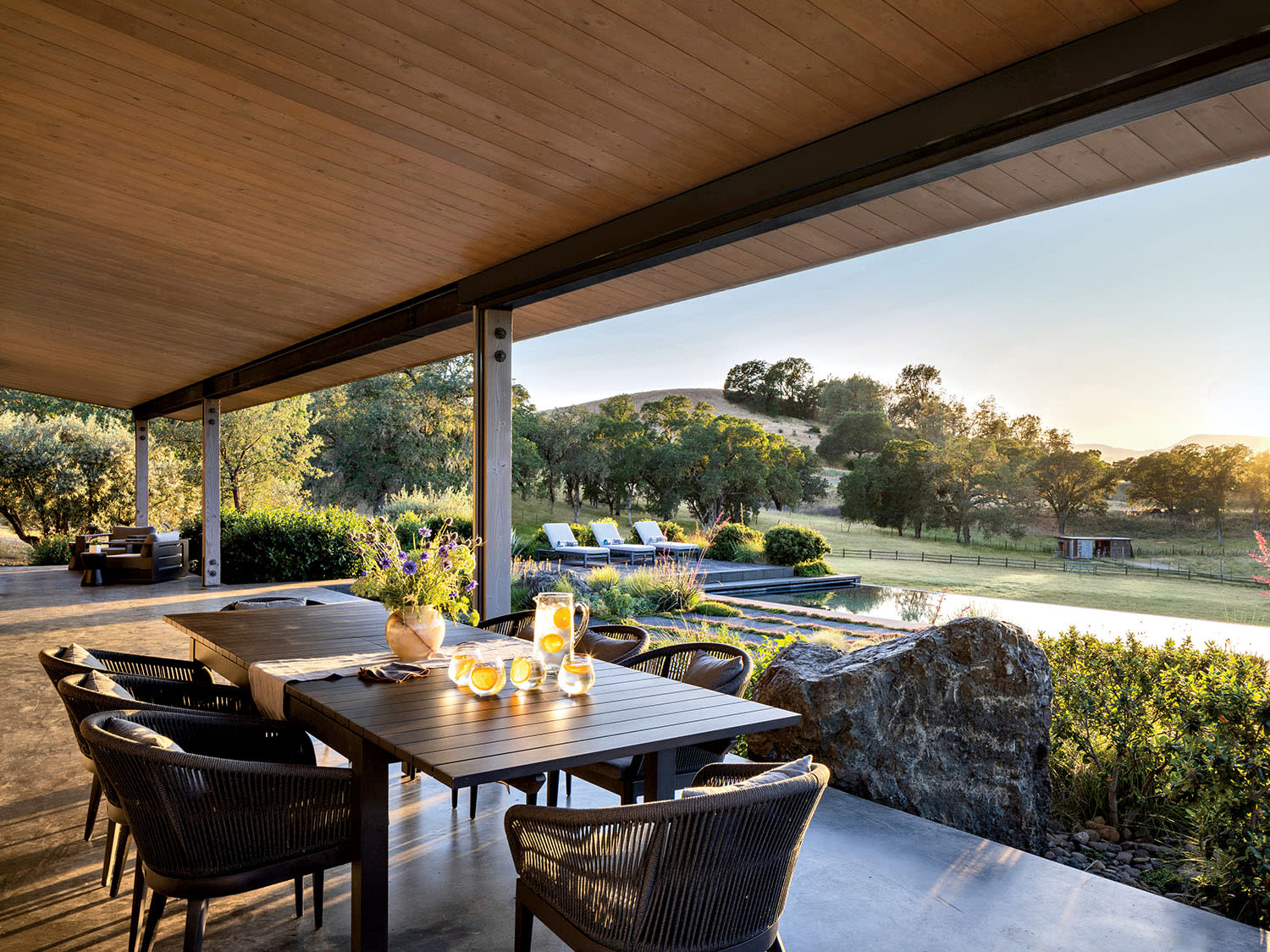
An outdoor dining area off the great room holds a table and chairs by Harbour. The grounds and pool were designed by landscape architect Todd Cole; the lounge chairs are from RH.
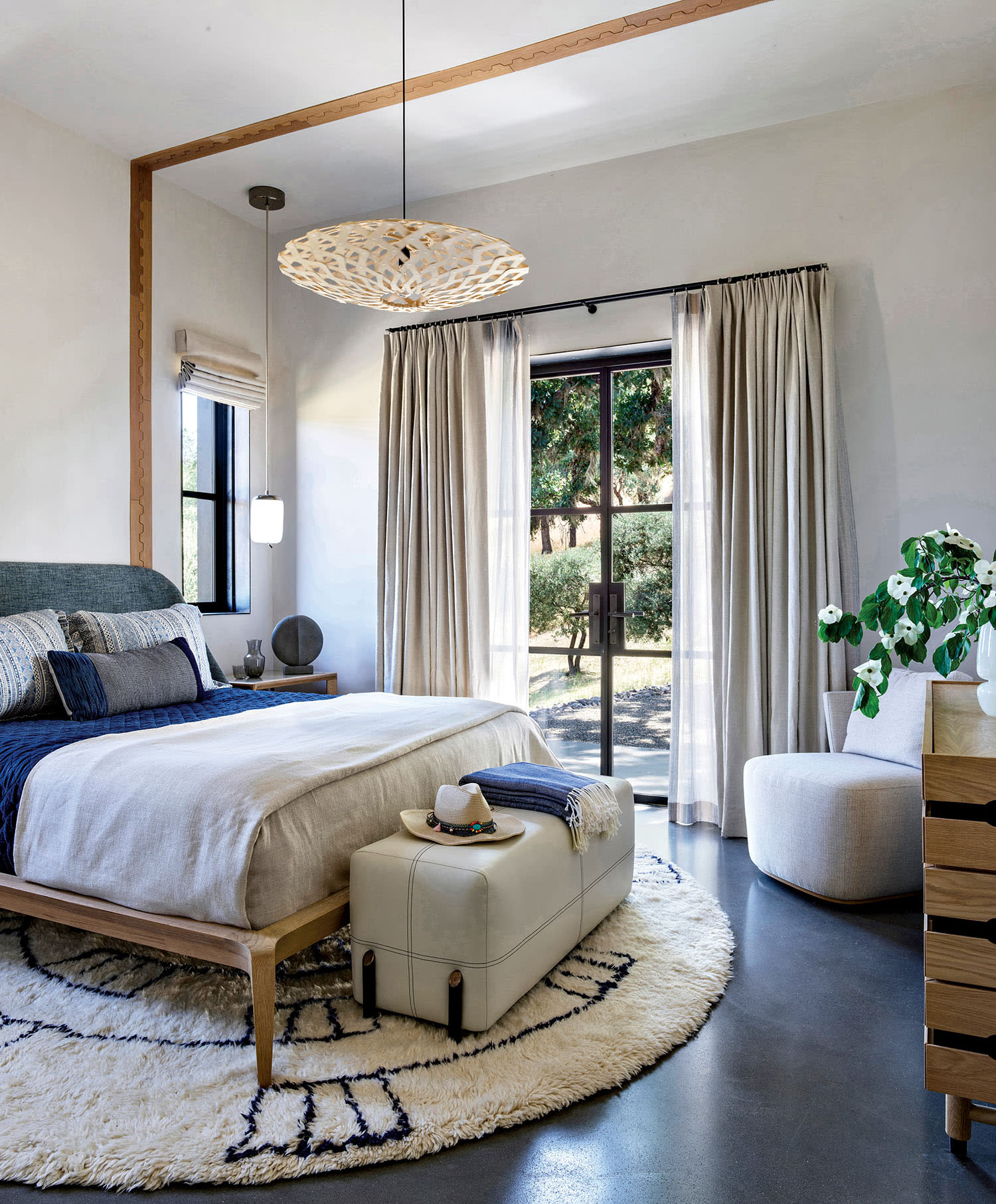
In the primary bedroom, the designer created the Angwyn bed. The bedding is made with fabric by Cowtan & Tout, and the woven accent pillow is by Ralucca. The rug, also by Juestel, is based on Native American patterns. The overhead light is by David Trubridge.
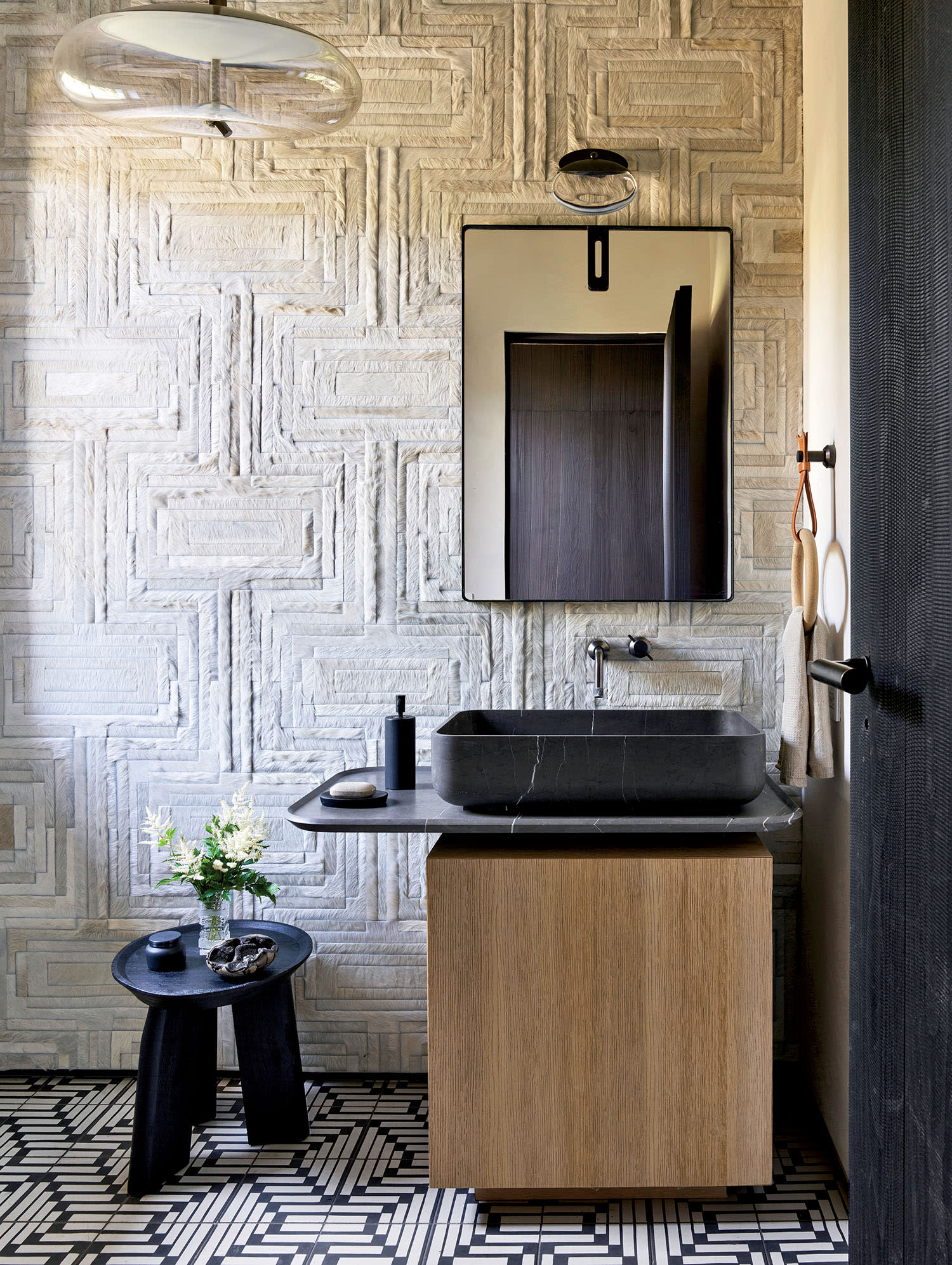
A powder room’s cowhide wallpaper was devised by Juestel for Kyle Bunting. She also designed the cement floor tile. The marble sink is by Kreoo, and the hardware is by Watermark. An Ochre sconce is over the mirror; the pendant is by Brokis.
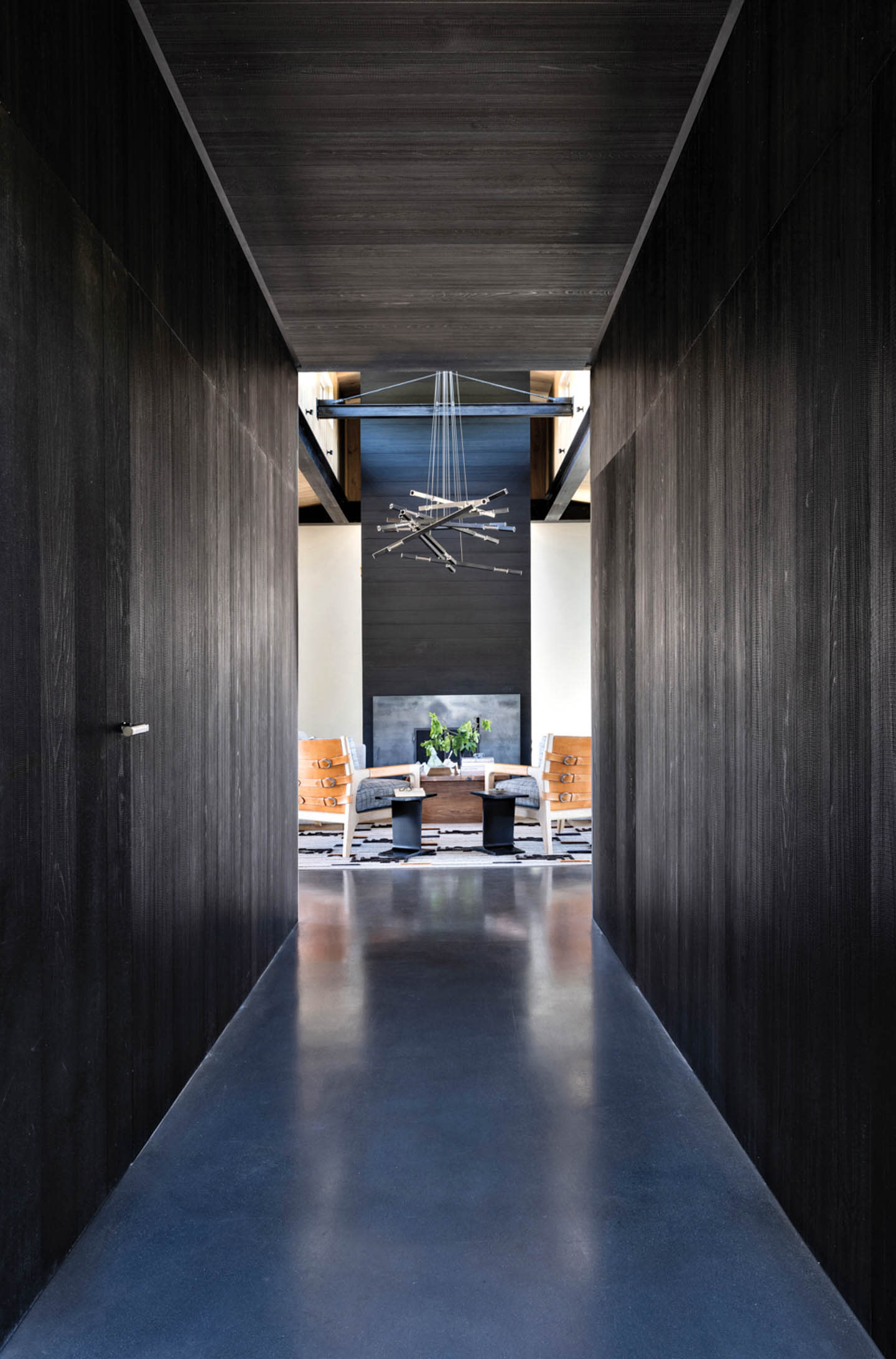
The entry of the home by designer Claudia Juestel and architect George Bevan is lined with sho sugi ban cypress wood and outfitted with minimalist Sun Valley Bronze hardware, allowing the eye to travel to the light and airy great room beyond.
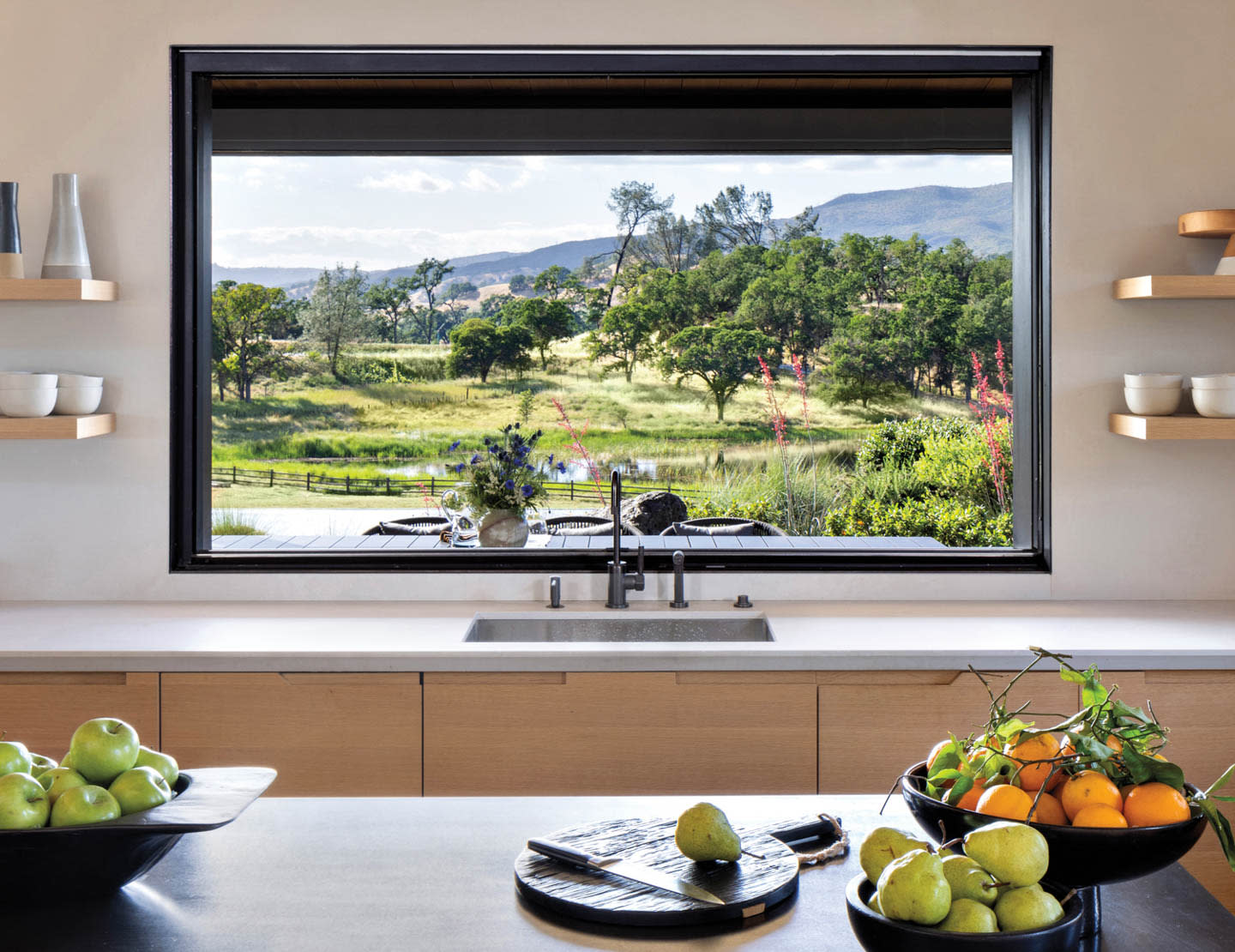
In the kitchen, Juestel-designed cabinets were made by VM Woodworking with horizontal-grain rift-cut oak cabinetry. The countertops are by Concrete Interiors, and the faucet is by Watermark.
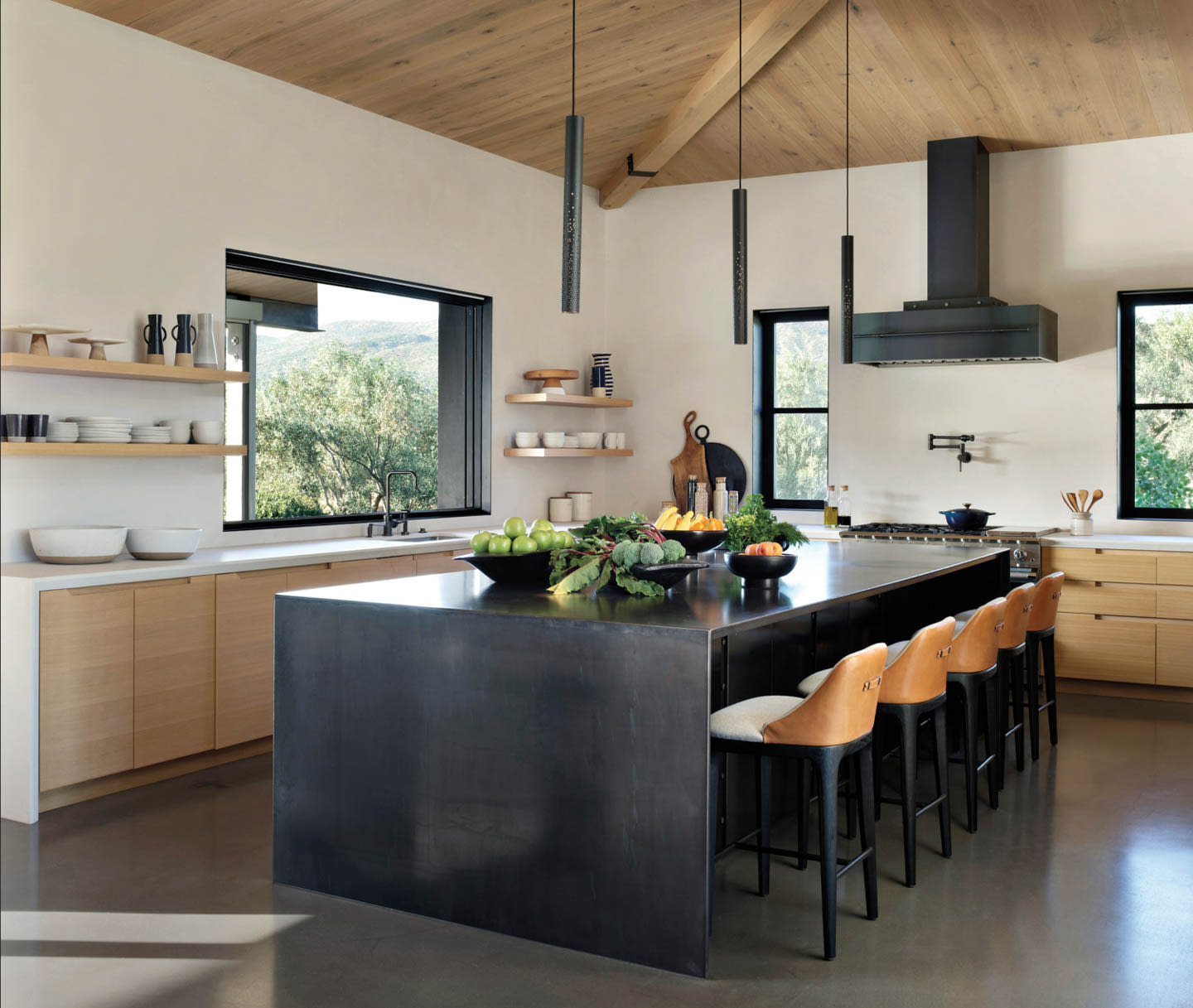
The kitchen island, made with cold-rolled steel, has pendants by Olson Kundig overhead and counter stools designed by Juestel. The custom range hood is by Modern Aire.
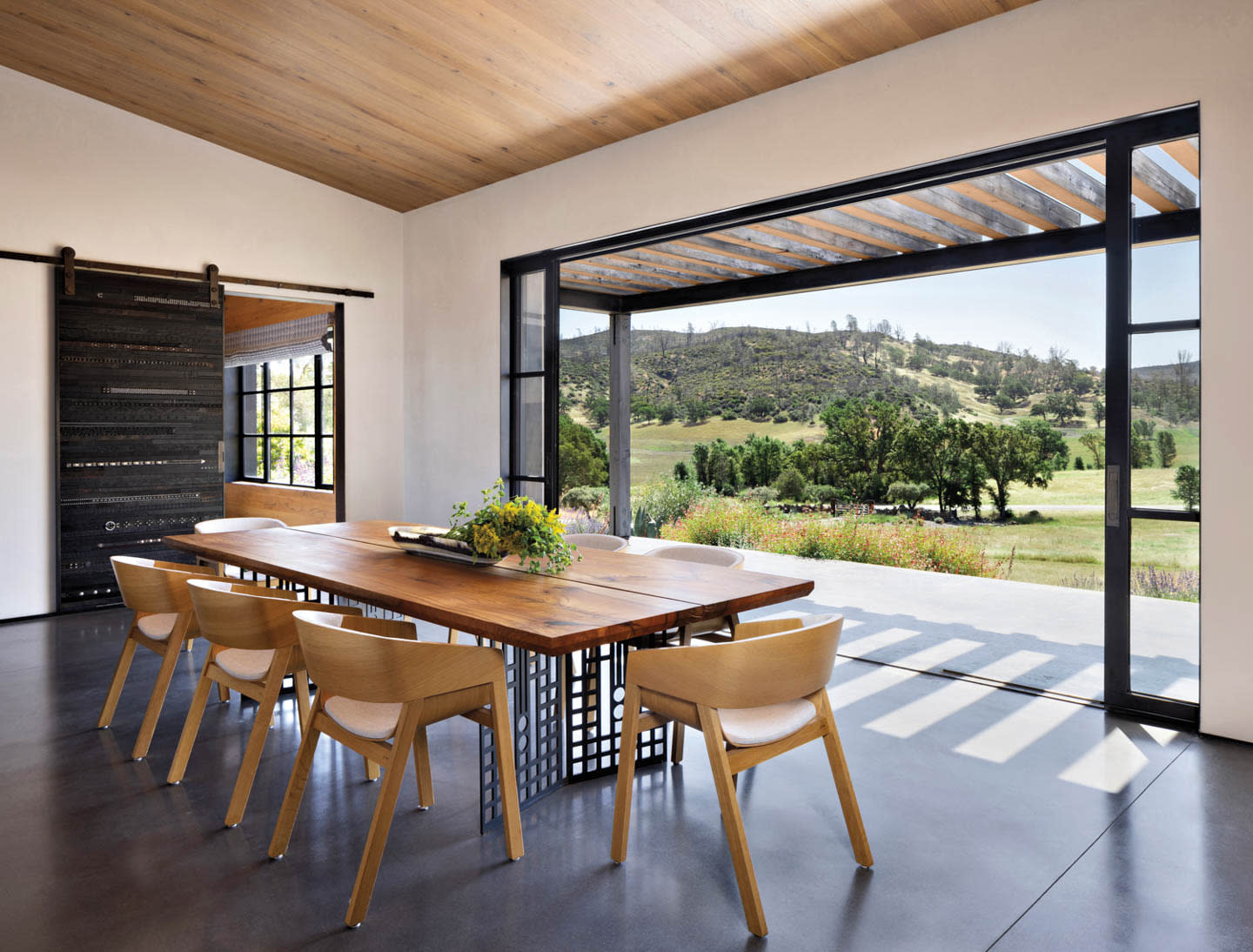
Charcoal-stained concrete installed by Ganco Industries runs from inside to outside. The dining table, designed by Juestel, is surrounded by bentwood chairs by Ton.
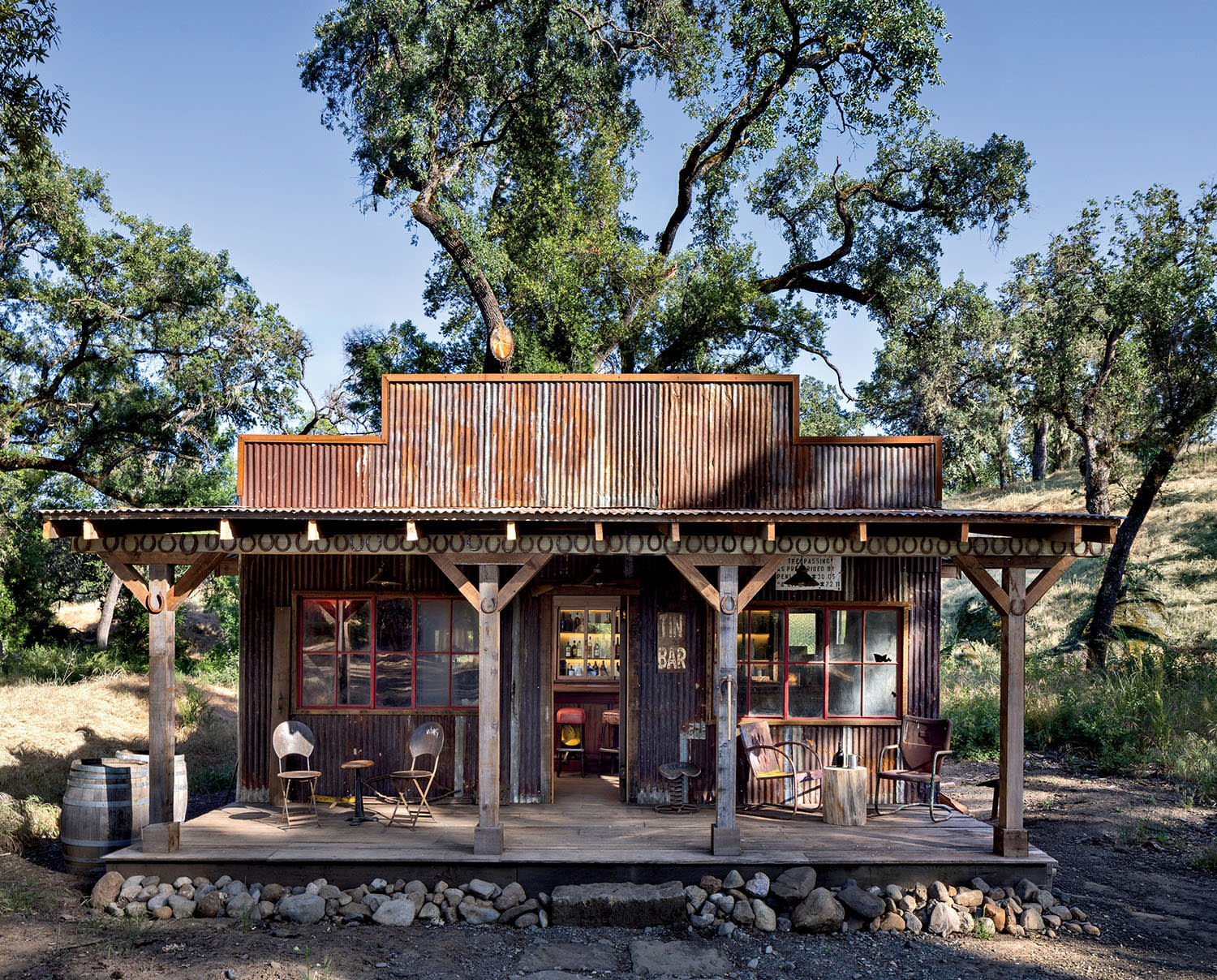
The Tin Bar is a favorite destination on the property. Juestel says Southern juke joints inspired its form, which is crafted with salvaged metal and decorated with found objects.
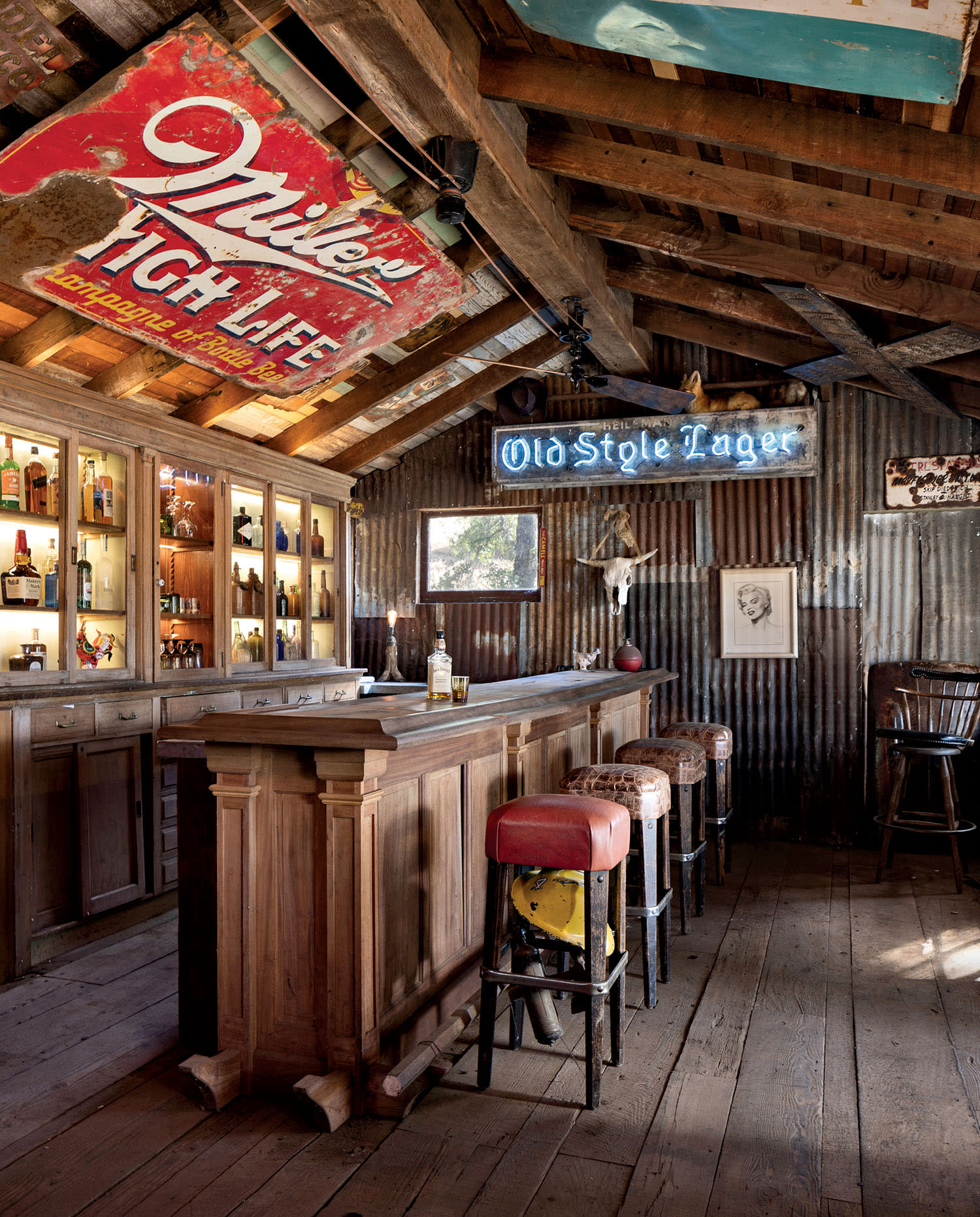
Inside, the designer created a vintage-inspired bar that sits in front of an antique apothecary cabinet. The owner’s sign collection adorns the space.
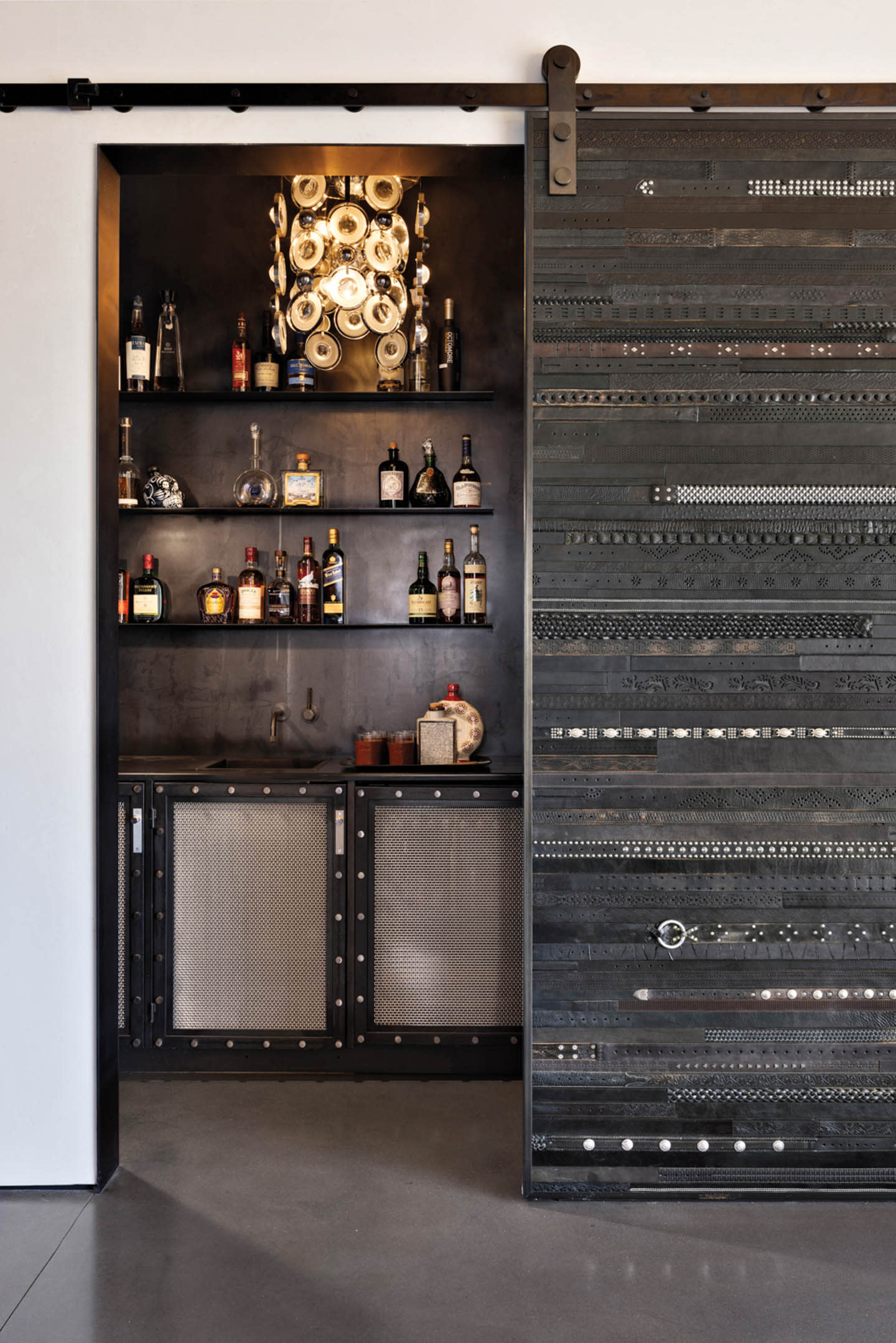
At the end of the room, Juestel worked with EcoDomoto create a barn door made with recycled leather belts that reveals a bar when slid to one side. The barn-door hardware is by Sun Valley Bronze.
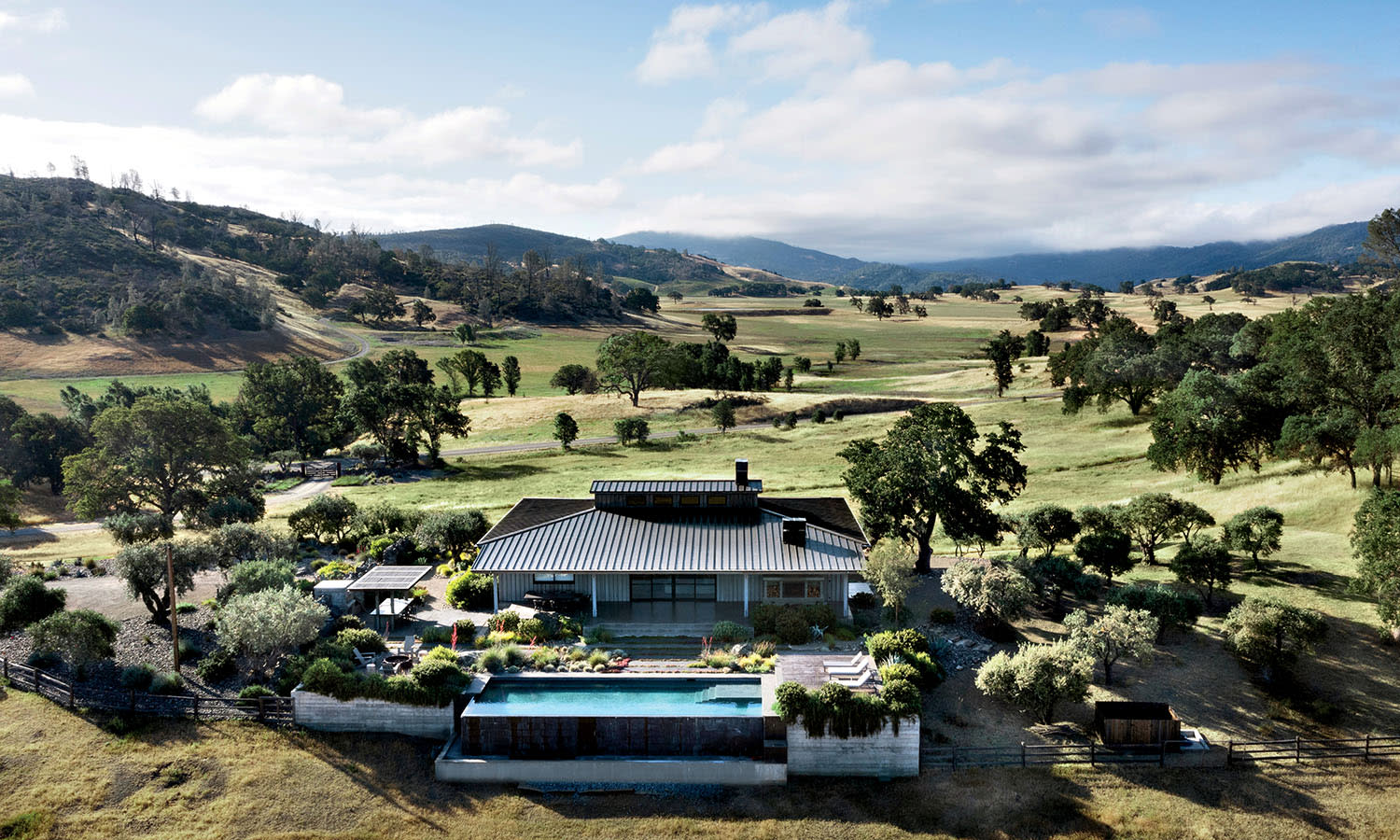
From overhead, the beauty of the home’s Pope Valley location is on full display. The siding is ReSawn Timber Co.’s Iruka, a charred cypress. Windows and doors by Optimum Window embrace the view.
That subtle transition is in evidence in the great room, where a soaring ceiling is topped by parallel rows of windows that let in natural light from above. The room’s oversize glass doors pocket completely into the walls to create a pair of 16-foot-wide openings. framing a valley view on one side and a lake landscape on the other.
The material story is simple and beautifully nuanced. Juestel suggested that the main house be clean-lined; however, the husband’s passion for salvaged items—he is an avid collector of vintage industrial pieces—informed the composition. The floors are concrete; the fireplace surround, island counter, bar backsplash and window frames are crafted from cold-rolled steel; and walls are covered with a light-gray plaster. At the end of the dining room, Juestel installed a steel-framed barn door made with repurposed leather belts that she sourced online, seeking out pieces with metal studs and woven elements. The designer also created multiple rugs that are modern but use traditional Native American basket patterns as inspiration. “The architecture and finishes have a slightly agrarian aesthetic,” she notes. “But the rooms are a soft style of contemporary.”
Outside, the feeling continues. Cole says that while the grounds around the buildings are intended to be sophisticated, he also wanted them to feel “wrought from stone.” The boulder-studded landscape leads visitors around structures and features that include a rustic bar, a boathouse, a pond, a barn that houses sports vehicles and an arcade, and pastures for peacocks, sheep and two donkeys (one named Tequila, the other Lime). “I always start with the rocks,” Cole says, noting that a vision of crumbling stone structures was in his mind when composing the deceptively effortless landscape.
That adroit, easy nature is evident in a small outbuilding tucked in the woods dubbed the Tin Bar, where the architect says the owner and his friends retreat to “drink, play cards, target shoot and tell stories.” It features a collection of neon signs, an old television turned into a vivarium and a safe reimagined as an end table. Juestel designed the layout and the long wooden bar but says that otherwise the structure, filled with reclaimed and vintage finds, is “all the husband.”
With the vision complete (for the moment), the husband says he doesn’t have a favorite spot; instead, he favors a time of day. “From the house to a stream, pond and pasture full of animals, there are many things to enjoy,” he says. “When the evening falls, the shadows are amazing, and the place comes alive. It’s magical.”
In the primary bedroom, the designer created the Angwyn bed. The bedding is made with fabric by Cowtan & Tout, and the woven accent pillow is by Ralucca. The rug, also by Juestel, is based on Native American patterns. The overhead light is by David Trubridge.