During their years vacationing in the San Juan Islands, this Seattle family experienced many fortuitous moments, such as the time they spotted a pod of endangered Southern Resident killer whales during a picnic. But it was a ferry ride home that changed everything for them. “As we were leaving, we realized this is where we wanted to be,” the husband says. In two more successive strokes of luck, they discovered and purchased a spectacular stretch of coastline on False Bay and hired architect Joe Herrin and general contractor David M. Elwell to design and construct a house for the property. “We envisioned a simple yet sturdy home, one that deferred to the clean smell of the sea and the sounds of eagles calling and waves lapping against the shore,” adds the wife.
“The level of exposure here is unusual—it’s open to the Strait of Juan de Fuca, so it is almost like being on the ocean,” Herrin says. “But it’s also a distinct microclimate,” he adds, explaining that the property sits in the rain shadow of the Olympic Mountains and is technically a desert, right down to the native prickly pears. “It’s very open with a lot of brush, which reminded me of Sea Ranch in Northern California, so we were inspired by the windswept building forms and materials utilized there.” Navigating the site’s rocks, winds and neighboring homes was a “bit of a puzzle,” recalls Herrin, and the resulting cedar-clad form, slightly pinched at the middle, is one he calls a “bow tie shape.” While the front of the dwelling looks to the water, its rear façade faces a 15-foot-high rock face that shelters the back patio. “It serves as both a prospect and a refuge,” the architect notes.
Home Details
Architecture and Interior Design:
Joe Herrin, Chris Wong and Rachel Belcher, Heliotrope Architects
Home Builder:
David M. Elwell, DME Builds
Landscape Architecture:
Wocka Hubber, Garden Artisan Landscapes
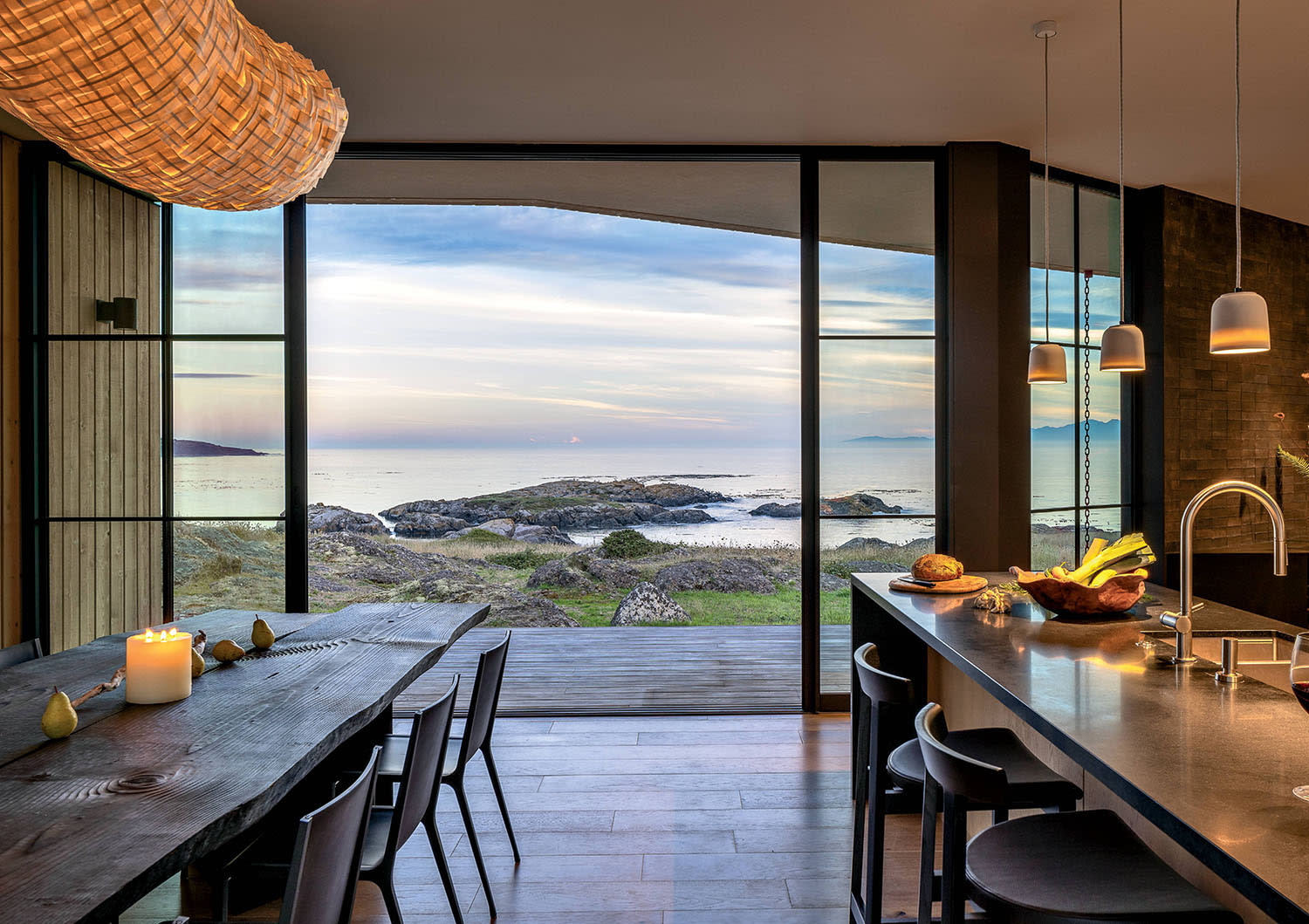
An 11-foot carbonized-wood dining table by artisan Laura Yeats reinforces the visual connection between the home and the rocky shoreline. A custom light fixture by Yuri Kinoshita illuminates the Kristalia chairs. The sliding glass doors are by Fleetwood Windows & Doors.
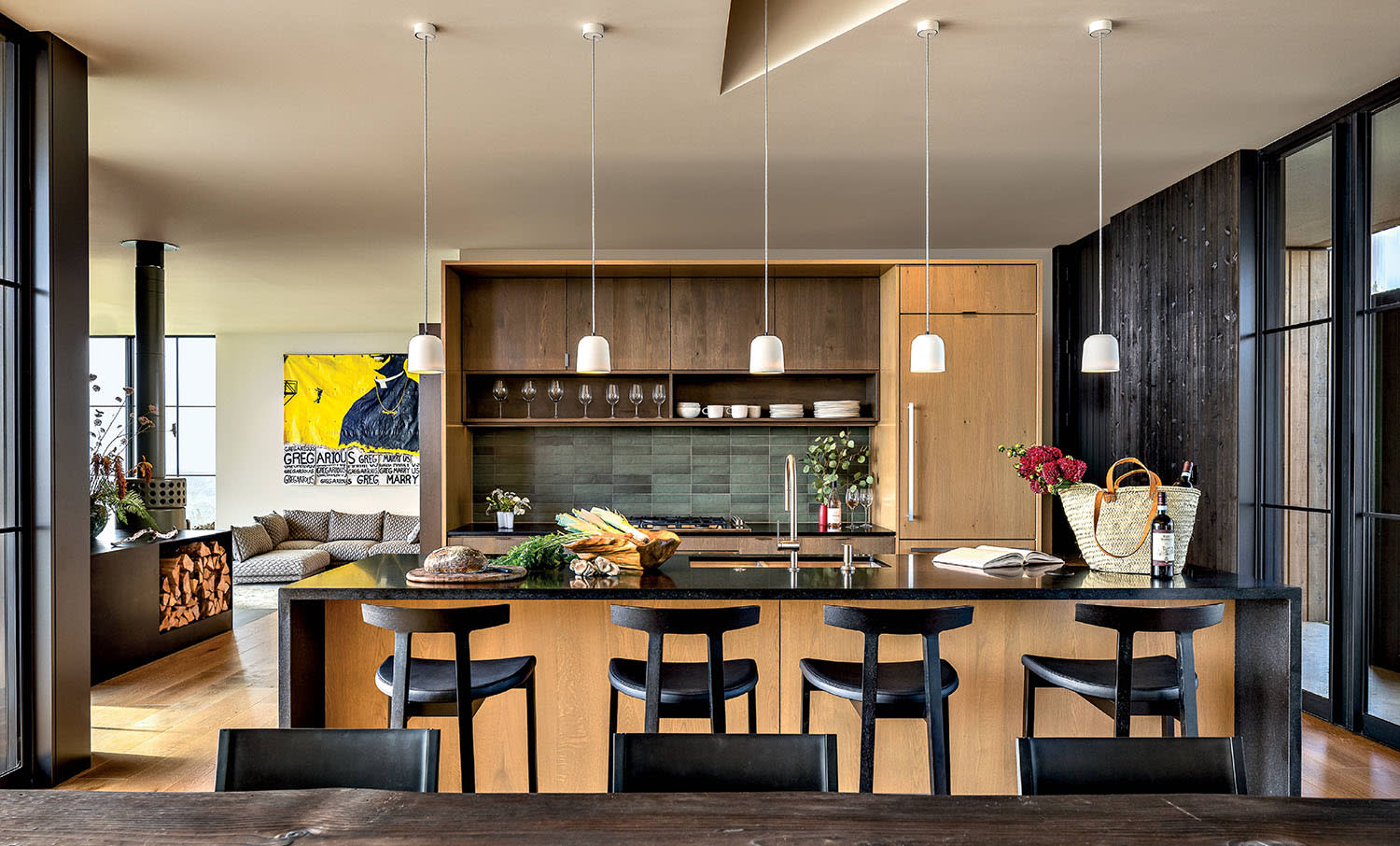
Bensen stools line the kitchen island, over which hang handmade pendants by Anchor. The backsplash tile is from Bedrosians Tile & Stone. Just beyond is the living room, warmed by a La Castellamonte wood-burning stove. Hanging above the Moroso sofa is Pat McKay’s Gregory.
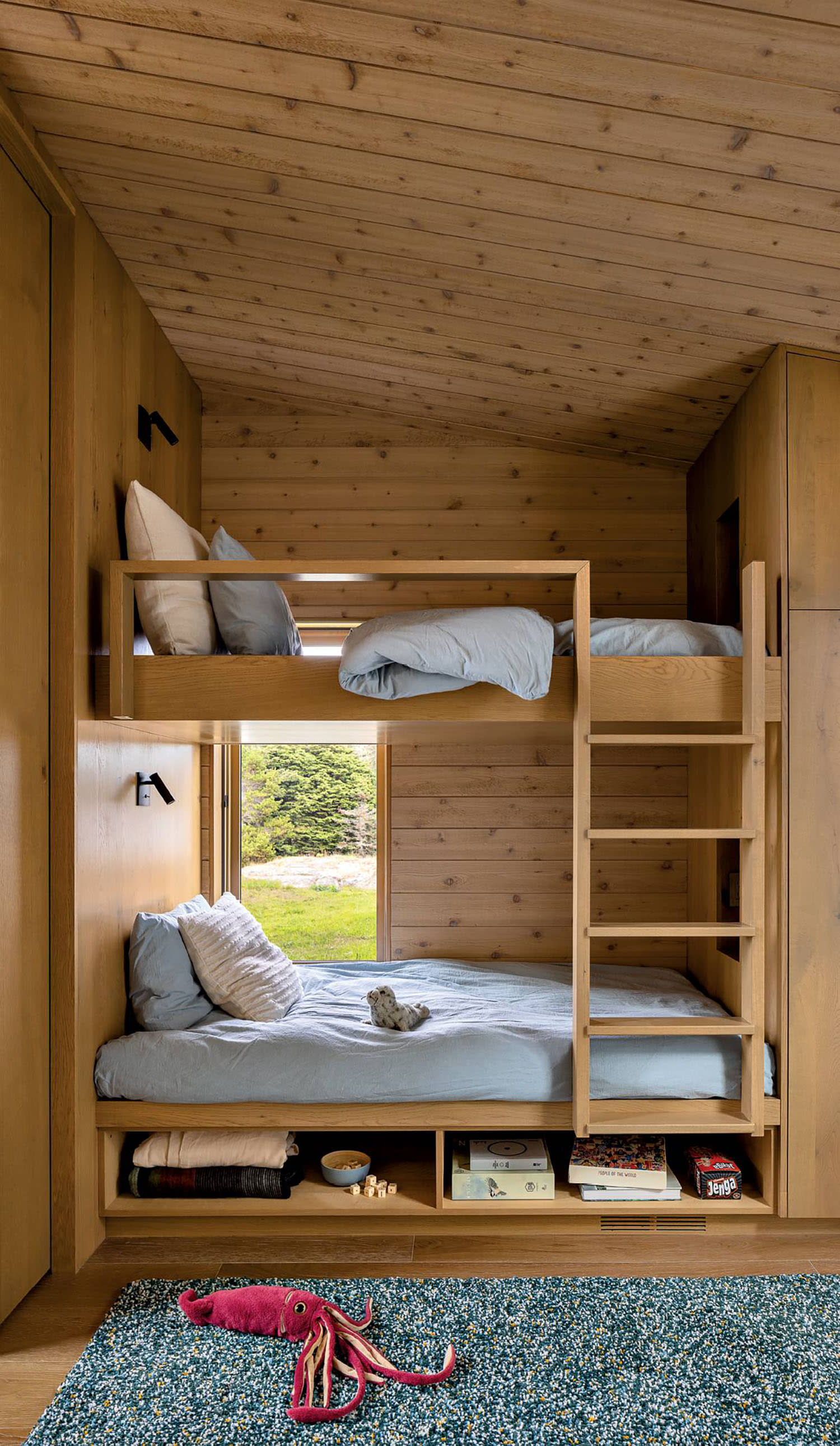
The upper floor of the home includes a guest suite with bunk beds, each with soft-blue duvet sets by Ventidora. Sconces by Astro Lighting allow for late-night reading.
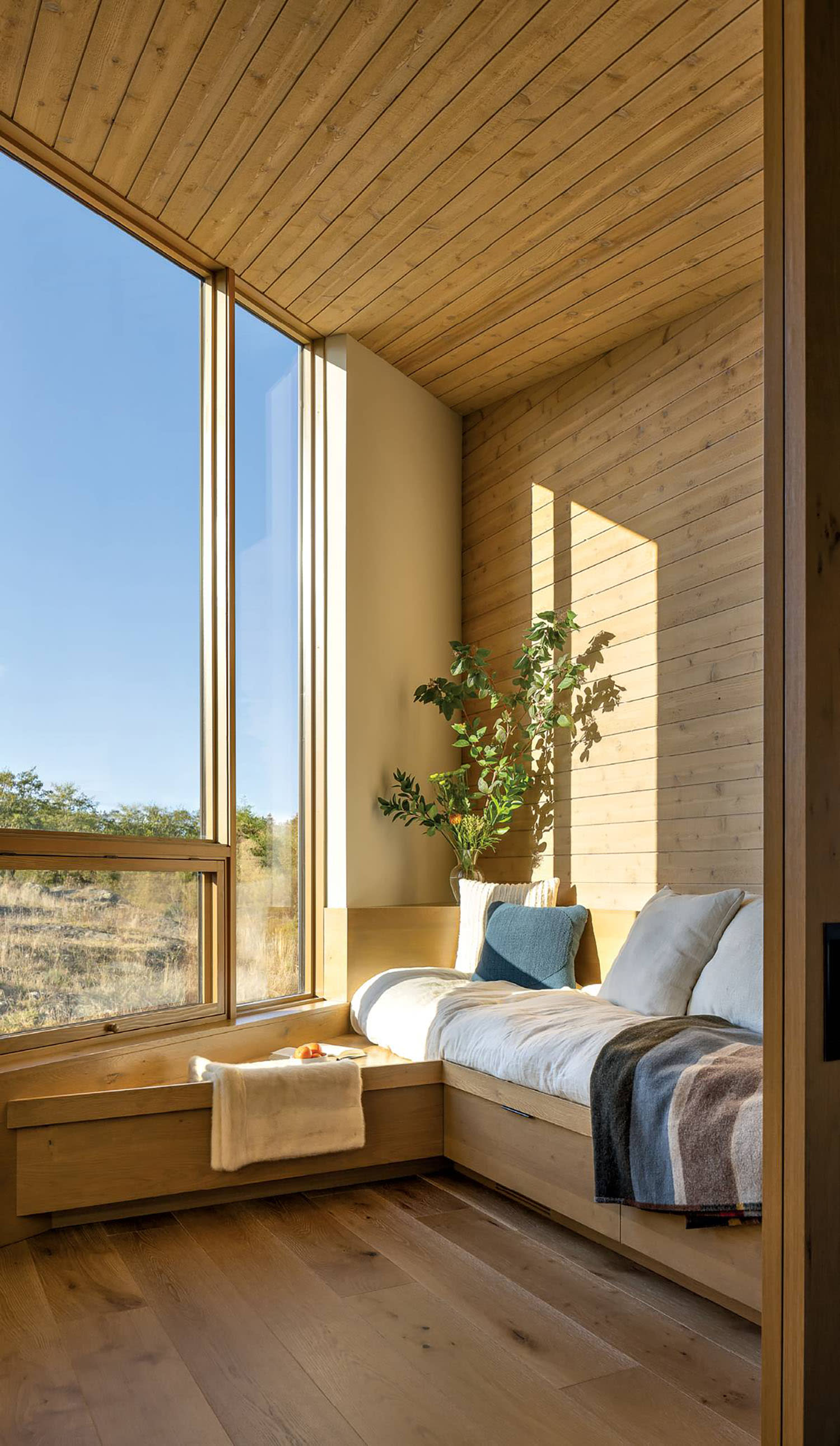
Adjacent to the suite is a cedar-clad reading nook. West Elm pillows and a Pendleton throw up the cozy factor.
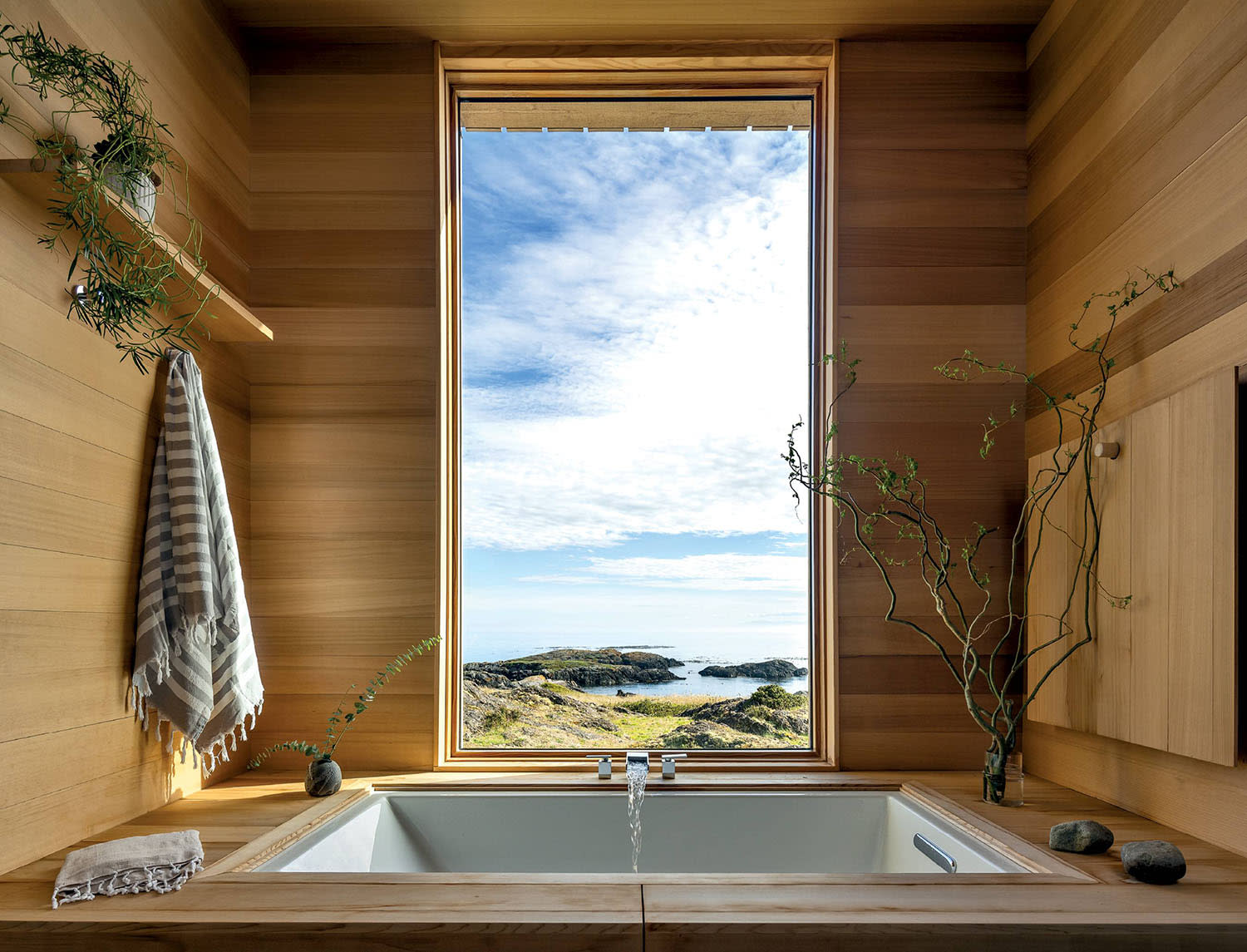
In the primary bathroom are a Kohler tub with a custom cedar surround and a waterfall faucet by Signature Hardware. The Marvin window captures water views.
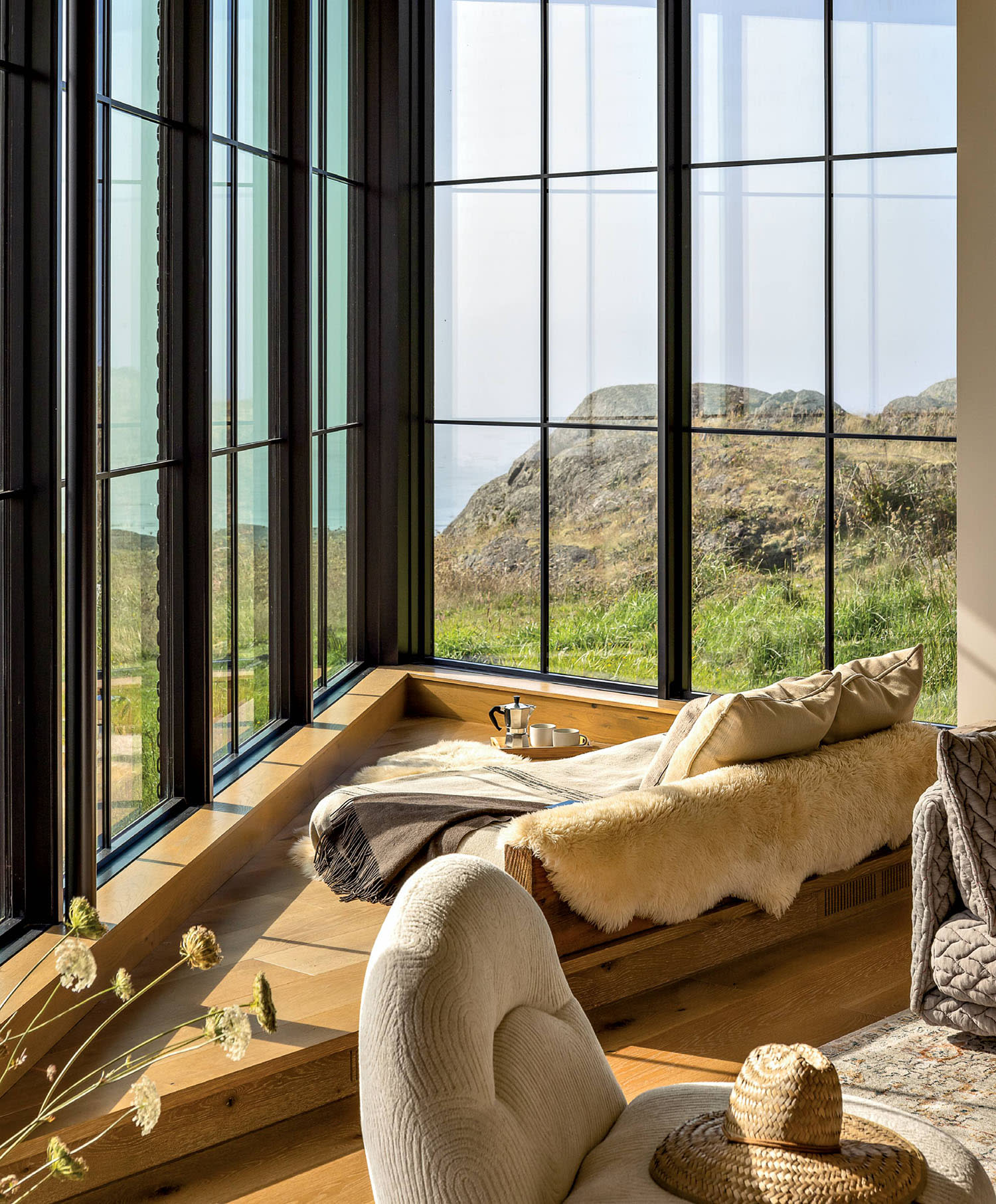
This San Juan Island home was designed—inside and out—by architect Joe Herrin and built by general contractor David M. Elwell. In a corner of the living room is a cozy sitting area with West Elm pillows and a Pendleton blanket.
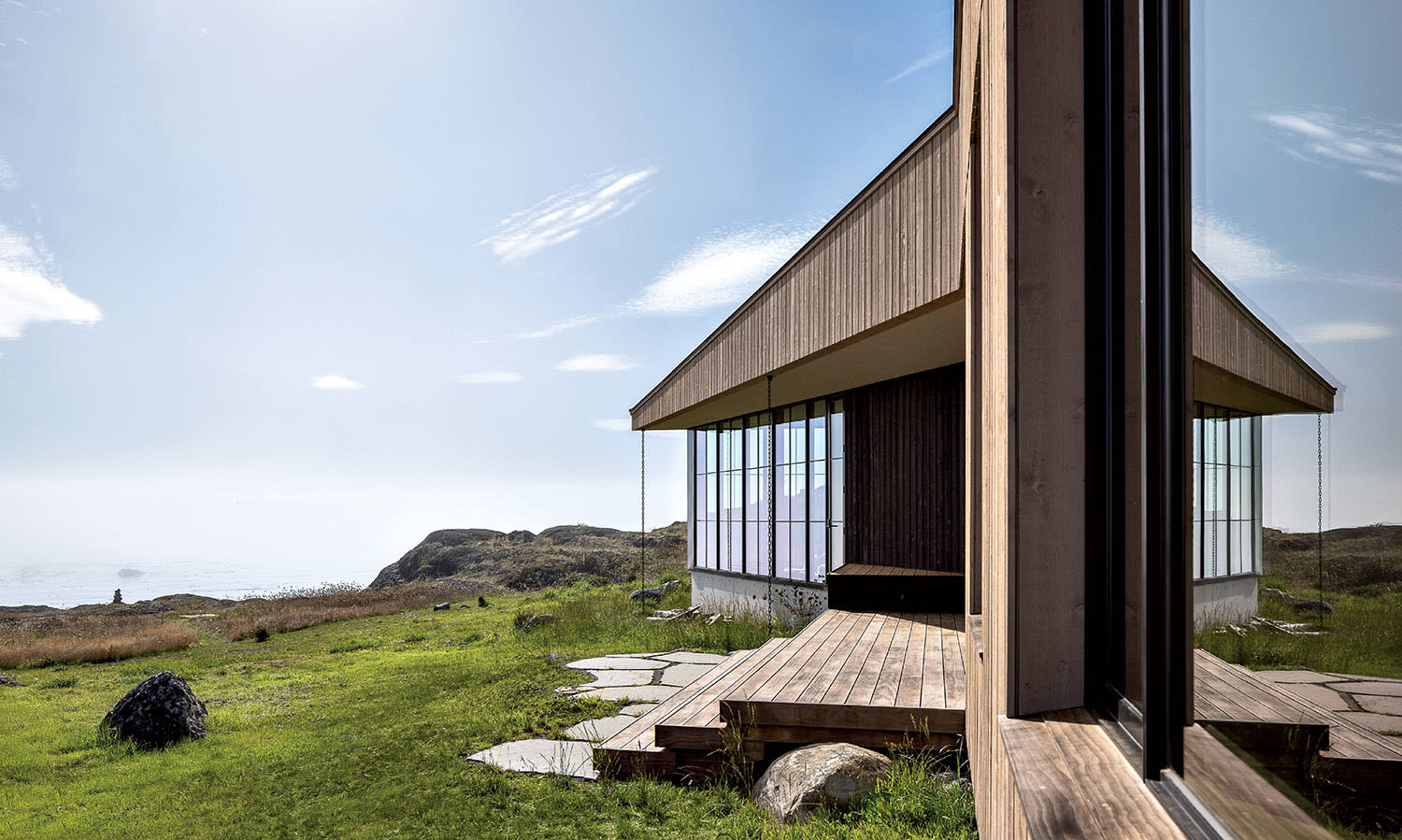
The residence takes full advantage of its waterfront setting, which was given a minimalist, noninvasive refresh by landscape designer by Wocka Hubber. Cedar cladding helps the structure blend into the site.
“The setting is second to none—views of Mount Rainier, orcas doing backflips—it doesn’t get more ‘Pacific Northwest’ than that, and the owners were committed to creating something truly exceptional,” Elwell adds. “During excavation for the structural foundation, I was struck by how well we were able to minimize site disturbance. In the end, the house looks like it was gently placed there.” That effortless look is also in part due to landscape designer Wocka Hubber. “The site is naturally very raw,” he says. “The Salish Sea breeze means few plants can weather the environment. We chose several Monterey cypress and native shore pines to help wrap and shelter the residence.”
When organizing the interior, Herrin, alongside teammates Chris Wong and Rachel Belcher, leaned into its role as a retreat. They devised a dramatic, prow-like window in the living room that doubles as a reading space and karaoke stage. Upstairs is another reading nook and a loft suite with bunk beds. “We spend long weekends and school breaks here, and we also enjoy bringing our parents up and hosting friends,” the husband says. “It’s morning beverages on the deck observing wildlife; puzzles and games if we stay in; or just giving ourselves permission to read a whole book,” the wife reflects.
“We want this house to evolve with us,” the wife adds, and so, in concert with Belcher, they are furnishing the home slowly. One of the most significant pieces is the dining room chandelier, commissioned from lighting designer Yuri Kinoshita. “I’d seen her woven fixtures in Seattle restaurants and loved the light they cast,” she notes. Another inspired feature is the couple’s enclosed bathtub. “The traditional look of a wooden ofuro is unbeatable, but I wanted something more practical for us,” the wife explains. The architect’s answer was a design that encases a standard bathtub with cedar. “We’re fans of the Asian influence on Pacific Northwest design and its strong connection to nature,” Herrin says, noting that the dwelling is also a model of efficiency, generating more energy than it uses. “We’ve not just focused this home on the water, we’ve celebrated aspects of the site you might not expect,” he adds. “We’ve stitched this house into the environment.”
This San Juan Island home was designed—inside and out—by architect Joe Herrin and built by general contractor David M. Elwell. In a corner of the living room is a cozy sitting area with West Elm pillows and a Pendleton blanket.