Brooklyn brownstones are usually snapped up for their historic charm and character. That wasn’t quite the case with this Carroll Gardens townhouse, which had been divided into multiple units over the years and stripped of nearly all original detailing in the process. But where crown molding and hand-carved mantles can prompt period-prescriptive design, the blank slate mandated by a full gut renovation can allow for a more custom, contemporary and—in the case of this particular family home—comfortable take on brownstone living.
Built in 1873, the house sits within a landmarked district, which gave architects Michael Ingui and Maggie Hummel a long list of regulations to navigate. By stripping the interior back to the floor joists, the architects were able to rebuild to Passive House performance standards while adding modern interventions, including floor-to-ceiling glass sliders across the rear façade and skylights on the third story that wash the stairwell in natural light. The staircase was one of the only remaining features, and the team’s meticulous restoration work “preserves the house’s historic quality and makes it feel like we still have some of that period detail intact,” notes Hummel. Its retention also informed details like the graceful trim that was added to the parlor floor’s loft-like cased openings, which helped to establish a transitional architectural vocabulary that designer Katie Lydon was eager to embellish with fresh colors, lively patterns and a collected-over-time ethos.
Home Details
Architecture:
Michael Ingui and Maggie Hummel, Ingui Architecture
Interior Design:
Katie Lydon, Katie Lydon Interiors
Styling:
Anita Sarsidi
“The house was really beautifully done,” shares Lydon of her first impressions when she joined the project on the heels of the renovation. In close concert with the clients, outfitting the interiors unfolded in successive chapters. “For most of our projects, we start with an overall vision and put each room together with as many elements as possible to make that vision a reality,” the designer reflects. “But with this house, as we were building on an already great foundation, our approach was a bit more organic. It was more about adding layers, color, textures and allowing each room to speak for itself.”
The gathered sensibility that evolved blends the pattern-forward styles of Swedish and English design with a pared-back modernist aesthetic. In choice rooms, Lydon introduced tight, repeated motifs and thick-pile textures—an approach that evokes the charm of Swedish interiors—and layered European antiques alongside midcentury furniture. In the formal living room, for example, original sheepskin-upholstered Philip Arctander Clam Chairs are paired with petal-patterned drapes and a gold-framed antique mirror above the fireplace. “We needed something traditional that felt warm and would anchor the room,” Lydon recalls. Similarly, in the primary bedroom, various traditional and contemporary textile prints mix with a Swedish carpet with a zigzag motif and a textured chair and ottoman. Together they create a soft, eclectic look that wouldn’t feel out of place in Småland or the Cotswolds.
In the same spirit, the color palette throughout the townhome melds Swedish-leaning cool tones with floral notes (see: pale pinks and deep plums) that bring to mind the English countryside. Against this refined palette, golden metallic details across lighting and accessories add shine and warmth, while the dynamic collection of oil paintings, watercolors, multimedia works and more that Lydon curated introduces a range of captivating accent colors.
All of the art, furniture and decor that Lydon sourced has resulted in a vibrant, thoughtful family home brimming with personality. In lieu of a historic restoration, the team put a respectfully fresh spin on a classic New York City typology, while also ensuring the brownstone is both structurally sound and energy-efficient for years to come. “It’s so beautiful that you don’t really notice how quiet and technical the building is,” Hummel observes. More than 150 years later, this brownstone is putting its best foot forward.
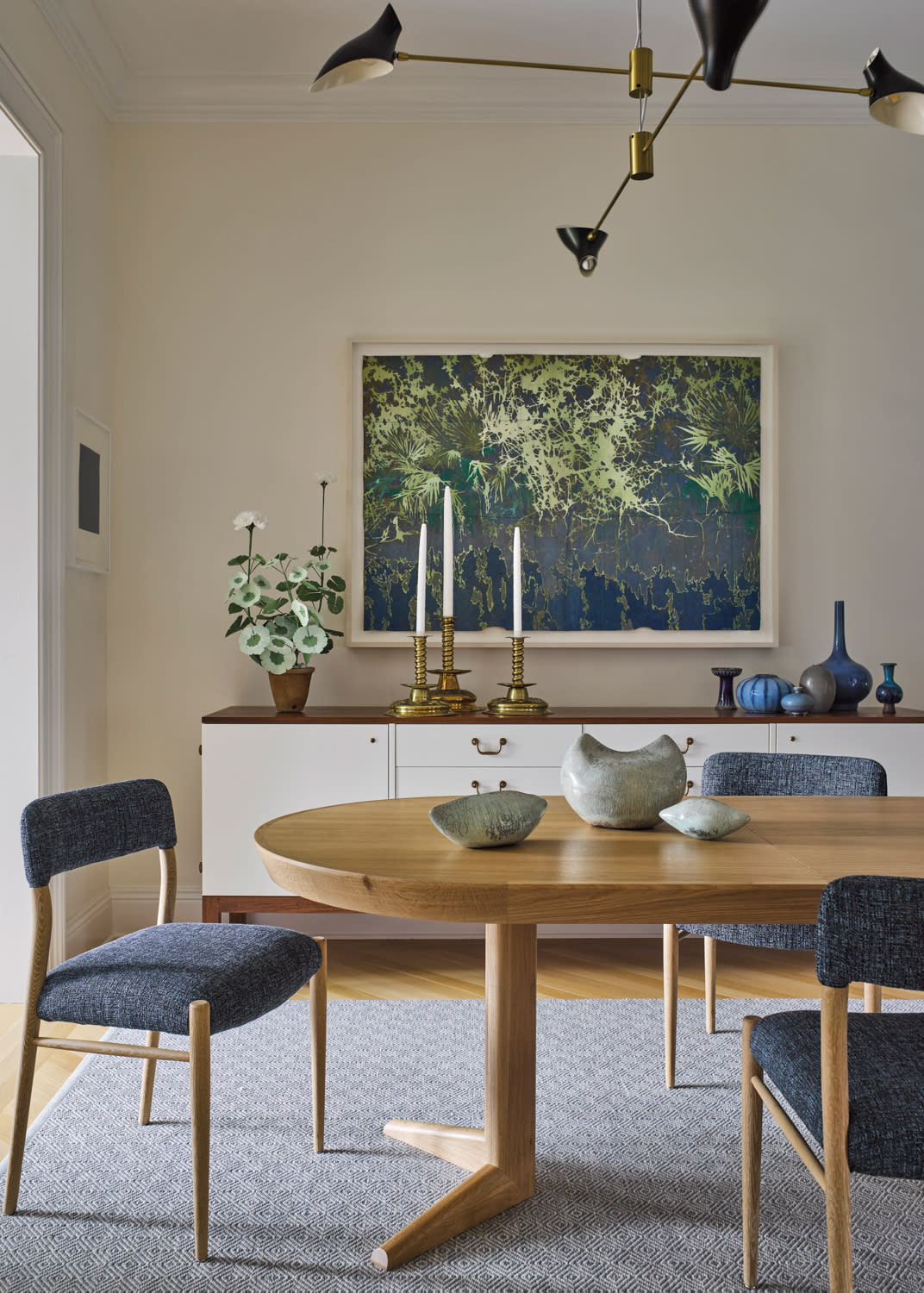
Custom pieces in the dining room include a white oak dining table from Ian Ingersoll and a credenza designed by Katie Lydon, which rests beneath a Maysey Craddock artwork. Swedish Baroque candlesticks dating to the 18th century add a lustrous flourish.
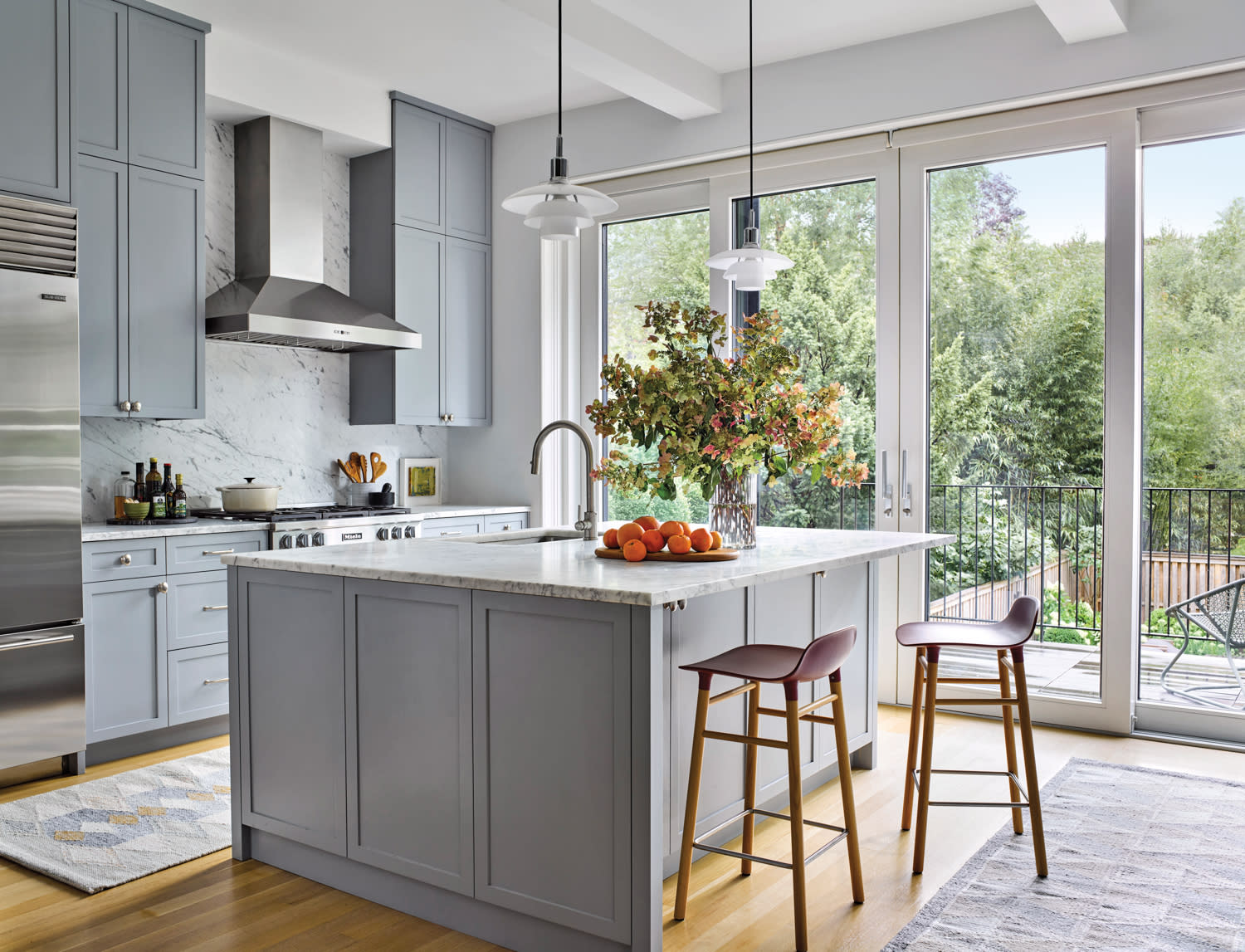
The kitchen features a cooler palette expressed through demure purple-gray millwork and stainless-steel hardware and appliances. Two Poul Henningsen pendants hang above the island, while Normann Copenhagen stools provide seating.
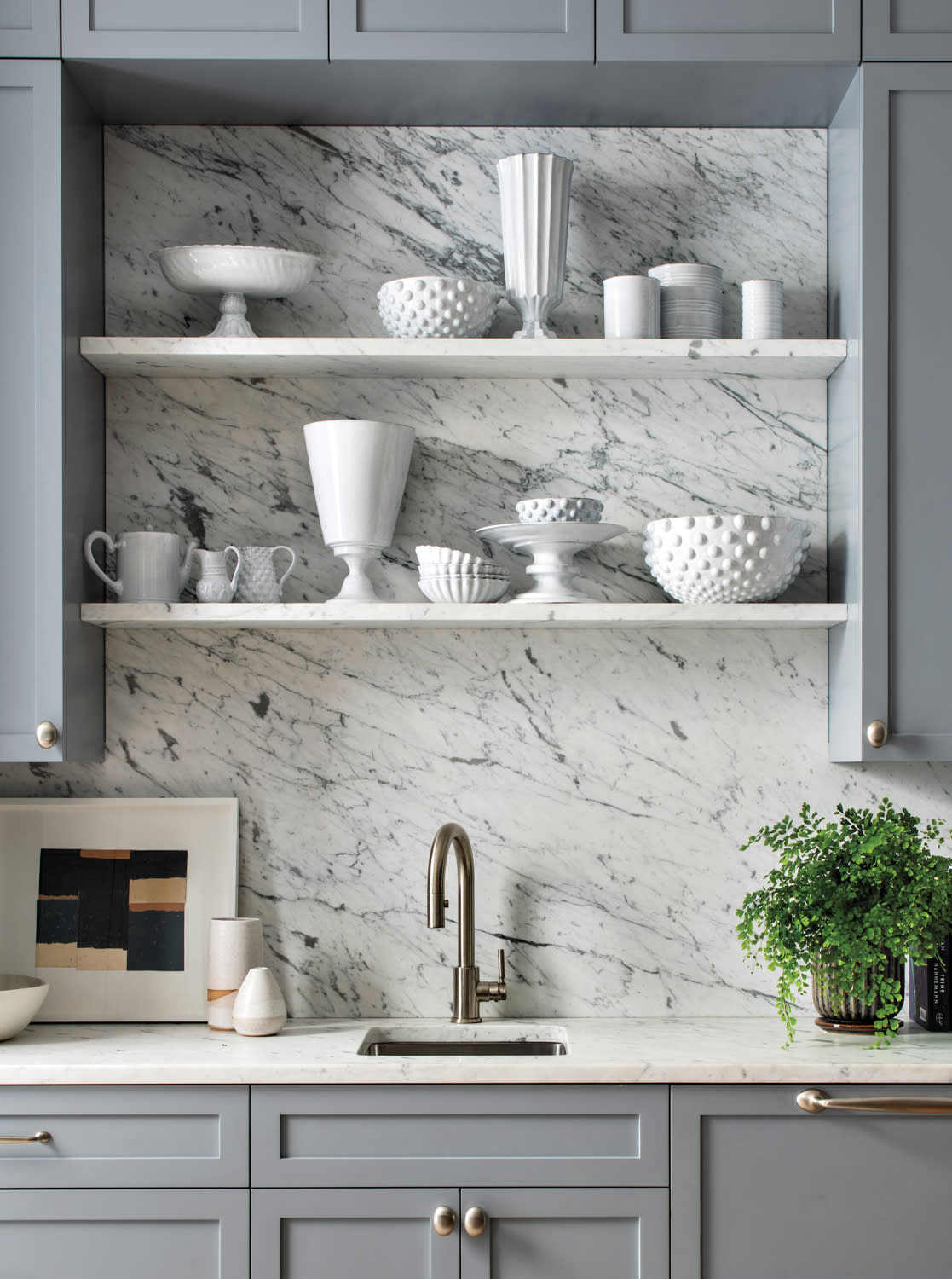
Pale marble streaked with dark gray forms the kitchen counters, backsplashes and open shelving. An oil-on-paper artwork by Sean Noonan is displayed on the countertop, while white ceramics from Astier de Villatte decorate the shelves above.
Custom pieces in the dining room include a white oak dining table from Ian Ingersoll and a credenza designed by Katie Lydon, which rests beneath a Maysey Craddock artwork. Swedish Baroque candlesticks dating to the 18th century add a lustrous flourish.
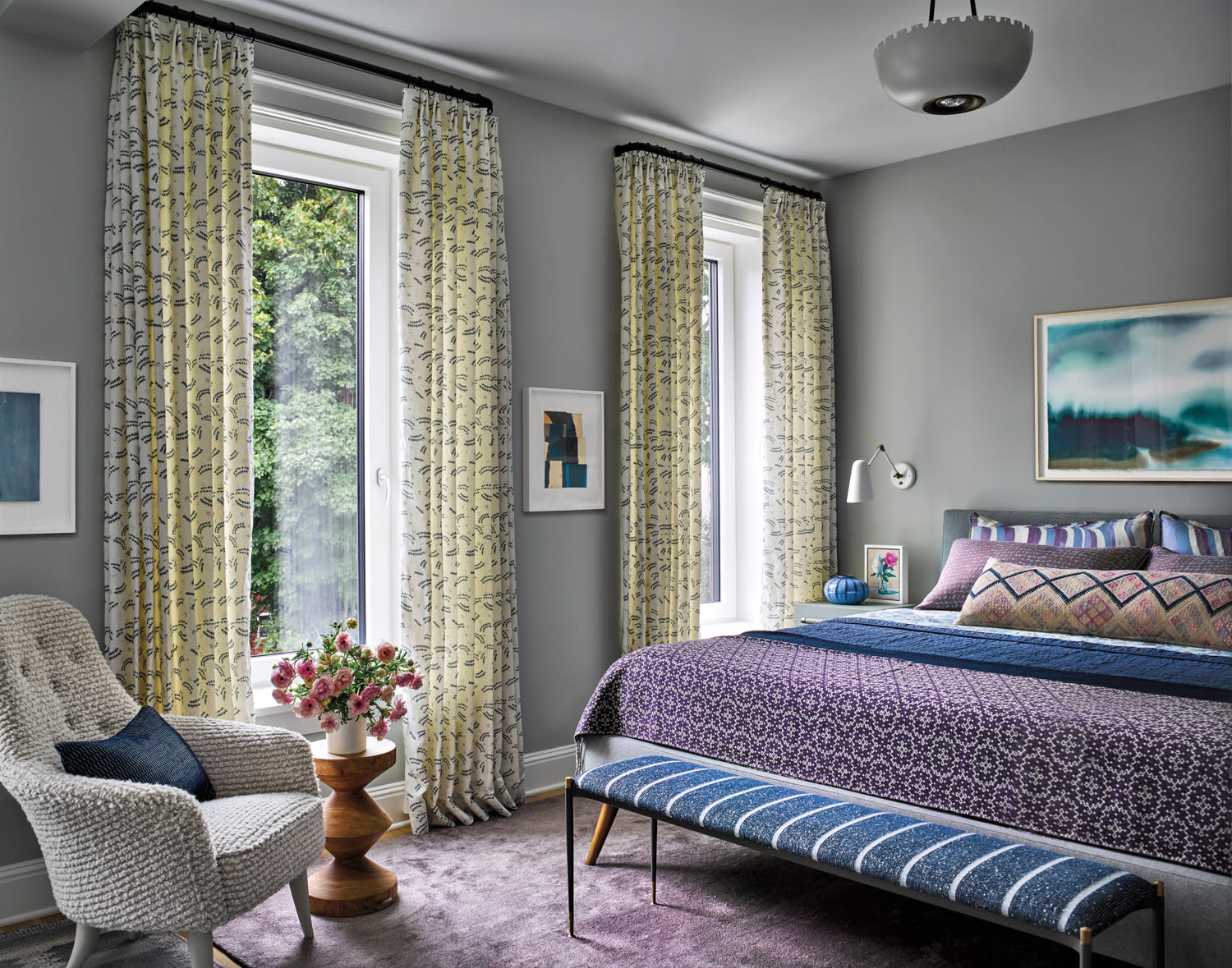
A variety of patterns layer the primary bedroom, including a striped bench from Chelsea Textiles in a fabric by John Rosselli & Associates and bedding sourced from Society Limonta, Clic and Nickey Kehoe. A pendant from The Urban Electric Company illuminates the space.
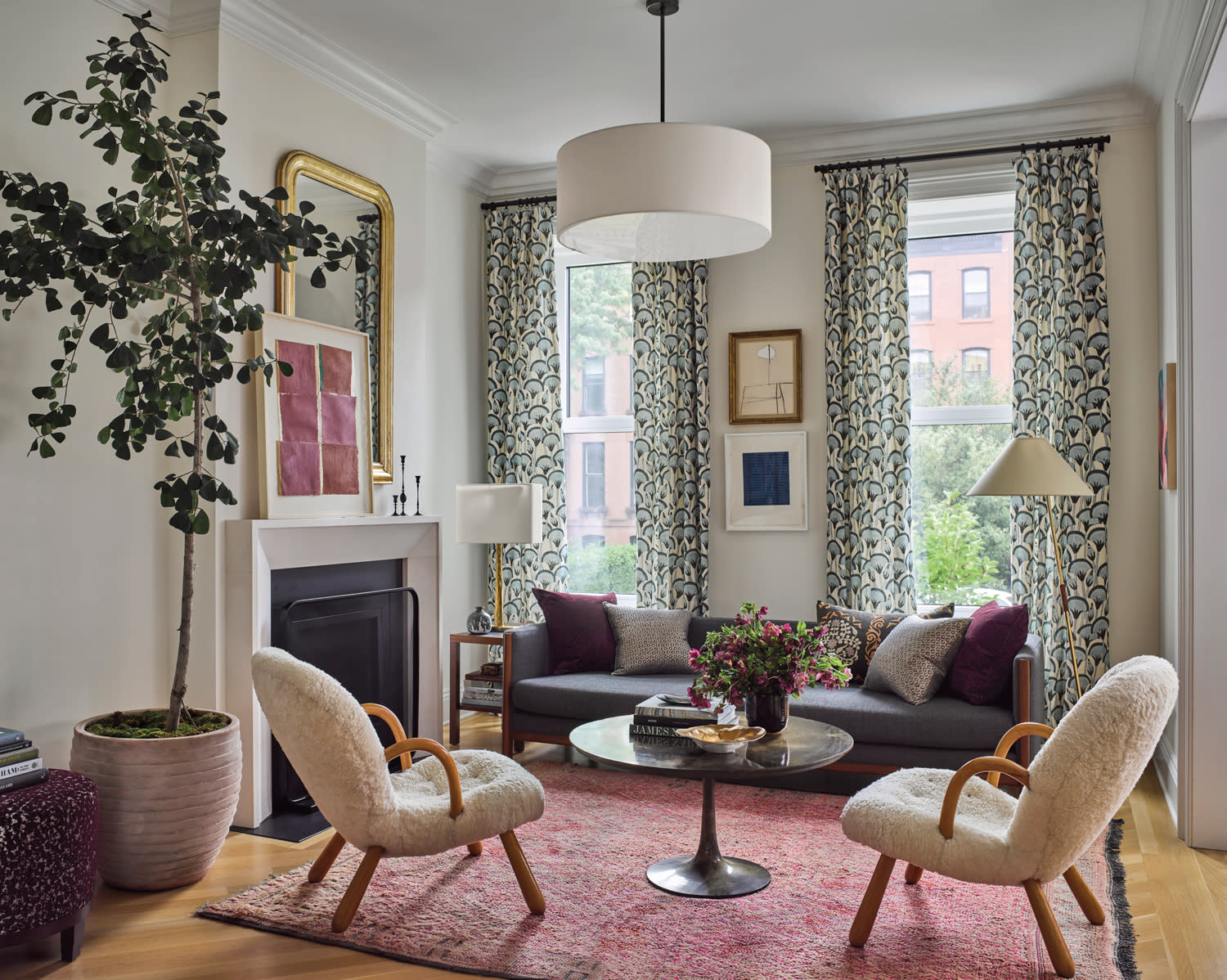
In the living room, a pair of vintage Philip Arctander Clam Chairs and the homeowner’s charcoal sofa and pink rug are set against Holland & Sherry patterned drapes. Artwork by Sean Noonan poises on the mantel.