For this 1940s home on a terraced hillside in Kentfield, the goal wasn’t an aggressive modernization. Instead, the owners wanted to honor the traditional architecture while updating finishes and bringing in furnishings that spoke to their wish to share the house frequently with family and friends. “Hospitality is central to their lifestyle,” says interior designer Guillaume Coutheillas. To instill the rooms with soulfulness, he looked to the beauty of nature—both the home’s setting, which offers unobstructed views of Mount Tamalpais, as well as his own childhood memories of the landscapes of France.
“The house is filled with a golden, Mediterranean-like light, and the forested hills around it reminded me of the South of France, where my mother is from,” notes Coutheillas, who was born in Paris and now lives in San Francisco and New York. To bring dimension to the previously all-white interiors, the designer added textural limewash, richly hued paint or scenic wallcoverings to nearly every room. “These elements are the project’s most transformative tools. Layering them brings softness, movement and a gentle glow to the home,” he describes.
For instance, in the dining room, which hosts everything from formal dinners to pizza nights, Coutheillas chose a floor-to-ceiling landscape wallpaper. “It’s reminiscent of Dutch oil paintings and wraps the entire room,” he says. It also creates a dream-like blur between the room and its views of oak trees and dry grasses. “The wife wanted some magic, some whimsy, and the mural really brings that element,” Coutheillas comments. Adjoining the room is the breakfast nook—its banquette is a favorite perch of the couple’s daughter—which flows into the family room and kitchen.
The existing kitchen worked well for the owners, but the designer updated it with new hardware, lighting and paint. He embraced already in-place features such as the range alcove, a design that plays on French Renaissance hearths and lends itself to the idea of communal meals. “This is a family who loves long dinners, spontaneous gatherings, weekends with friends, cousins sleeping over and children flowing easily between rooms.”
To create depth and character, the designer sourced furnishings crafted with natural materials and organic forms. In the living room, a generous space that lends itself to two separate seating areas, Coutheillas placed a curved blue sofa and bouclé swivel chairs with swooping backs near the windows (“With the morning light, it’s a great reading area,” he notes) and established a “darker, more intimate” space at the opposite end. There, an oak bookcase holds objects meaningful to the family. “These clients have a strong appreciation for craft and contemporary artworks gathered on their travels around the world; they serve as storytelling elements,” Coutheillas muses. The entire space reflects the elevated but casual ethos found throughout the home. “This house feels French in that no rooms are off-limits—they are meant to be used. No one thinks twice about sitting down anywhere,” he adds.
While the couple enjoys a hushed, sage-hued bedroom retreat, “Their priority was creating comfortable guest rooms,” the designer explains. “Since this is Marin, away from the city, friends often stay the night when they come over.” To accommodate everyone, Coutheillas designed a “bunk room for grownups” with stacked beds and a plush, chocolate-brown sofa for additional sleep space. A dusky-pink room currently used as a guest suite will soon become the daughter’s domain. “She had a baby room, but it’s time for her to move into this one now,” the designer says. “It’s an adult room that she can grow into, which is a very European way of treating a child’s space.”
The result of Coutheillas’ work is a home that feels atmospheric and lovingly assembled. “This house reflects the layering of old European homes, but also the light, openness and freedom that California gives you,” he says. “It’s refined but never strict.”
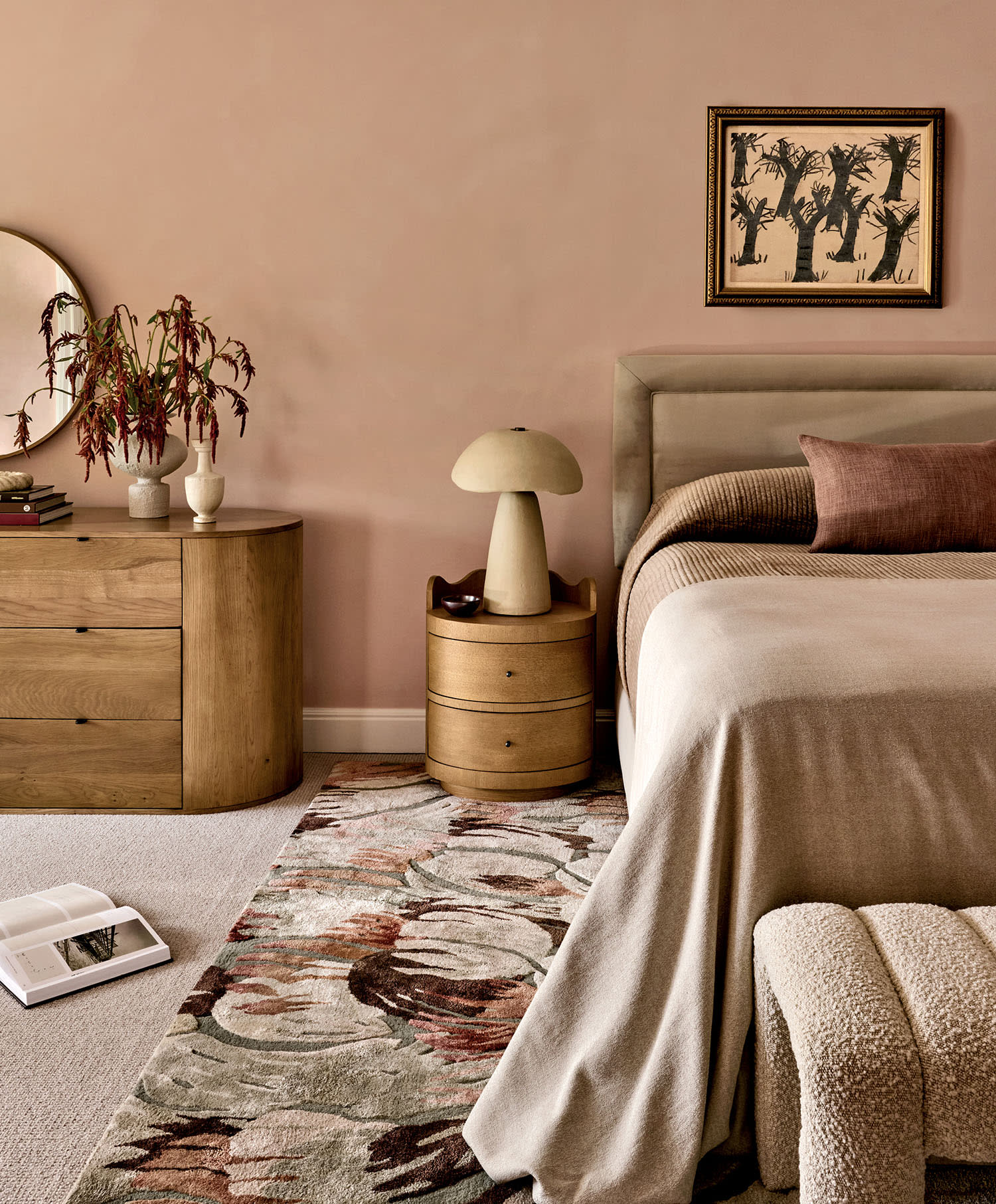
Throughout the home, Coutheillas used limewashes from Color Atelier on the walls. He chose a pink hue called Muse for what will become the daughter’s bedroom.
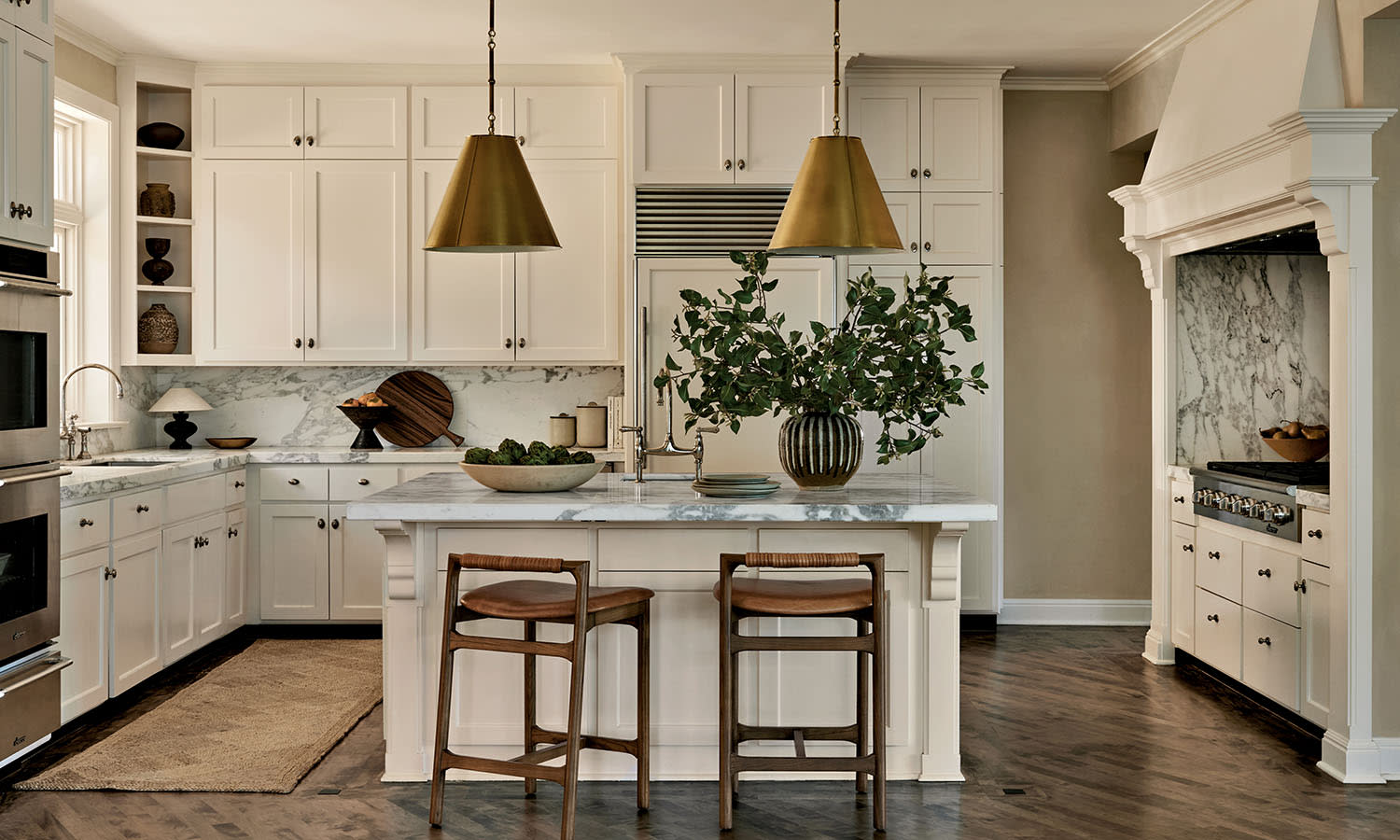
The designer retained the kitchen’s existing Dacor wall ovens and range, as well as its polished nickel faucets and hardware from Rejuvenation. At the island, he added Williams-Sonoma Home pendant lights and counter stools from West Elm.
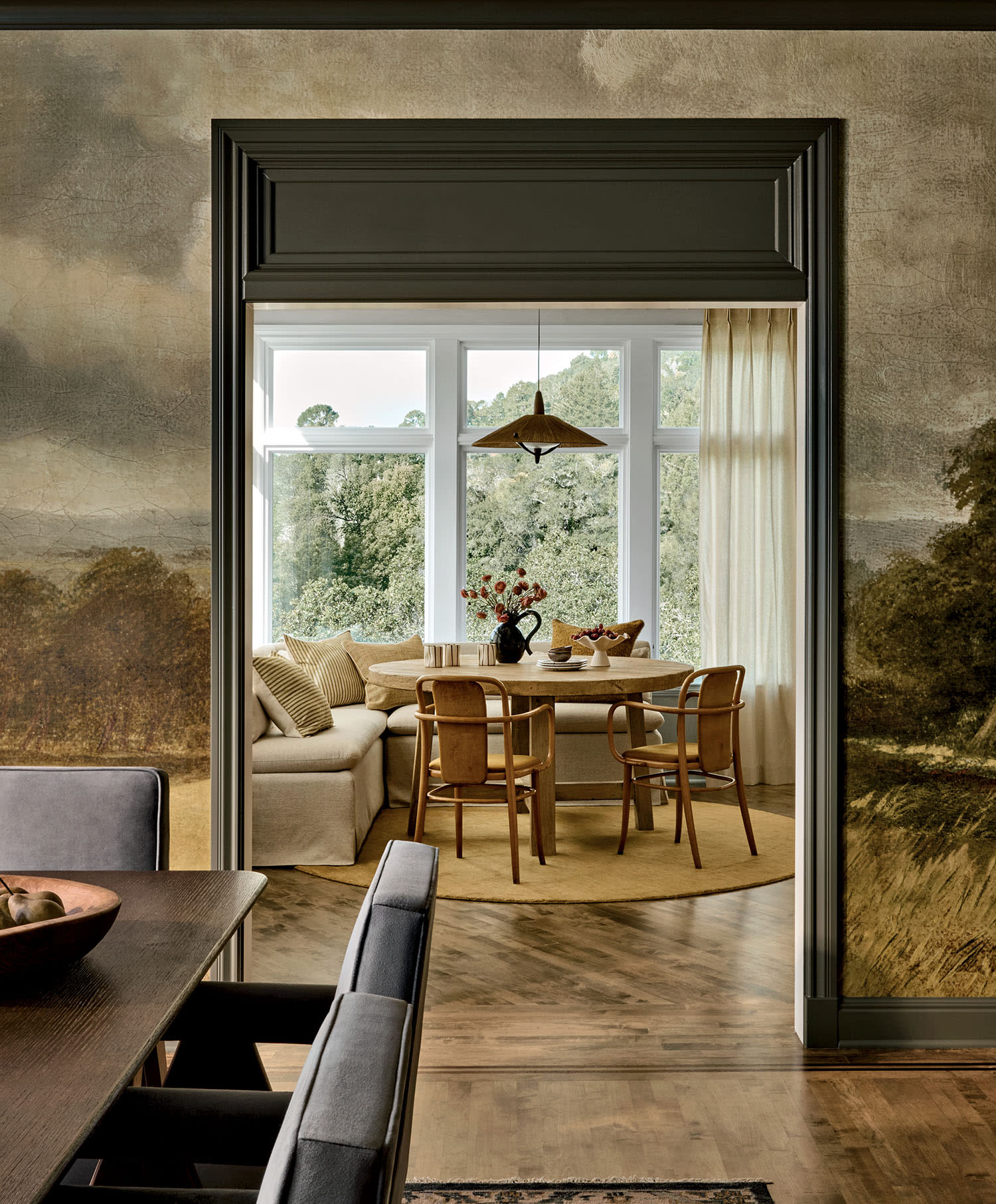
In the breakfast room, seen through the dining room, designer Guillaume Coutheillas paired a Crate & Barrel banquette with a table, chairs and pendant from 1stdibs. The rug is by Rugvista.
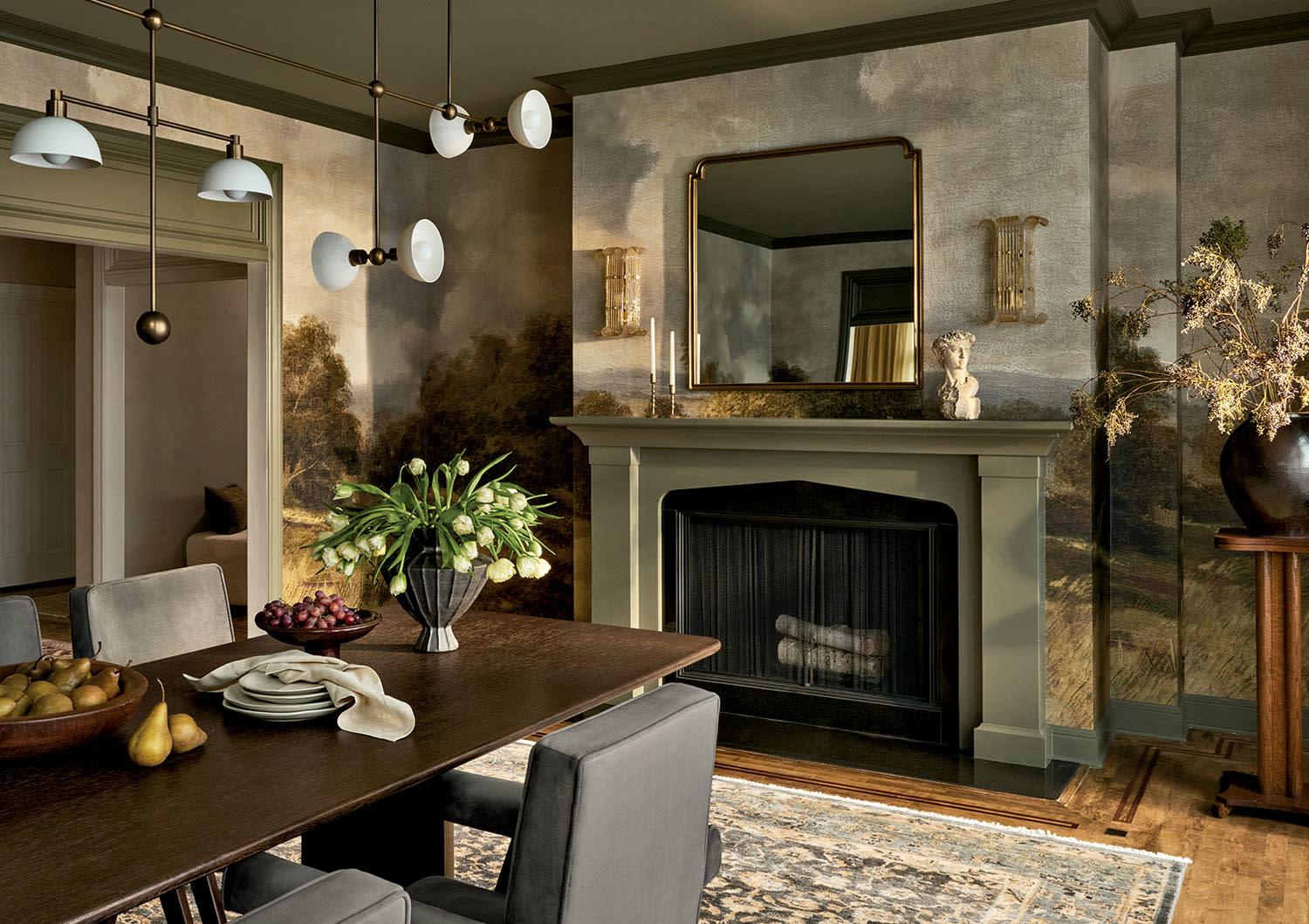
Coutheillas wrapped the dining room in a Boråstapeter Studio wallpaper and painted the millwork Benjamin Moore’s Dark Olive. The table is RH, the chairs are by Forom, and the rug is Soho Home. Above the fireplace are an Anthropologie mirror and Lulu and Georgia sconces. The ceiling light is Apparatus.
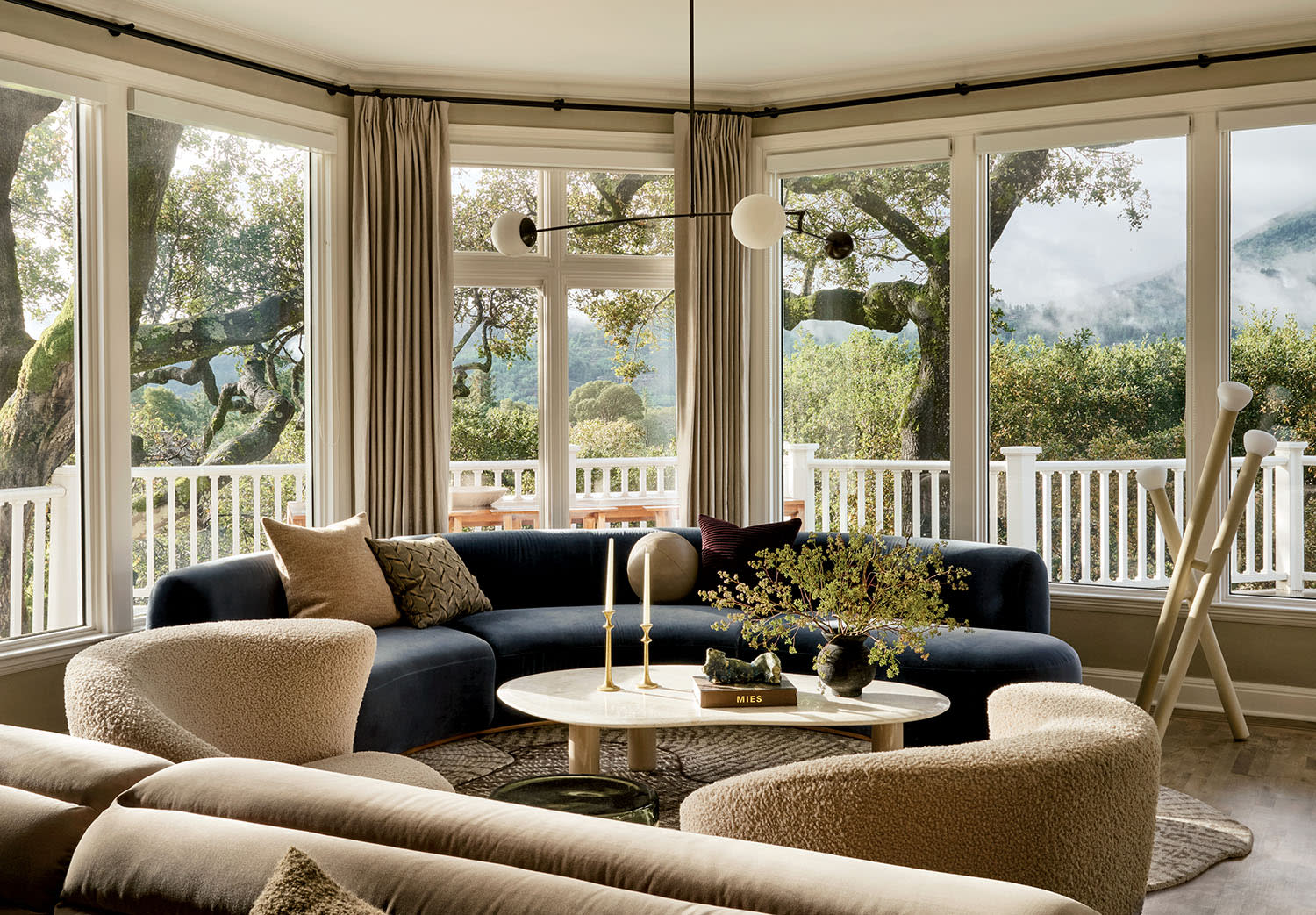
One end of the living room is anchored by a Soho Home sofa, vintage Vladimir Kagan chairs and an Ellison Studios coffee table atop a rug from CC-Tapis. The ceiling fixture is by Glustin Luminaires, and the floor lamp is Lambert & Fils.
Throughout the home, Coutheillas used limewashes from Color Atelier on the walls. He chose a pink hue called Muse for what will become the daughter’s bedroom.
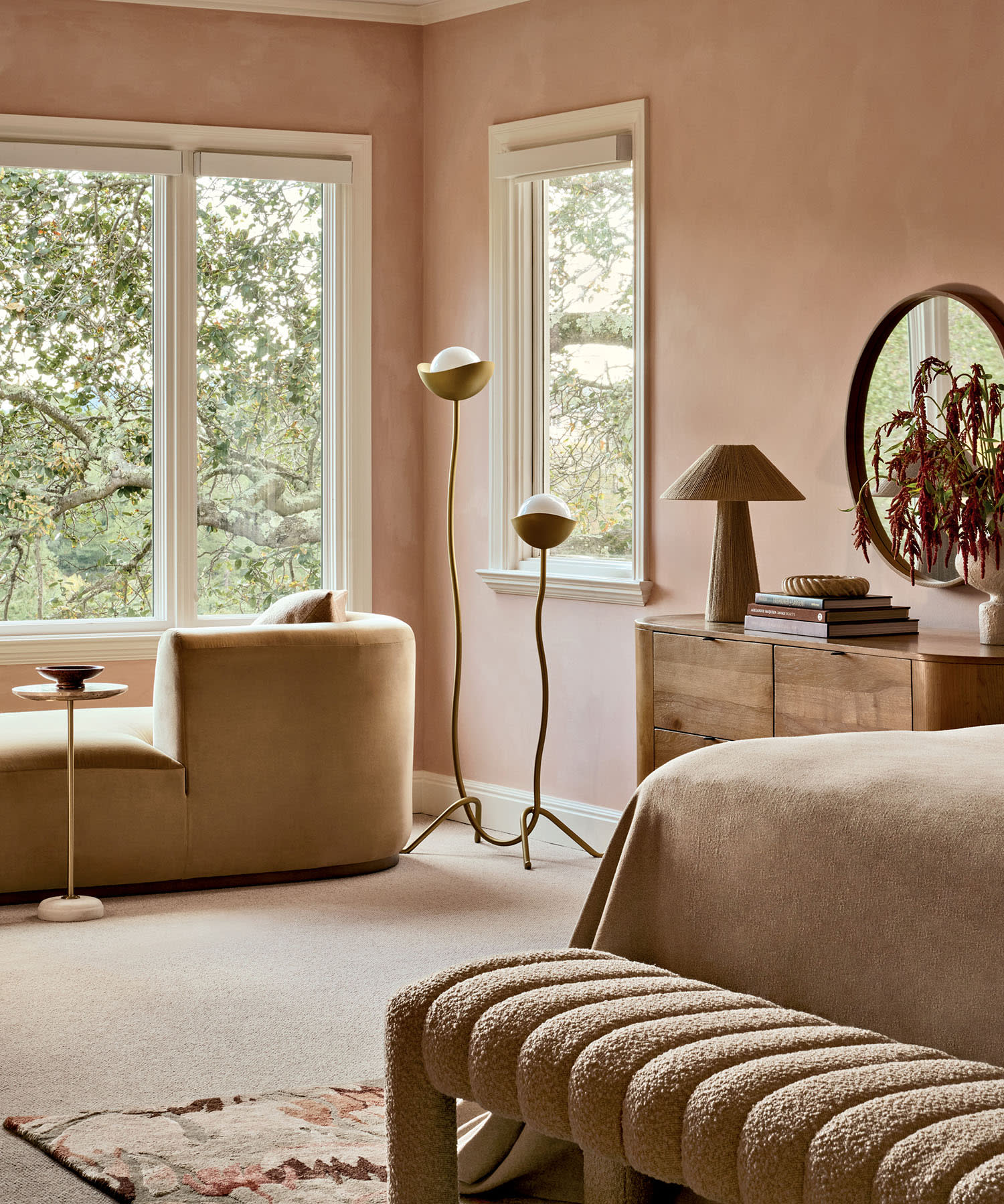
The nightstand, bench and floor lamp are all Lulu and Georgia, the dresser is Pottery Barn, and the chaise is from AllModern. The area rug and accent table are Soho Home.