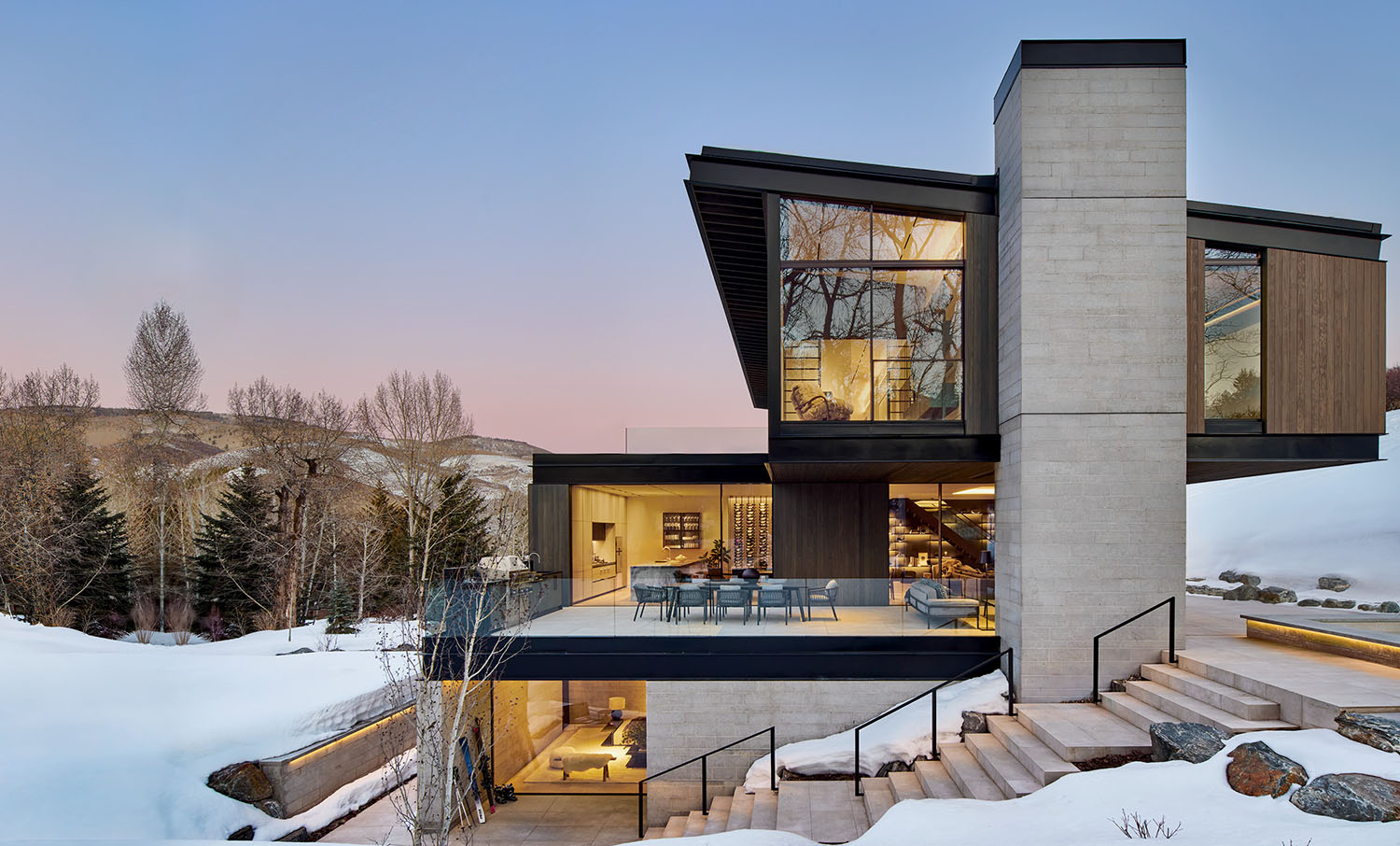
Exteriors of limestone and durable Accoya wood cladding emulate the tones and textures of the mountain setting. The cantilevered top floor is a dramatic gesture balanced by a monolithic chimney that anchors the residence to the ground.
How A Sculptural Colorado Retreat Leans On Wellness Principles
Great design can make you feel better and ultimately help you live better, say architects Kevin Toukoumidis and Tom Hagerty. The two point out that just stepping inside an aesthetically pleasing space can evoke a sense of calm or pleasure, triggering physical responses like a lowered heart rate or a dopamine rush. And that’s just a hint of the broader concept of neuroarchitecture, an emerging discipline that the architects are dedicated to exploring through their work. The field looks at how a built environment can affect a person’s emotions, behavior and even physiology, the overall goal being to create spaces that optimize their occupants’ health. So, as they considered the style of their clients’ Beaver Creek home—a retreat the homeowners imagined as a gateway for outdoor adventures as well as a family sanctuary for rest and relaxation—Toukoumidis and Hagerty, alongside project manager Connor Brindza and architectural designer Allison Loth, took a holistic approach in order to factor in wellness features. “After many years in practice, we know how to make a home look beautiful,” explains Toukoumidis. “But what can it do to improve your well-being?”
Home Details
Architecture:
Kevin Toukoumidis and Tom Hagerty, dSpace Studio
Interior Design:
Luca Lanzetta, Luca Lanzetta Group
Home Builder:
David Hyde, Shaeffer Hyde Construction
Landscape Architecture:
Kathy Aalto, Ceres+ Landscape Architecture
Styling:
Anita Sarsidi
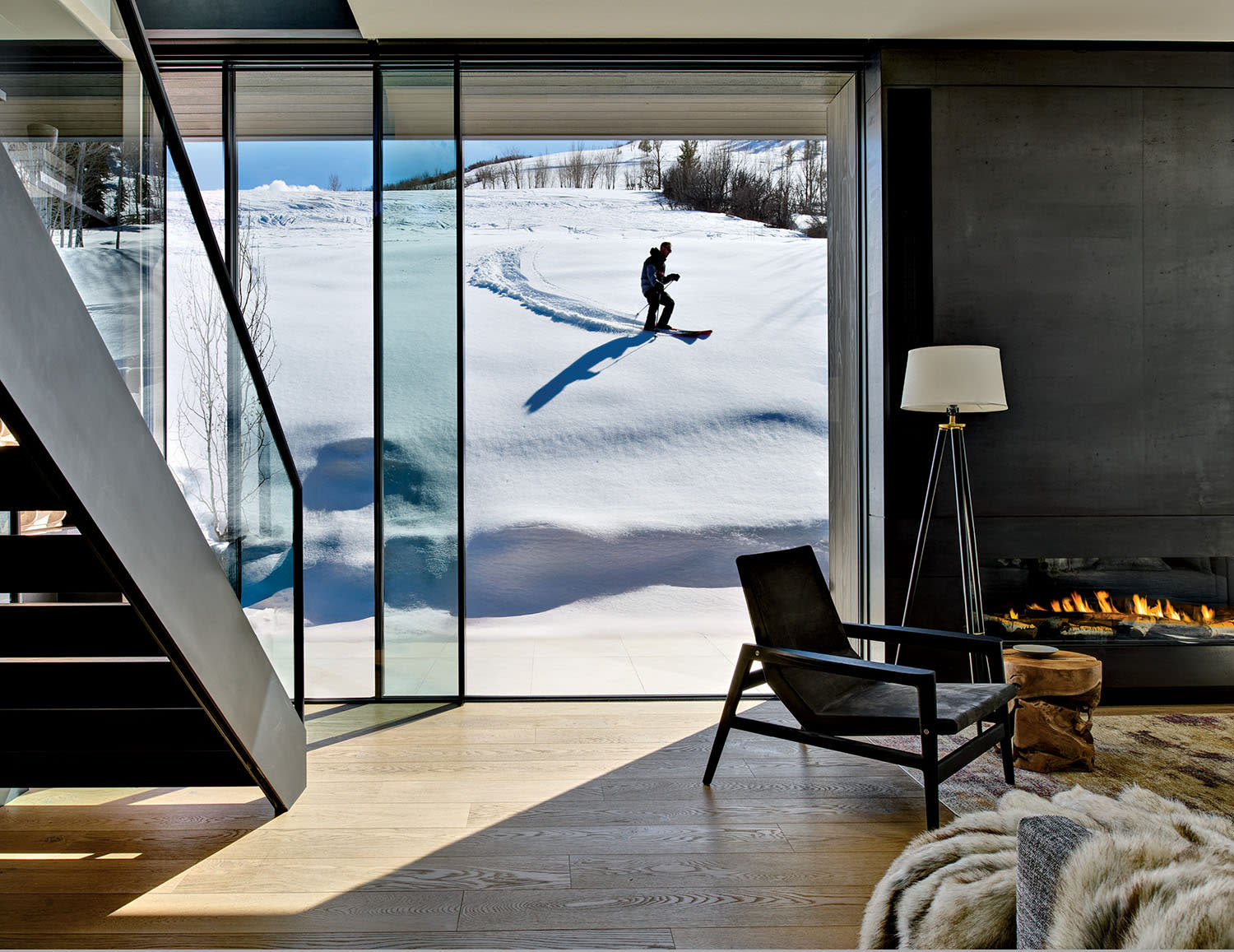
Thin-frame Panoramah! sliding doors off the main, midlevel living area frame the hillside. A steel-and-glass stairway, fabricated by High Country Customs, nods to a blackened-steel fireplace wall; both are contrasted by white oak flooring by Northern Wide Plank. The armchair is Poliform.
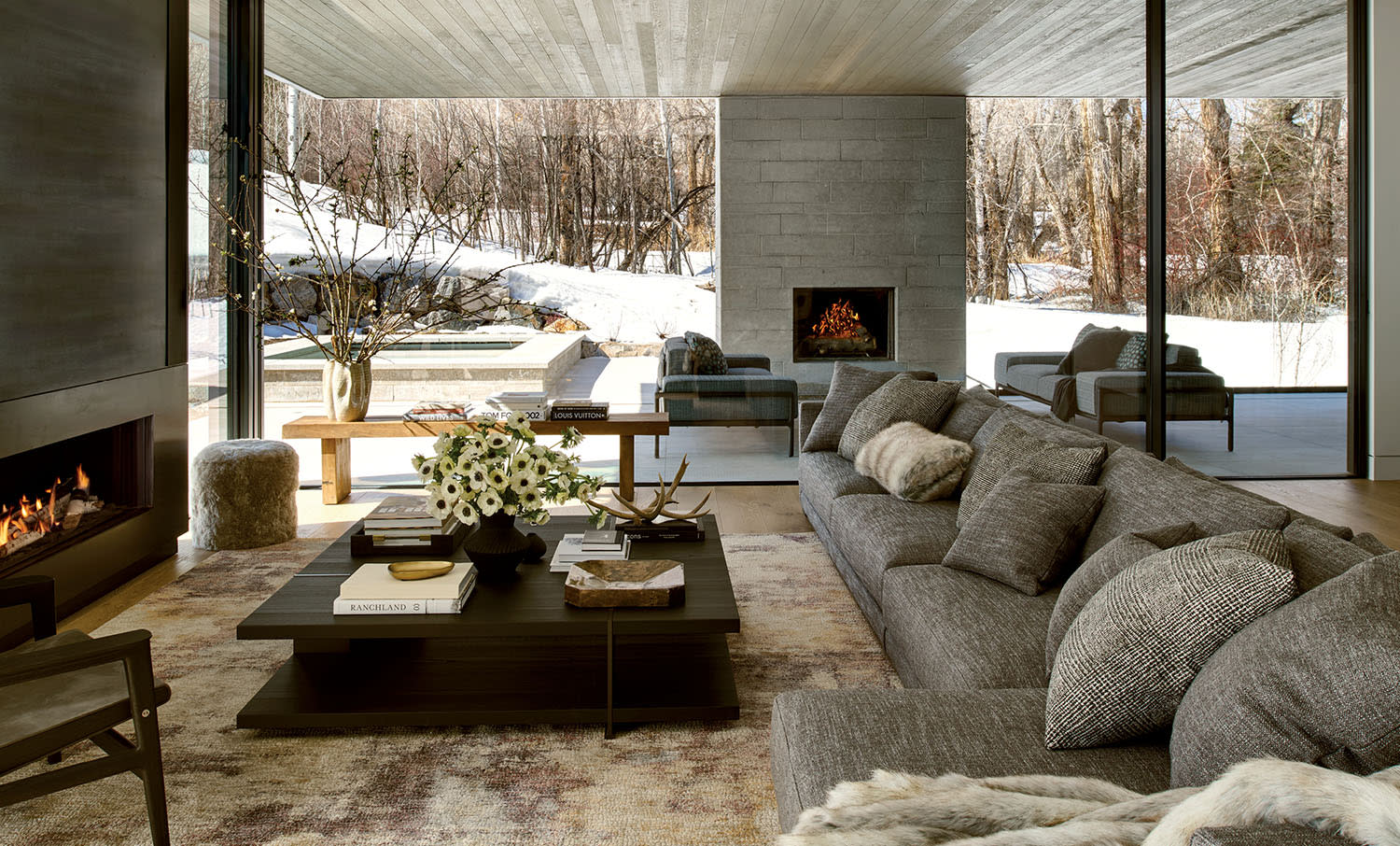
Designer Luca Lanzetta selected a Poliform sectional and coffee table for the living area. A wide, floor-to-ceiling Panoramah! window—the home’s largest—looks out to an exterior living space outfitted with Brown Jordan furnishings and a limestone-walled fireplace.
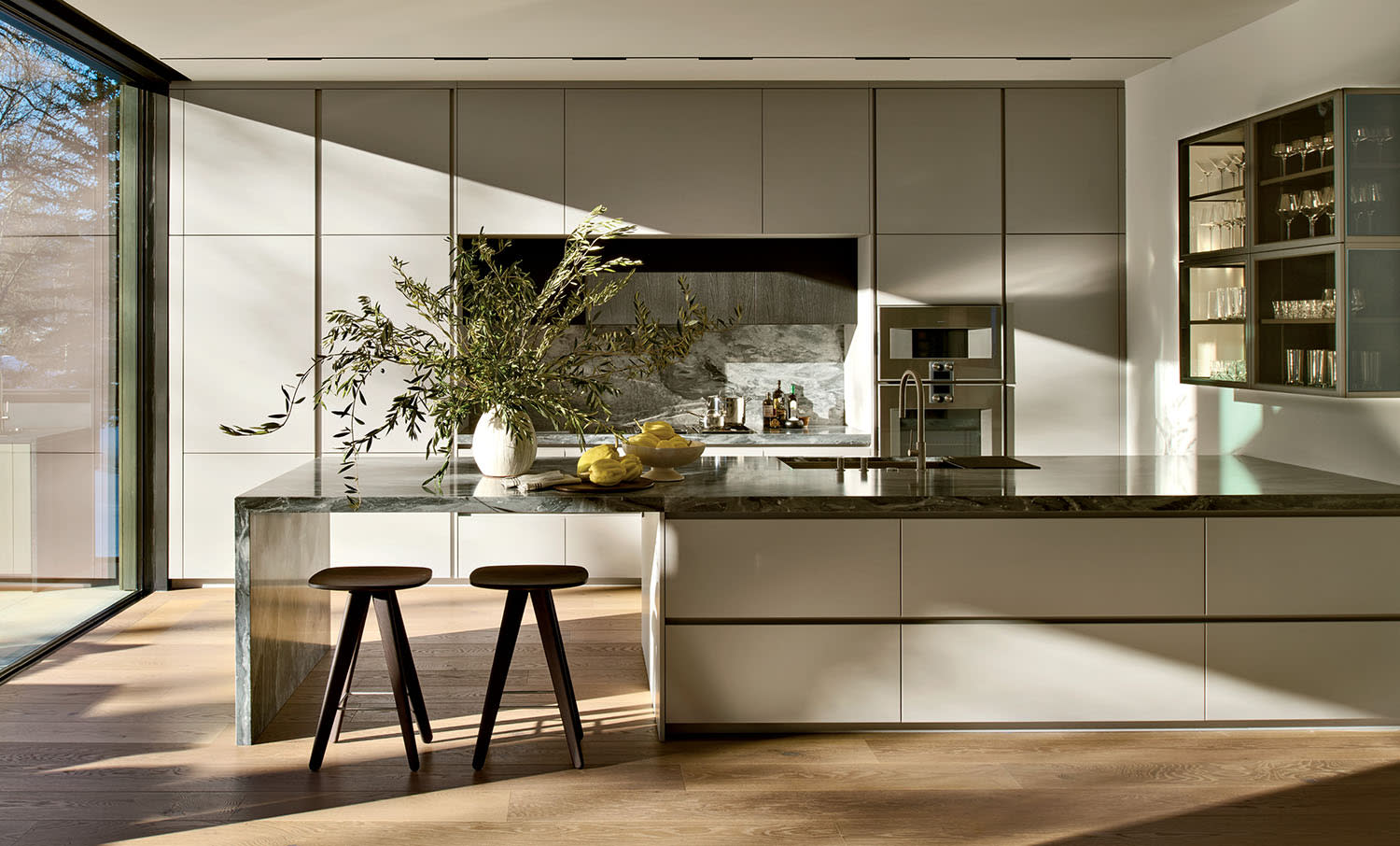
Clean-lined and minimalistic, a custom Ernestomeda kitchen features matte-gray lacquered cabinetry and gray Bardiglio marble on the peninsula and cooking niche. The faucet is Cea; the counter stools are Poliform.
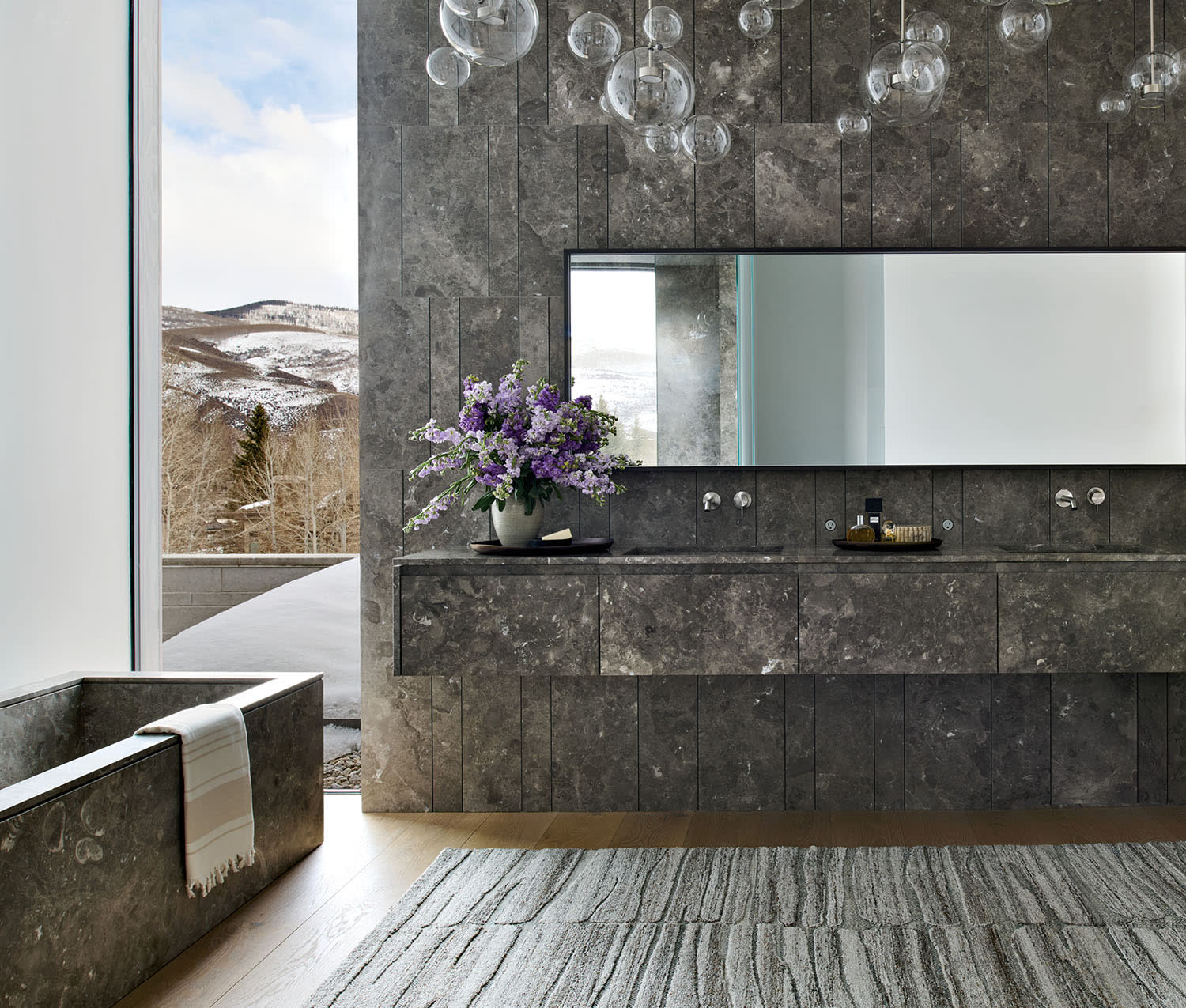
Playful, bubble-like Giopato & Coombes pendants drift across the primary bathroom. The floating vanity, vanity wall and tub are wrapped in Salvatori’s gray-brown Gris du Marais marble.
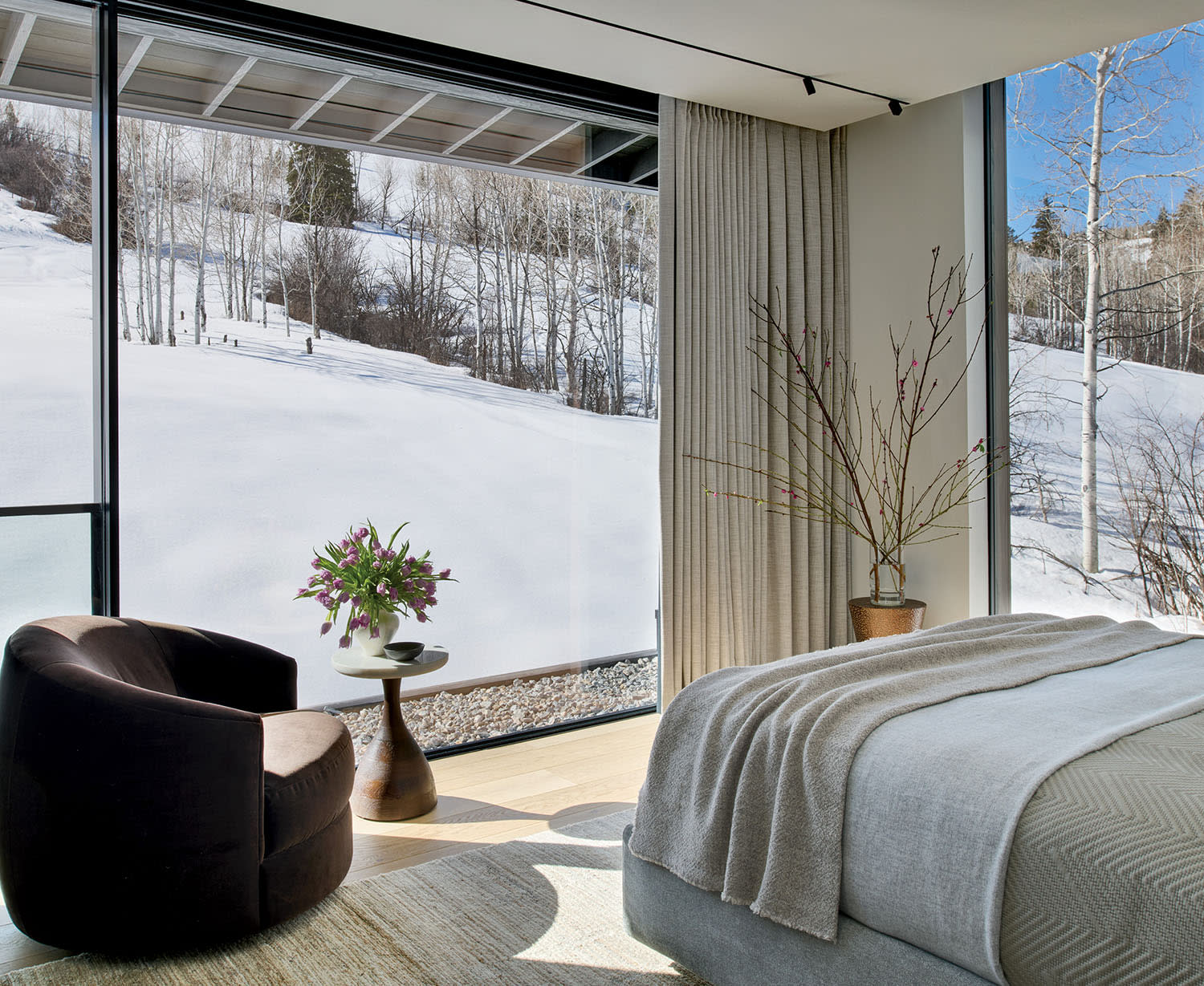
Floor-to-ceiling Panoramah! windows, with ripple-fold drapery by Tailored Interiors, capture uninterrupted alpine views in the primary bedroom. The bed is by Poliform.
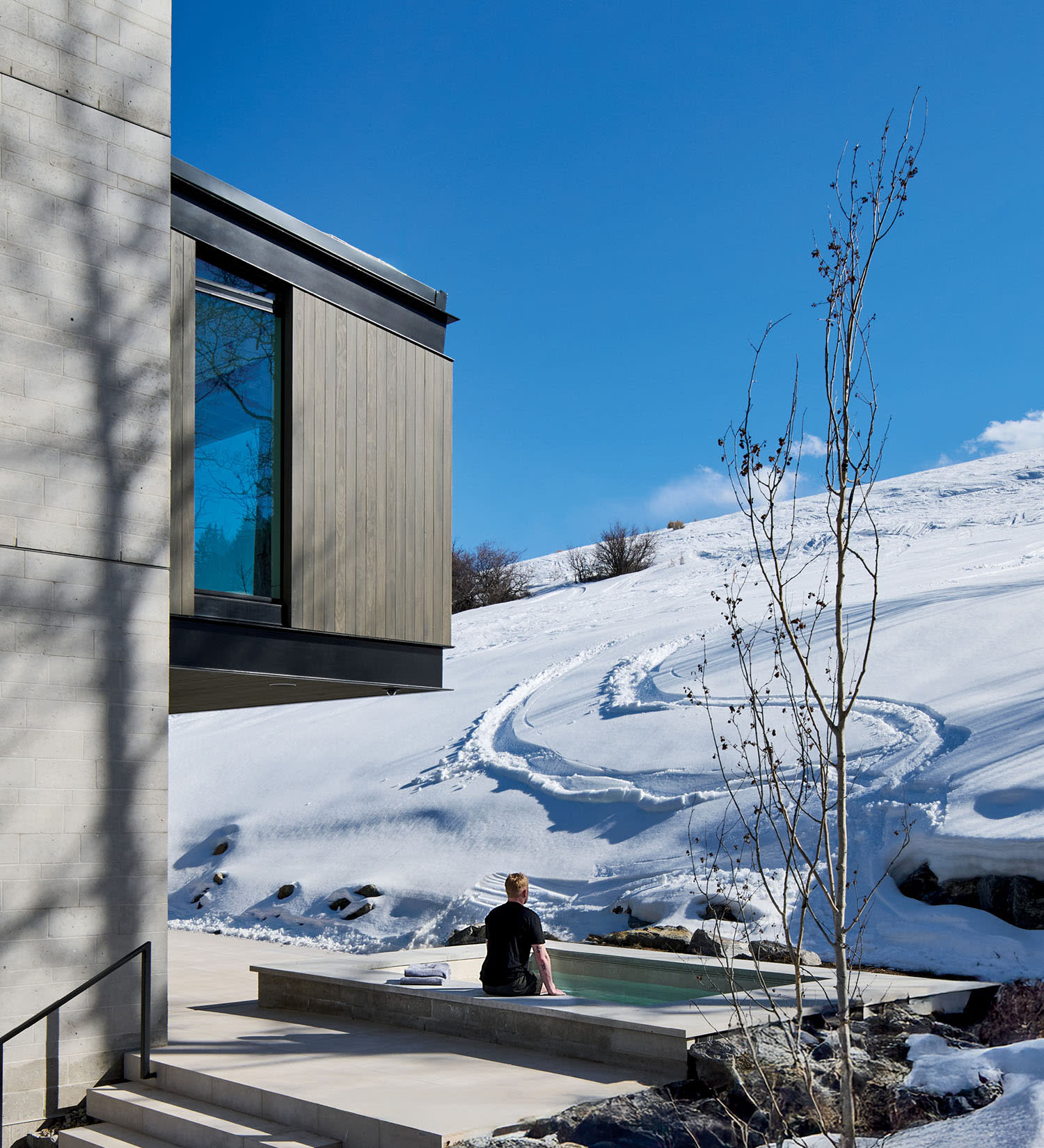
Colorado Pool + Spa Scapes installed the Nespa Tiled Spas hot tub, situated off the main-level outdoor living area. The path to the area’s skiway is visible just beyond.
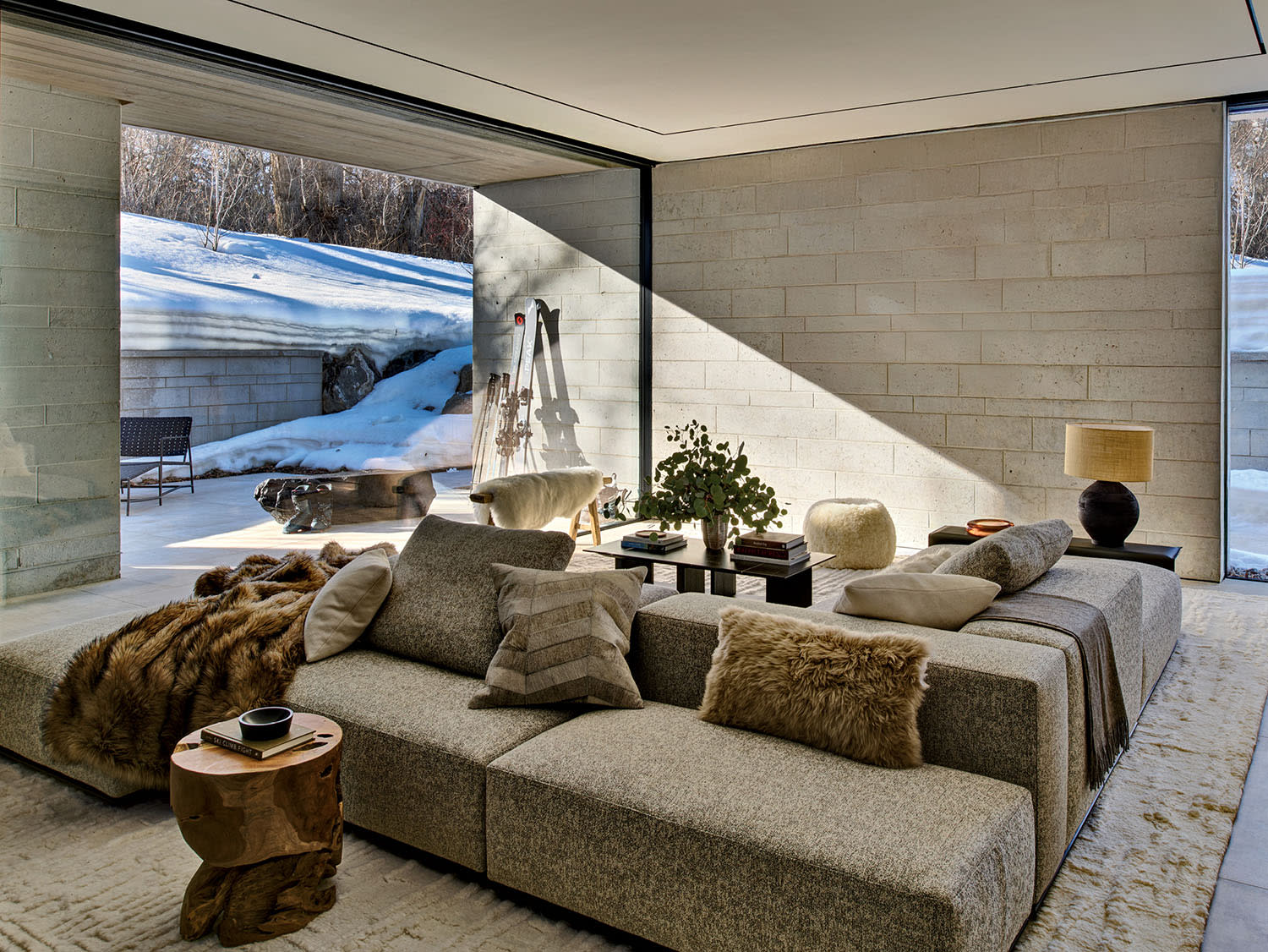
In the lower-level entertaining lounge, the Panoramah! glass wall slides open, allowing ski in, ski out access. The sectional and coffee table are Poliform. An accent wall of limestone, via Halquist Stone, spans from the inside out.
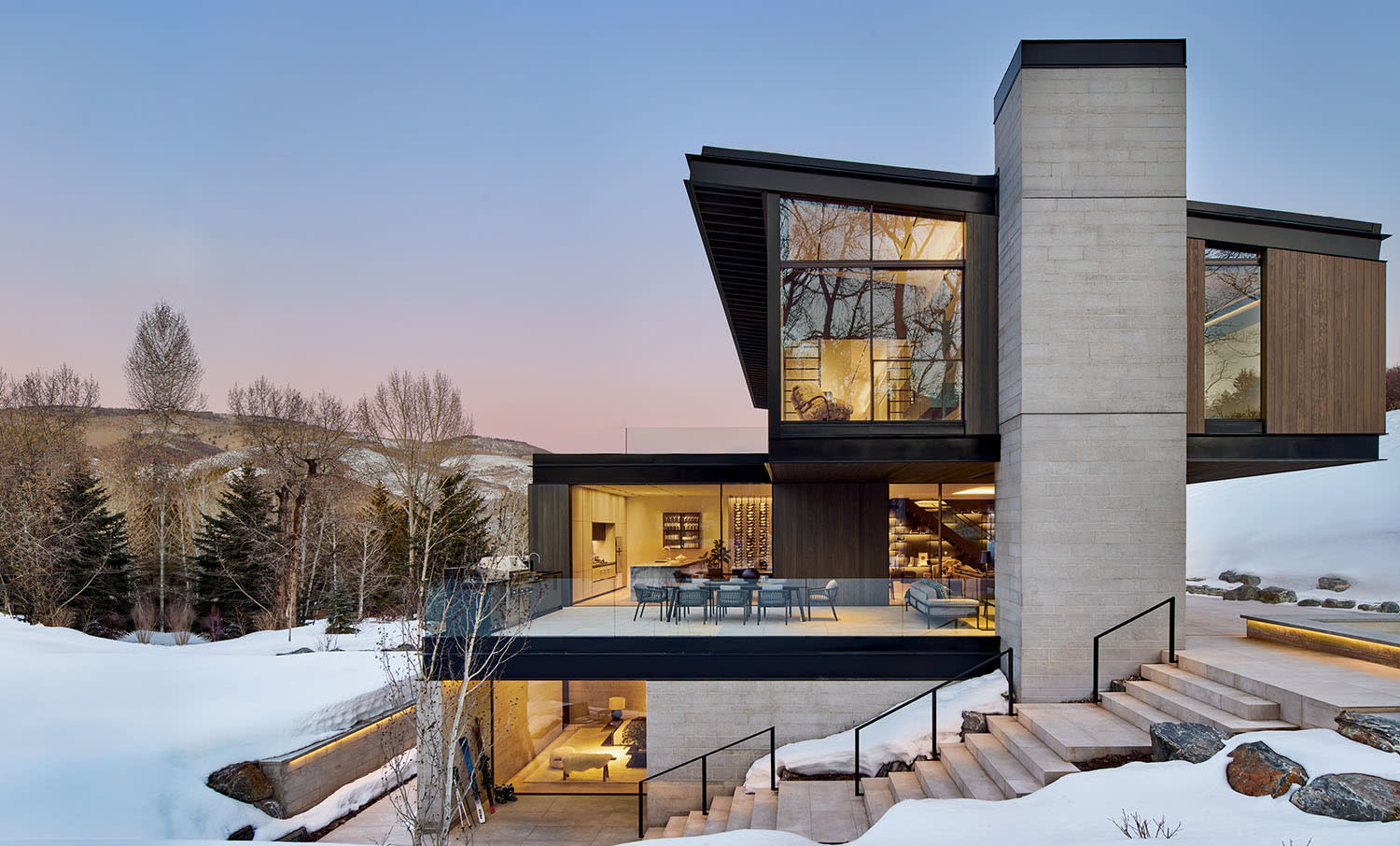
Exteriors of limestone and durable Accoya wood cladding emulate the tones and textures of the mountain setting. The cantilevered top floor is a dramatic gesture balanced by a monolithic chimney that anchors the residence to the ground.
Answering this question in a profound way required more than just integrating spaces like a gym, pool, sauna and spa—though this home does include those fitness and rejuvenation tools, plus an oxygen supplementation system in the owners’ bedroom. Consider how the dwelling’s indoor-outdoor layout inherently promotes an active lifestyle (particularly in the winter, as it enjoys ski in, ski out access). All the interior spaces incorporate wellness-driven design components: They seamlessly flow outdoors to expansive patios or are lined by glass doors and frameless windows, many of which can open, creating a constant connection to the surroundings while drawing in daylight and fresh air. “By using transparency with intention and aligning the ceiling and floor planes, the spaces start to breathe,” Toukoumidis comments. “There’s an ease and clarity that’s felt the moment you move through the home.”
That sense of serenity is further enhanced by interior designer Luca Lanzetta’s understated yet sophisticated Italian furnishings in visually soothing warm neutrals. The materials play off natural surfaces of marble, oak and limestone throughout the residence. Custom lighting is a significant final touch, as the clients own the lighting company Luminii and were intimately involved with the home’s illumination plan, which adapts to circadian rhythms.
The physical and mental benefits of this culmination of features are multifold, notes Toukoumidis—among them, elevated mood, better sleep and stress reduction. The structural beauty of the residence supports the concept of neuroarchitecture as well. On the exterior, three stacked horizontal volumes mimic the natural strata of the Rockies and reflect the landscape’s colors. “The levels shift and stack in response to the site’s natural topography, allowing the house to feel as though it emerges organically from the mountain itself,” Toukoumidis says. This dialogue with the topography is cemented by the work of landscape architect Kathy Aalto, who worked with landscape designer Clint Granros to implement boulder walls and native plantings. “The landscape is intended to be very natural, as if the house was set into the site rather than being a statement,” Aalto comments.
Colorado Pool + Spa Scapes installed the Nespa Tiled Spas hot tub, situated off the main-level outdoor living area. The path to the area’s skiway is visible just beyond.
Lanzetta’s restrained interior palette and use of modern shapes create a cohesive feel, promoting an air of quiet relaxation. Nothing is overtly attention-grabbing; instead, each space is striking due to an emphasis on refined craftsmanship, intentional minimalism and nuanced, textured surfaces. “The use of grays sets a calm tone,” the designer points out, noting his preference of warm, brown-inflected grays versus cooler, blue versions of the hue. See the primary bathroom, awash in a lustrous, finely veined brown-gray marble, “which feels very, very rich but not cold,” he describes. “Overall, the homeowners wanted to maintain a style that’s simple, modern, minimalist and very functional.” These directives neatly align with the residence’s wellness tenets.
For the owners, spending time in a home that is intimately attuned to their needs and converses so directly with its environment offers feel-good factors all around. “The wellness features are so important—we want to be able to still have fun here as we age—but that sense of being within nature even while we’re inside this house is my favorite part,” the husband says. “This is a happy place for us.” And that’s a win for neuroarchitecture: Happiness, after all, is perhaps the most significant indicator of well-being.
Designer Luca Lanzetta selected a Poliform sectional and coffee table for the living area. A wide, floor-to-ceiling Panoramah! window—the home’s largest—looks out to an exterior living space outfitted with Brown Jordan furnishings and a limestone-walled fireplace.