What do interior designers and filmmakers have in common? They know how to create an ambience. For an atmospheric Upper West Side apartment with a romantic sense of nostalgia, sister design duo Joan Michaels and Jayne Michaels drew inspiration from a star-studded cast of postwar aesthetic icons, including Alfred Hitchcock, Julia Child and Gio Ponti, to set a dreamy scene.
“She’s worldly, sophisticated and has traveled everywhere,” Joan says of the homeowner, a longtime client who has owned a collection of midcentury houses (including a Richard Neutra) and admires the golden age of American cinema as much as the modernist architects of the 1950s and 1960s. “It was really a marrying of all the things she loves.” Adds Jayne, “We translated her vision to capture all the details of her enchanting personality.”
The challenge lay in expertly fusing these influences while still preserving the apartment’s prewar charm, including details like cove crown molding, narrow-plank wood floors and single-panel doors. Enter architects Peter Allen and Emily Cohen, who worked in collaboration with the Michaels and general contractor Michael Vella to gut-renovate the space, modernizing HVAC and electrical systems, streamlining the flow of the private spaces, and demolishing an unused chimney to expand the kitchen and add a pantry and laundry station. “She brought a lot of ideas and clear preferences to the table,” says Allen of the discerning homeowner. “We worked closely to bring those ideas to life, all while keeping the space functional and honoring the historic fabric of the building.”
Home Details
Architecture:
Peter Allen and Emily Cohen, Ernst Architects
Interior Design:
Joan Michaels and Jayne Michaels, 2Michaels Design
Home Builder:
Michael Vella, Vella Interiors, Inc.
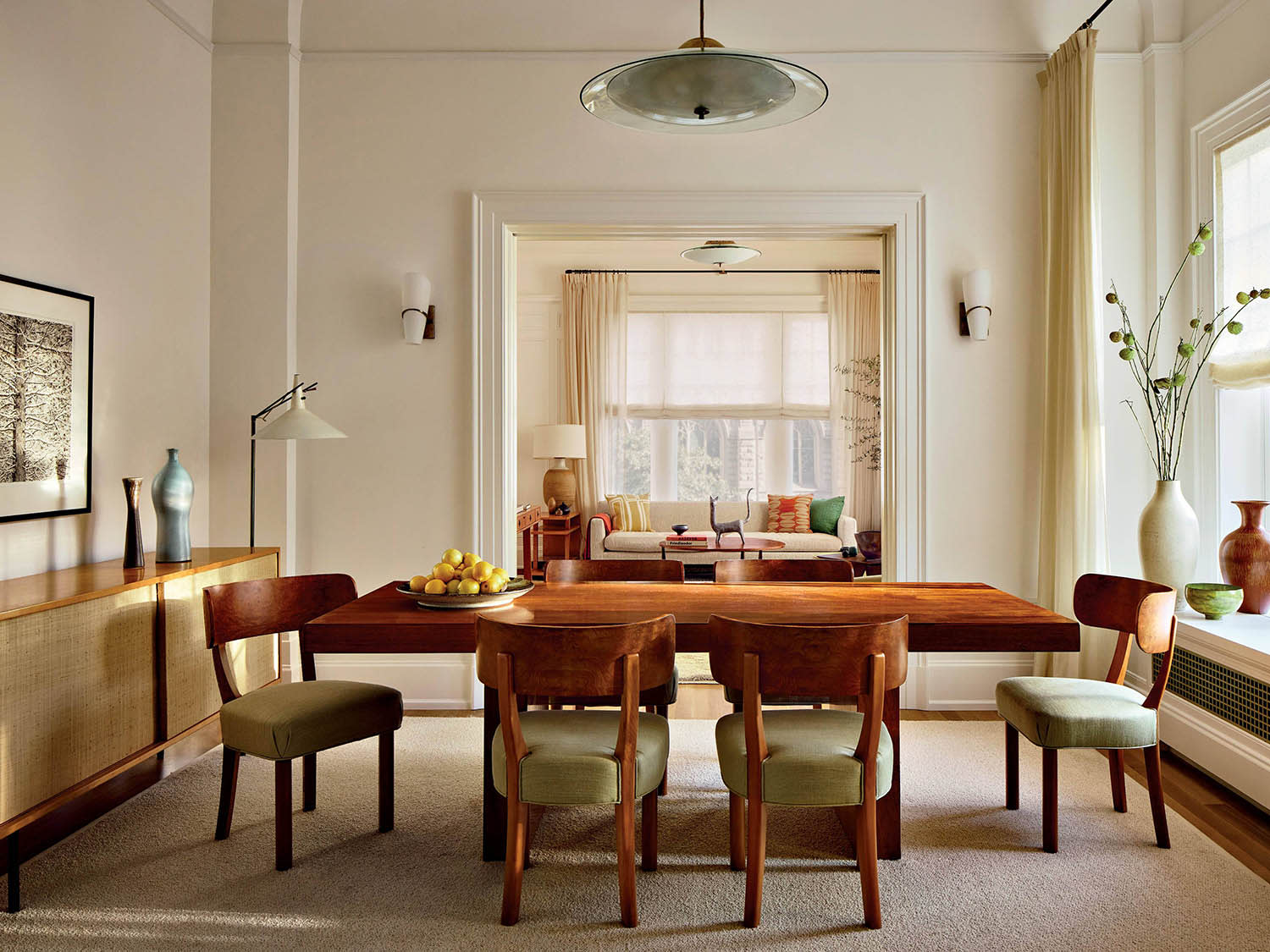
Vintage designs define the dining room, from the chairs and table designed by Axel Einar Hjorth to the Florence Knoll credenza. A Pietro Chiesa chandelier and FontanaArte sconces light the scene.
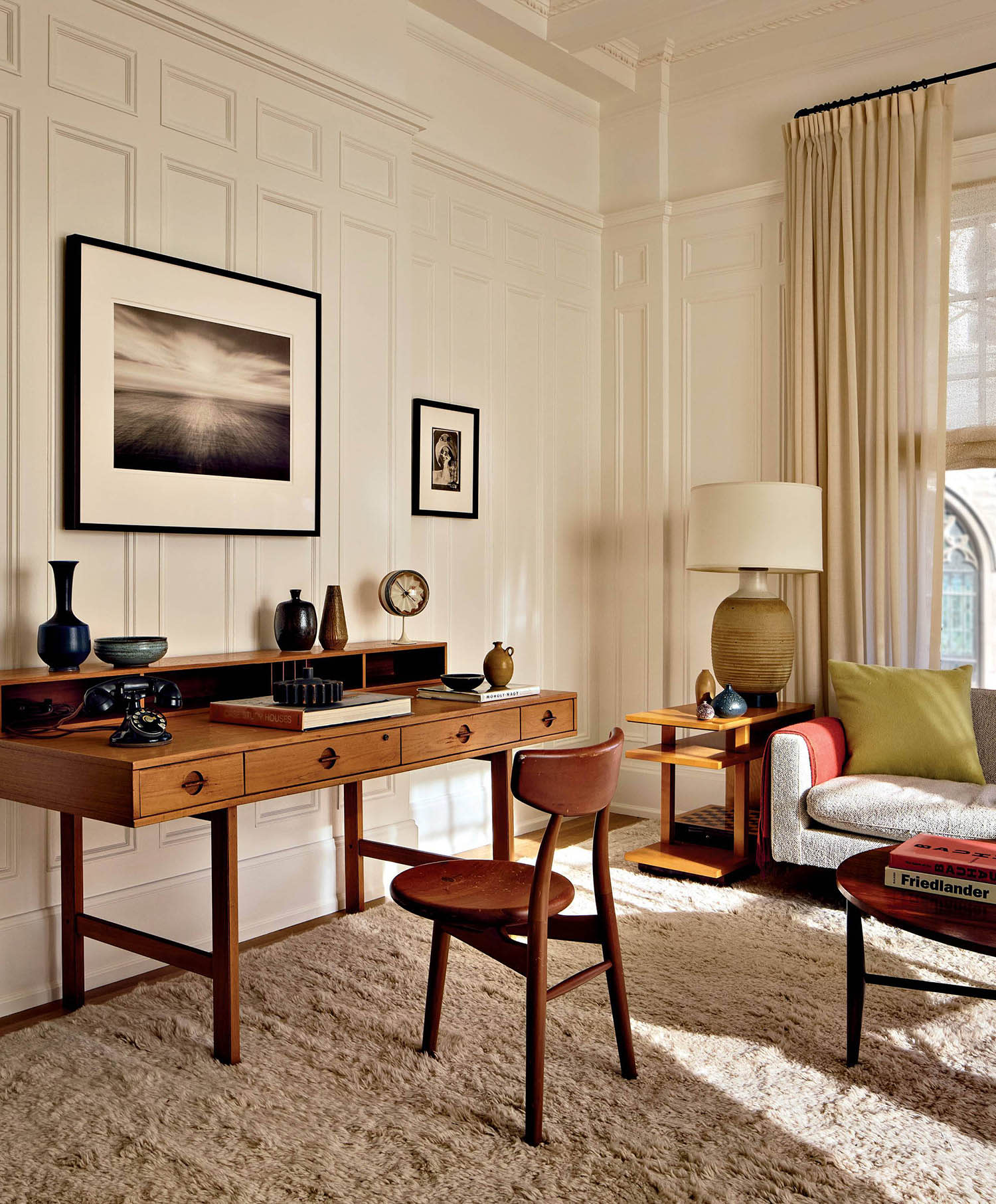
The design team recast existing wood paneling in white paint to maintain the apartment’s period feel while bringing an airier sensibility. The Peter Løvig Nielsen desk is paired with an Espasso chair.
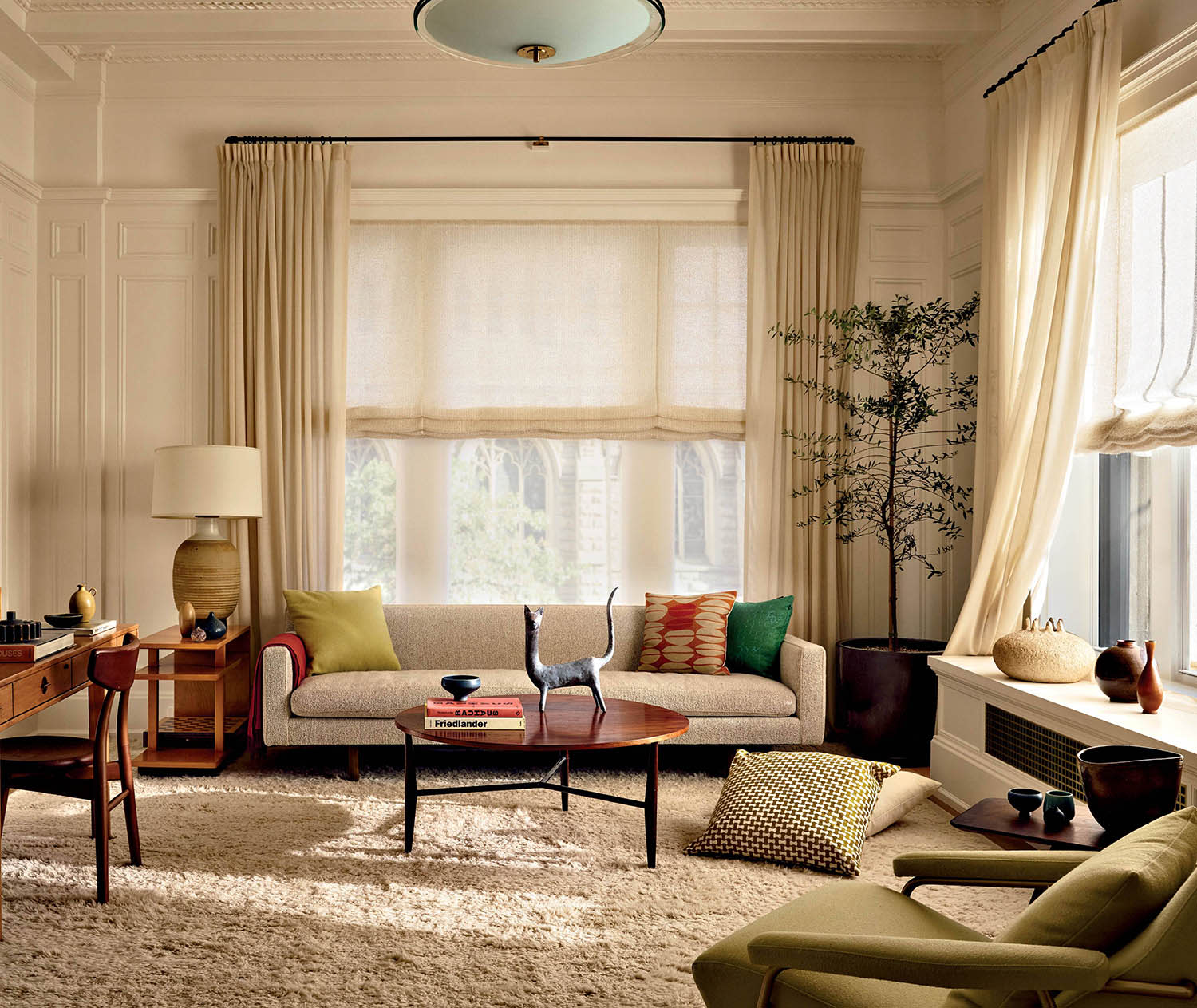
An Edward Wormley sofa, Gio Ponti lounge chair and Kia Carpets rug invite relaxation in the living room. Pottery by Palshus, Berndt Friberg and Gunnar Nylund and a rare cat sculpture by Leza McVey animate the space.
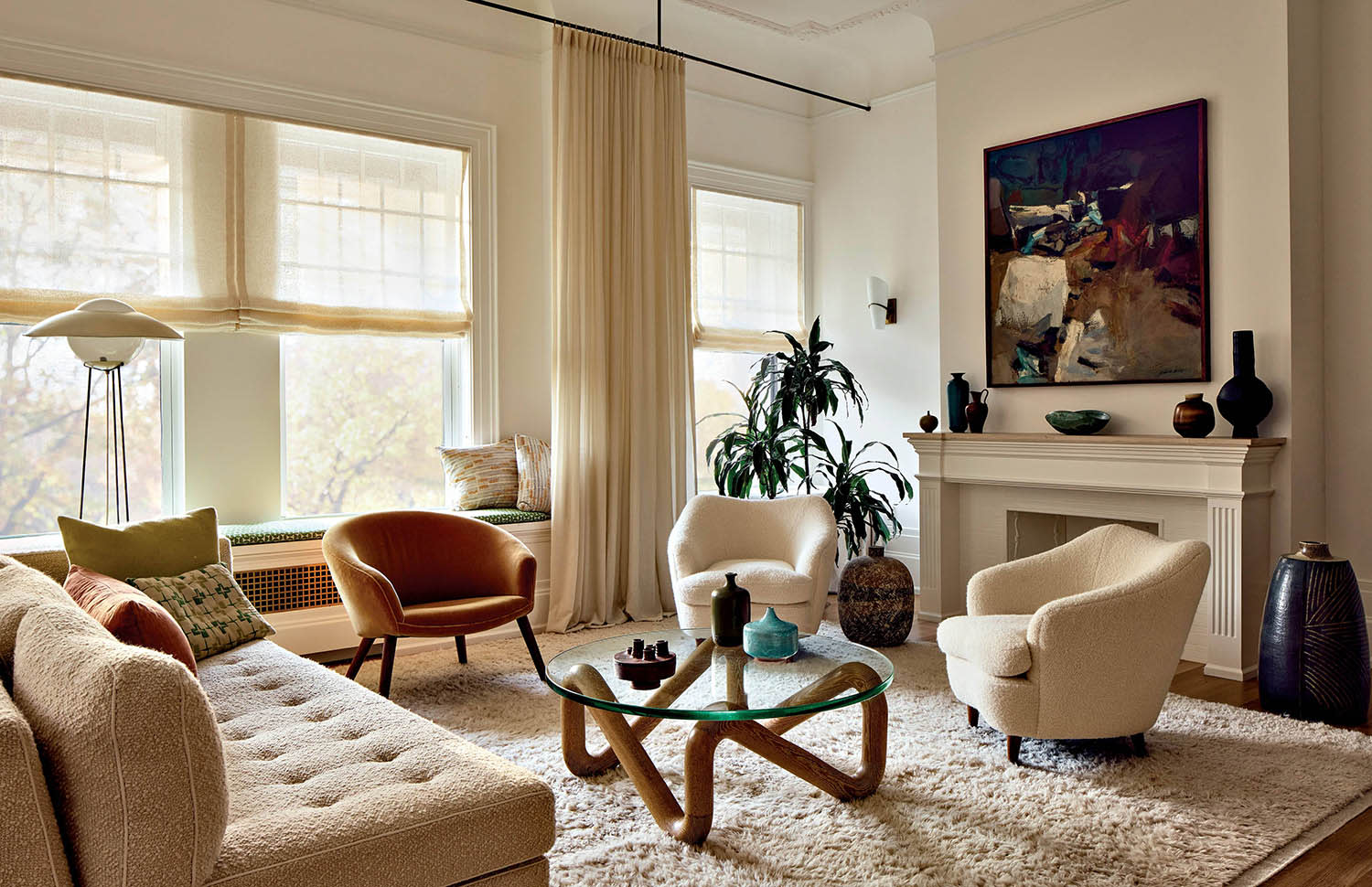
A Paul Frankl coffee table anchors chairs by Gio Ponti (cream) and Nanna Ditzel (amber) in the sitting room. Window treatments of Rogers & Goffigon and Clarence House fabrics create an ethereal mood. The painting is by Alexander Nepote.
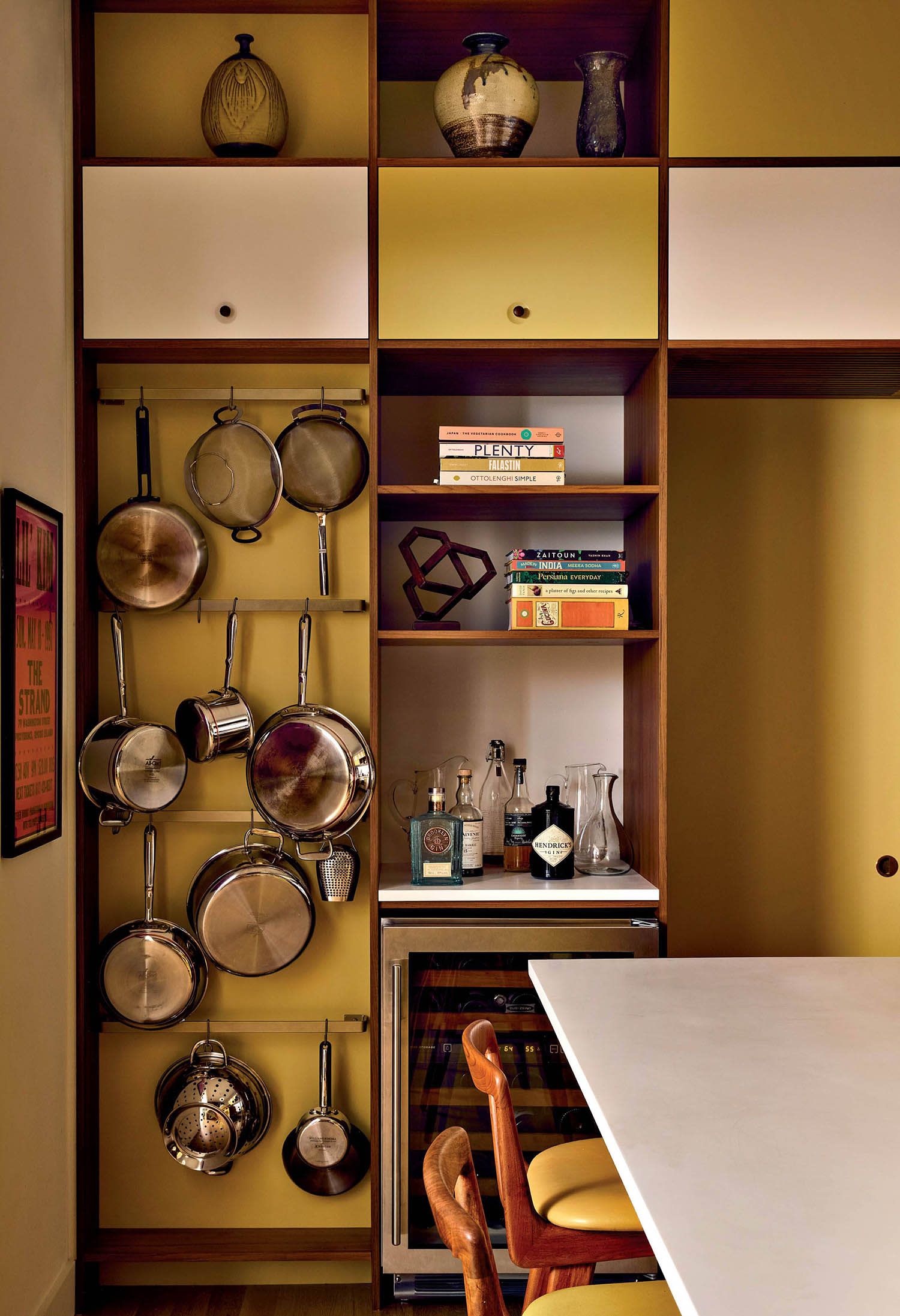
A nook in the kitchen provides storage as well as an entrance to a hidden pantry and laundry area. Vella Interiors crafted the teak cabinetry, which is alternately painted Benjamin Moore’s Simply White and Goldfield.
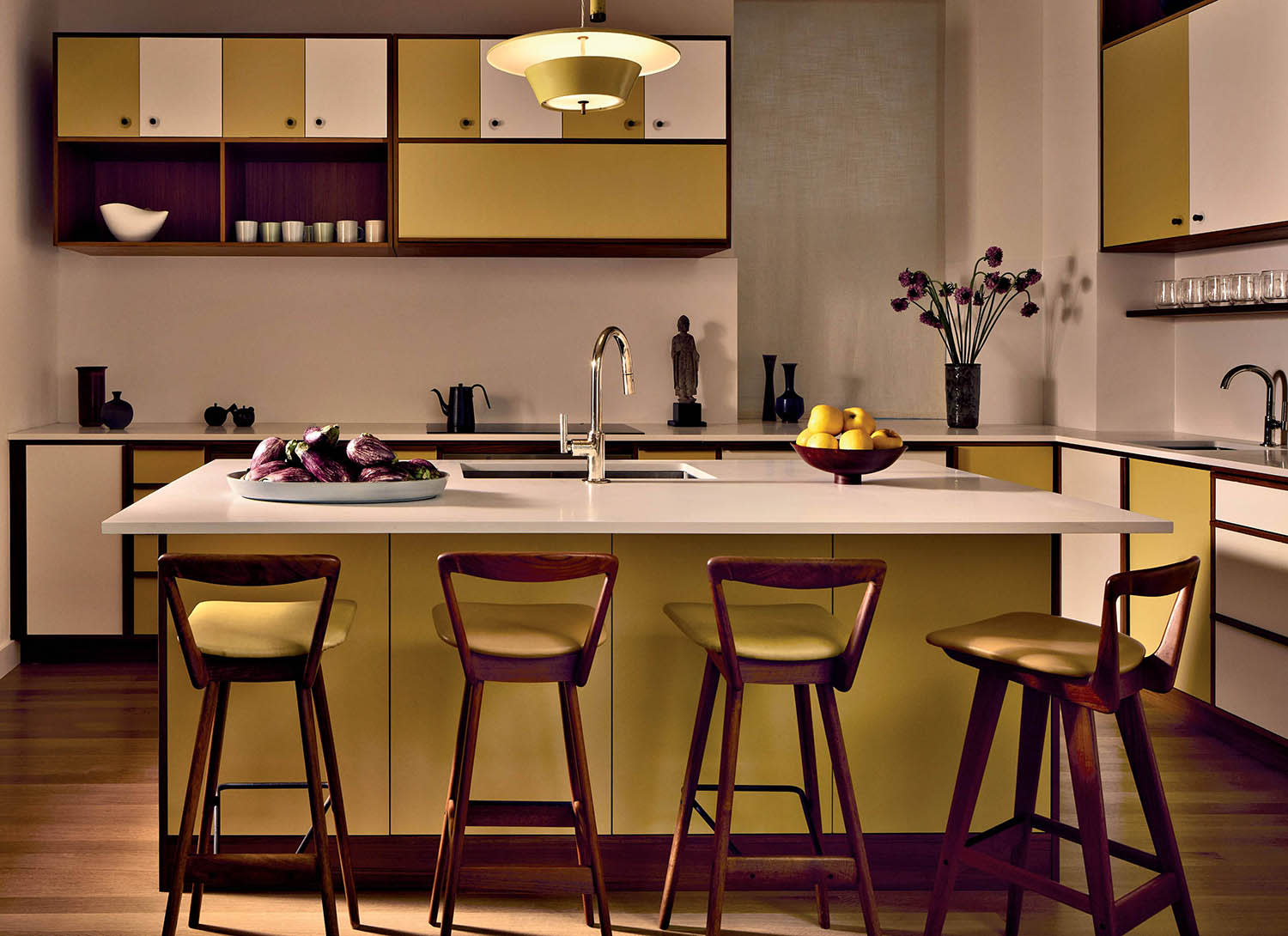
Slim stools by Henry Rosengren Hansen and thin Corian countertops allow the cabinetry’s sunny scheme to dominate the scene. The faucet is Waterworks, and the pendant is by Paavo Tynell.
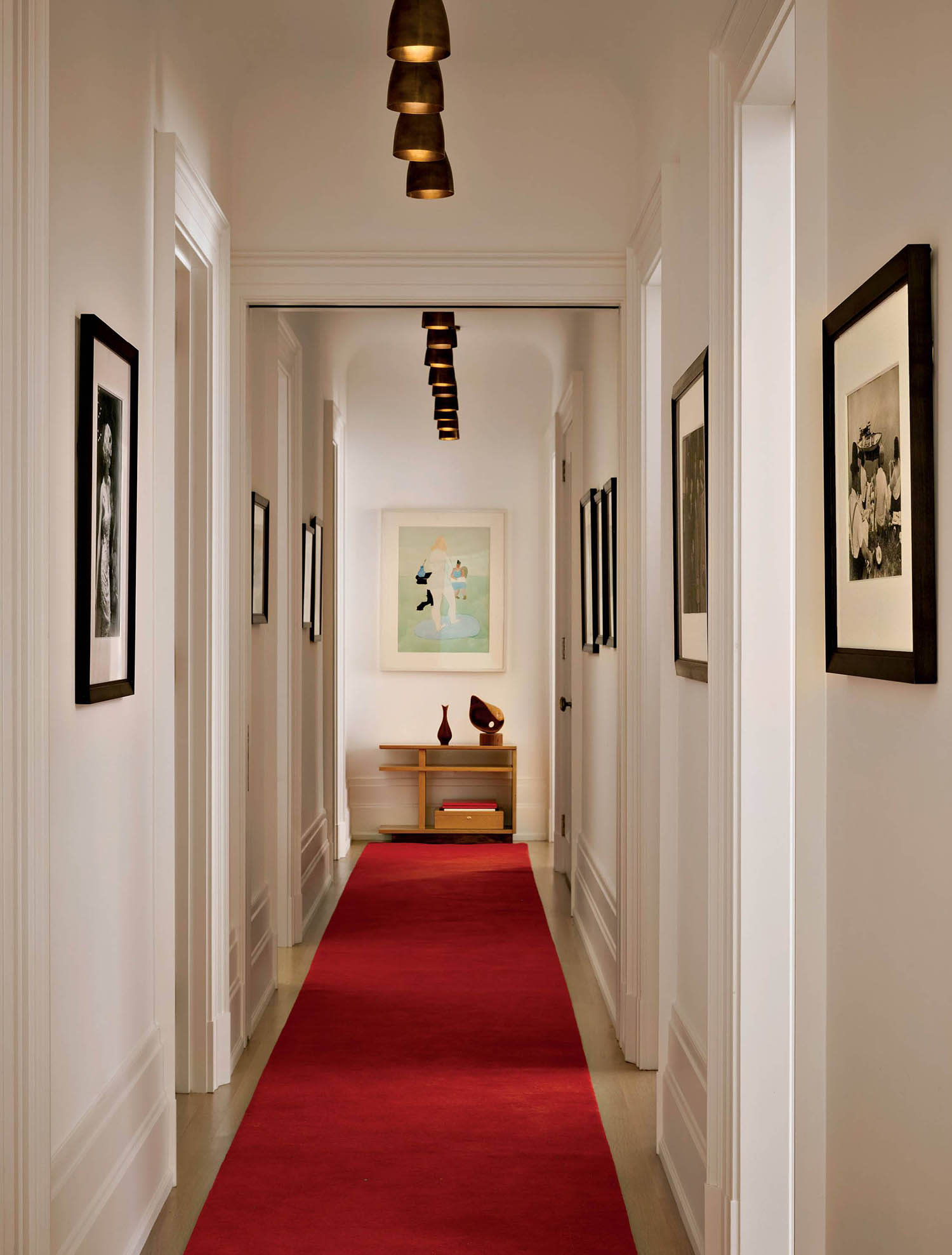
A wool runner by Judy Ross Textiles adds an unexpected color pop in the hallway, as does a Milton Avery work above an Eliel Saarinen accent table. Dotting the ceiling are brass pendants by Apparatus.
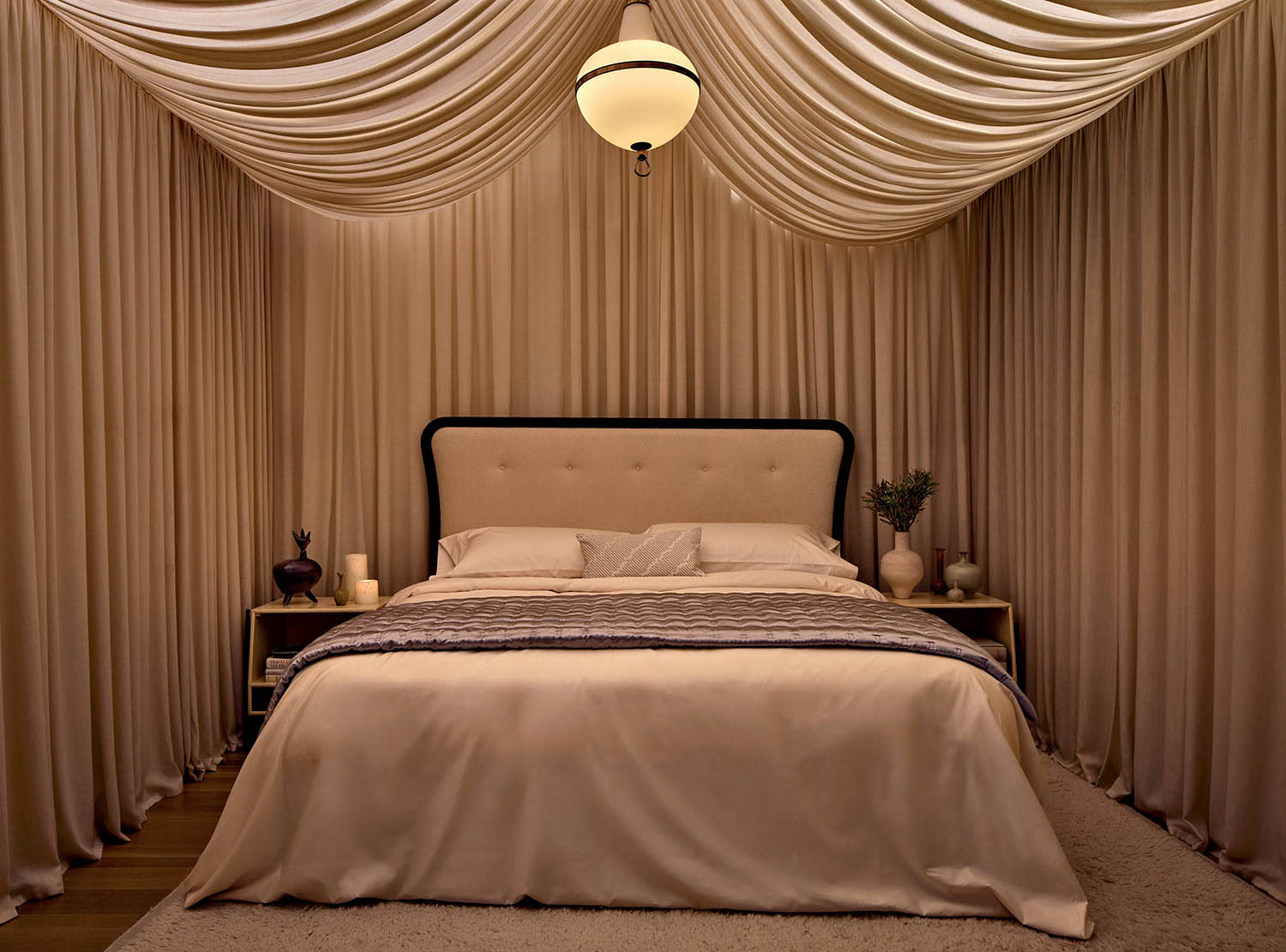
To evoke a Bedouin tent in the bedroom, the designers draped woolen fabric by Dedar along the walls and ceiling, then added a glowing Stilnovo pendant for a jewel box effect. Paul Frankl nightstands frame the custom headboard.
With the renovation complete, the first visual set piece came from the 1945 film Spellbound , a Hitchcockian masterpiece whose surreal dream sequences became the inspiration for the apartment’s soft glow: Frosted sconces glimmer quietly in the sitting room and dining area, a series of bronze pendants recalls the lanterns of a Moroccan tent in a hallway designed to display the homeowner’s collection of art and black-and-white photography, and twinkly lights are woven into the living room’s Roman shades for guaranteed starry nights no matter the weather.
“She is a romantic,” Jayne says. “She adores Bedouin tents and the fantasy of living inside one.” Perhaps nowhere is that sentiment more apparent than in the bedroom, where the designers swagged yards of sheer wool fabric from the ceiling and walls to create a cocooning pavilion that feels at once like a desert mirage and a sumptuous retreat for an Old Hollywood starlet. “That bedroom is a sanctuary for her,” Joan says. “She can draw the curtain and close out the world.”
A similar sense of escape comes into focus in the sitting room. To establish a secret retreat in plain sight, Michaels created a tucked-away window seat (bonus: it hides an old radiator box) and suspended an exposed iron curtain rod fit with diaphanous fabric panels to camouflage the bench without sealing off the room. “She likes to open and close the drapes, and the world disappears,” Joan notes. Here, as elsewhere, casting the room’s design through a midcentury lens proved helpful in translating the style from something literal to a more interesting personal expression, as in the zigzagging base of the Paul Frankl coffee table, which adds a playful note within the monochromatic color scheme.
But if there’s one room that deserves a cinematic spotlight, it’s the kitchen, an expanded volume that invokes Julia Child’s Provençal cook space with its exposed pots and unfussy cabinetry yet also recalls the punchy, graphic 1960s movie title sequences created by Saul Bass and Maurice Binder. “She wanted a midcentury kitchen, and we were trying to figure out how that would look because we didn’t want it to be too sharp of a contrast,” Joan says. After creating a cardboard model, the sisters landed on a cheerful color-blocked treatment with understated Corian countertops and open shelving where the owner could display her collection of Scandinavian pottery. Cue the closing credits.
A nook in the kitchen provides storage as well as an entrance to a hidden pantry and laundry area. Vella Interiors crafted the teak cabinetry, which is alternately painted Benjamin Moore’s Simply White and Goldfield.