Everything We Learned At Palm Beach Design Days
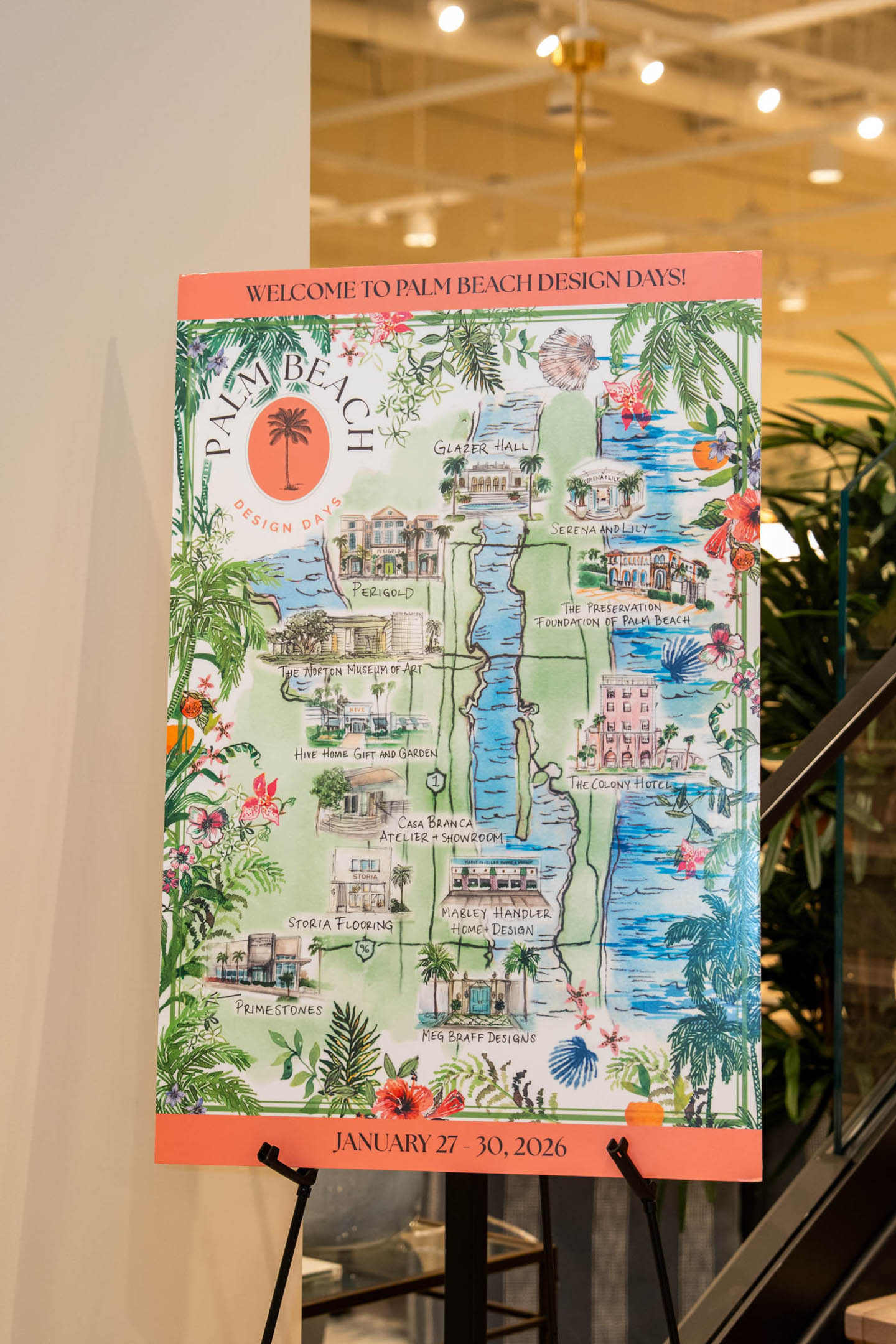
Palm Beach Design Days took place January 27-30, bringing some of the country’s most esteemed industry names to South Florida for insightful panels to impart their wisdom and musings. Below, read the top takeaways we gathered.
Unpacking 4 Impactful Panels From Palm Beach Design Days 2026
From “The Power of the Edit: Styling with Personality, Depth, and Detail”
At Perigold, photographer Carmel Brantley and stylists Ben Reynaert, Emma Bazilian and Mieke ten Have shared their best secrets for nailing a photo-worthy moment.
Aim for asymmetry and imperfection in compositions. “If something is linear and perfect, the eye loses interest,” Bazilian noted. Take advantage of the local vernacular in materials and colors, she recommended, but insert an element that clashes a bit through tones or pattern to inject tension in a space. “Whatever space you’re in, do the opposite,” ten Have added, such as wildflowers in an interior room or ornate silverware on an outdoor table—a move she described as “civilizing the exterior.”
Incorporate any collections naturally in the space. Reynaert recalled displaying one client’s vintage watches on a tray and leaving a stack of another homeowner’s books on a nightstand. The same applies to florals: “There are no peonies in Florida,” ten Have pointed out. “Clip something native, even a weed.” But avoid looking too lived in: No shoes or handbags in spaces like the entry, Bazilian warned. “It looks like a catalog,” she said.
Pay attention to lighting. This determines the feeling of an image and can change the colors in a room, Brantley noted. “Go for the best natural light you can,” she suggested.
Bring two important household tools. Reynaert never attends a shoot without a good pair of scissors, while Brantley admitted she “can’t live without a squeegee” for cleaning windows.
Keep the end result in mind. “My mission is to convey the feeling of being in that space,” ten Have said. What will catch someone’s attention while scrolling Instagram? “The magic of the shoot comes alive when the space reflects who lives there,” Reynaert added. Go with your gut: “You know it when you see it,” ten Have said about nailing the composition. “Pay attention to eye sensitivity. We are much more perceptive than we realize.”

From “Anatomy of a Great Room: A Master Class in Inspiration”
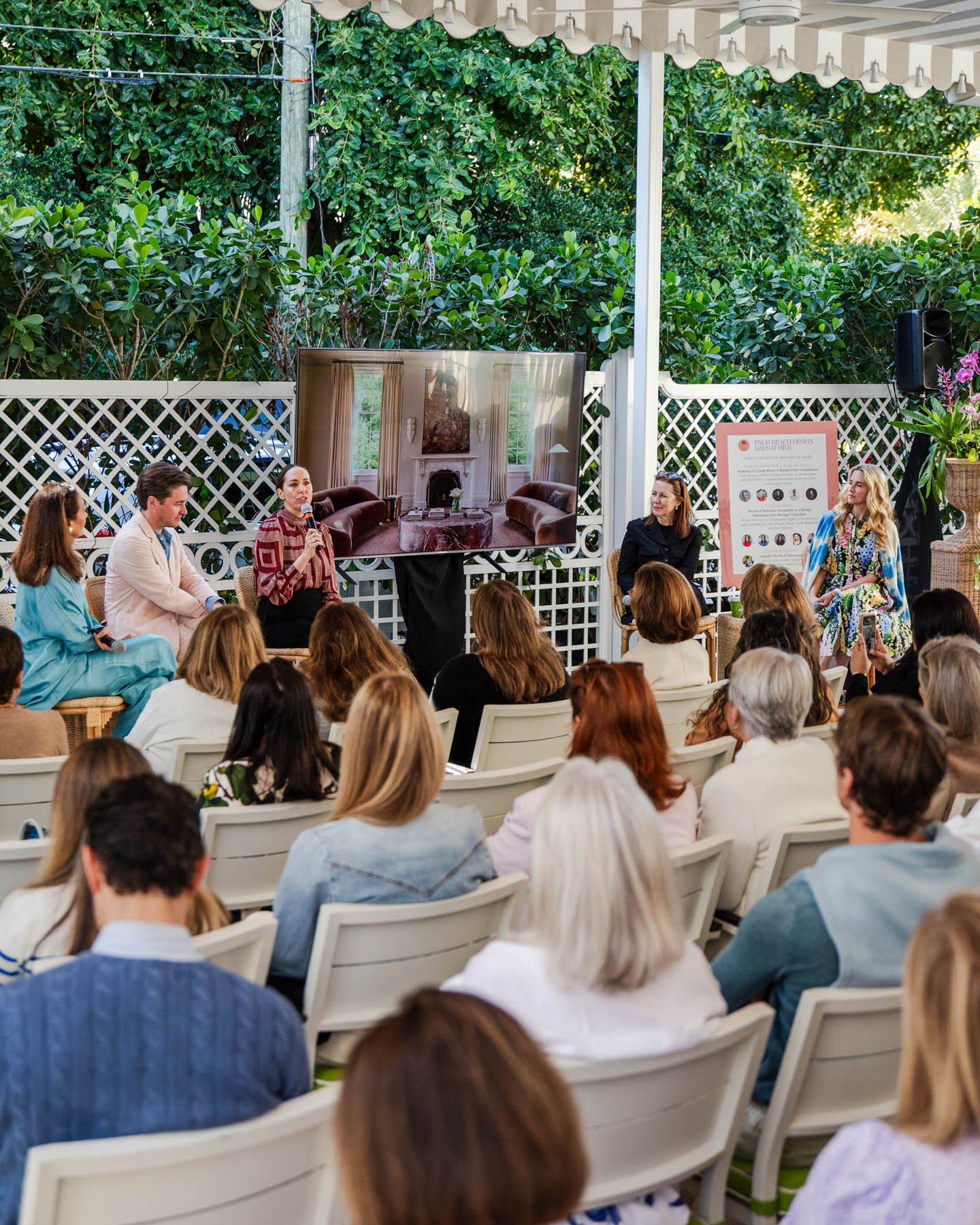
What makes a space a hit? Will Fisher and Charlotte Freemantle of Jamb joined designers Brian McCarthy and Suzanne Tucker to ponder the question at HIVE Home, Gift & Garden.
Select a focal point. “Every room has an anchor,” McCarthy said, noting a console, artwork or a rug. “A fireplace mantle can define a room.” Larger pieces such as sofas and mirrors typically catch attention first, Tucker explained. “Your eye looks there, then travels around the room,” she said. Elements like the fireplace, floors and moldings should be determined first, Fisher noted. “Create a hit list of the top features to call out,” McCarthy added. “The first step will lead you to the end.”
Pay attention to scale. “If something feels off, it’s likely related to proportion,” Tucker warned. “Think of where your eyes go, and move them from anything unsightly.” For instance, if you can’t raise the 8-foot ceilings, raise the doorways instead.
Look at a space from every angle. McCarthy recommended positioning yourself in every corner. “It inspires the next room and the throughline,” he explained. “You can’t have parts of a room you’re not drawn to.” In particular, follow the light: What will it accent in the room? “You will sense it, even if you don’t notice it,” Tucker said.
Find inspiration. McCarthy admires Henri Manuel’s Parisian residence and recommends touring house museums as well as the Metropolitan Museum of Art, the Getty Museum and London’s Sir John Soane’s Museum. Fisher spoke about touring England’s Rousham House, a 17th-century property by William Kent with incredible greens, and Freemantle suggested observing the work of Cathy Kincaid. Tucker suggested enlisting in membership to the Institute of Classical Architecture and Art.
Trust your intuition. All emphasized: You can’t codify what makes a great room. “Decorating is an art, not a science,” McCarthy summed.
From “Bold Style: Go Big or Go Home!”
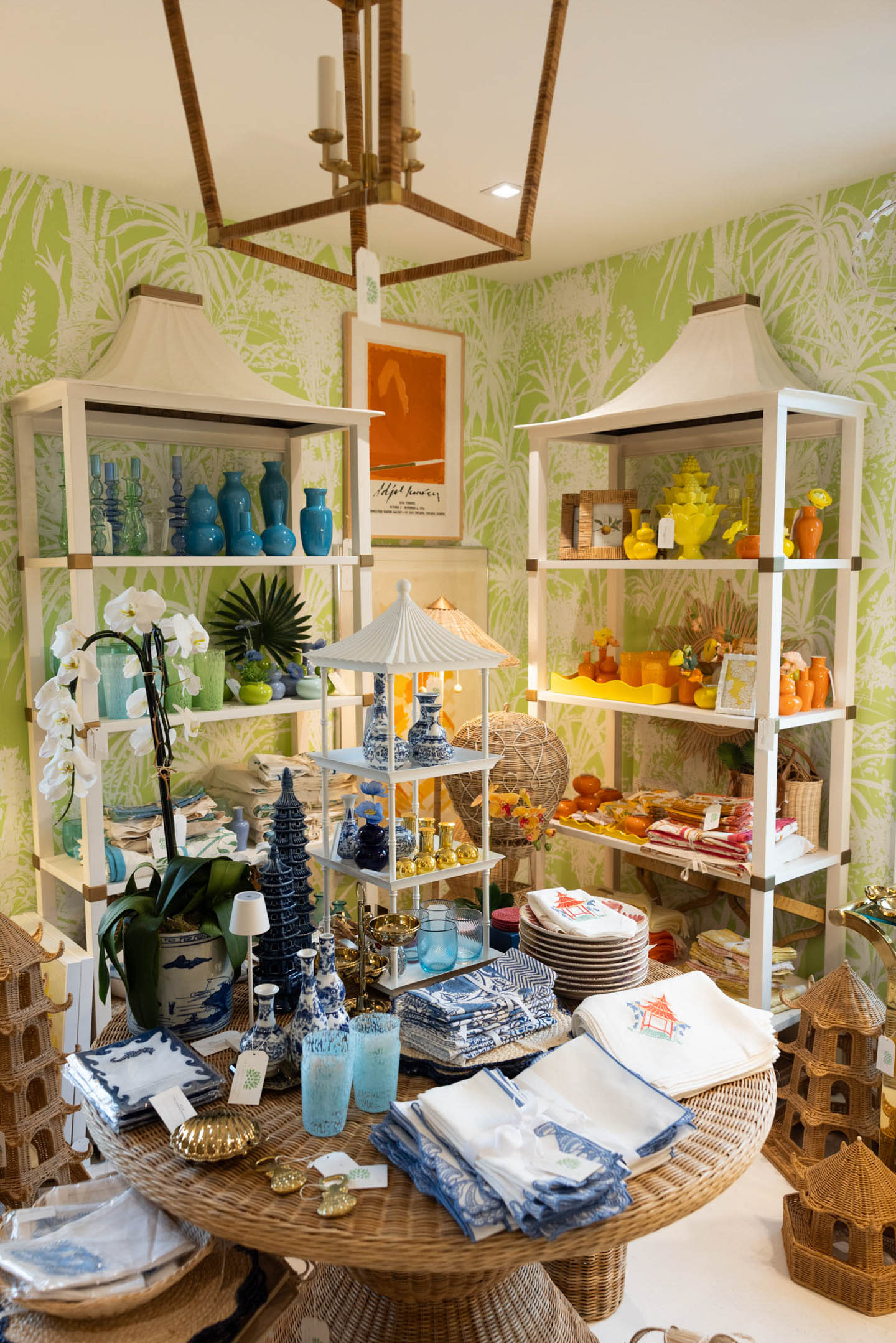
At her showroom, Meg Braff sat with Miles Red and Matthew Carter to discuss creating interiors that are anything but mild.
Don’t be afraid of paint colors. “It’s the easiest thing to change,” Carter said. Added Braff: “Greens and blues are neutrals.” In fact, she used green doors and windows as a jumping-off point in her home, threading the tones throughout—including peacock blue for the walls in her breakfast nook and pillows in her living room.
Go big in small spaces. A powder room is an ideal place for a wow factor, Redd said. “You’re in there for 30 seconds and want to feel glam, so you have more license to be zanier,” he pointed out. “They should spark joy and make you gasp.” Braff views modest rooms as ironic opportunities for displaying large-scale pieces such as a big console or an oversize lantern.
Layer—then edit. For instance, Braff noted she offset a patterned wallpaper in her home with “a lot of ivory.” Aim for a collected look, such as mixing lighting, Carter recommended.
Overcome architectural challenges with bold decisions. Distract the eye with elements such as wallpaper, trim and decorative doors, Redd suggested. “Start with fabric,” Carter said, while Braff recommended large-scale art.
Copy the masters. Carter admires the designs of Sister Parish; Braff turns to books featuring the work of David Hicks and Billy Baldwin.
From “Bright Lights, Big City”
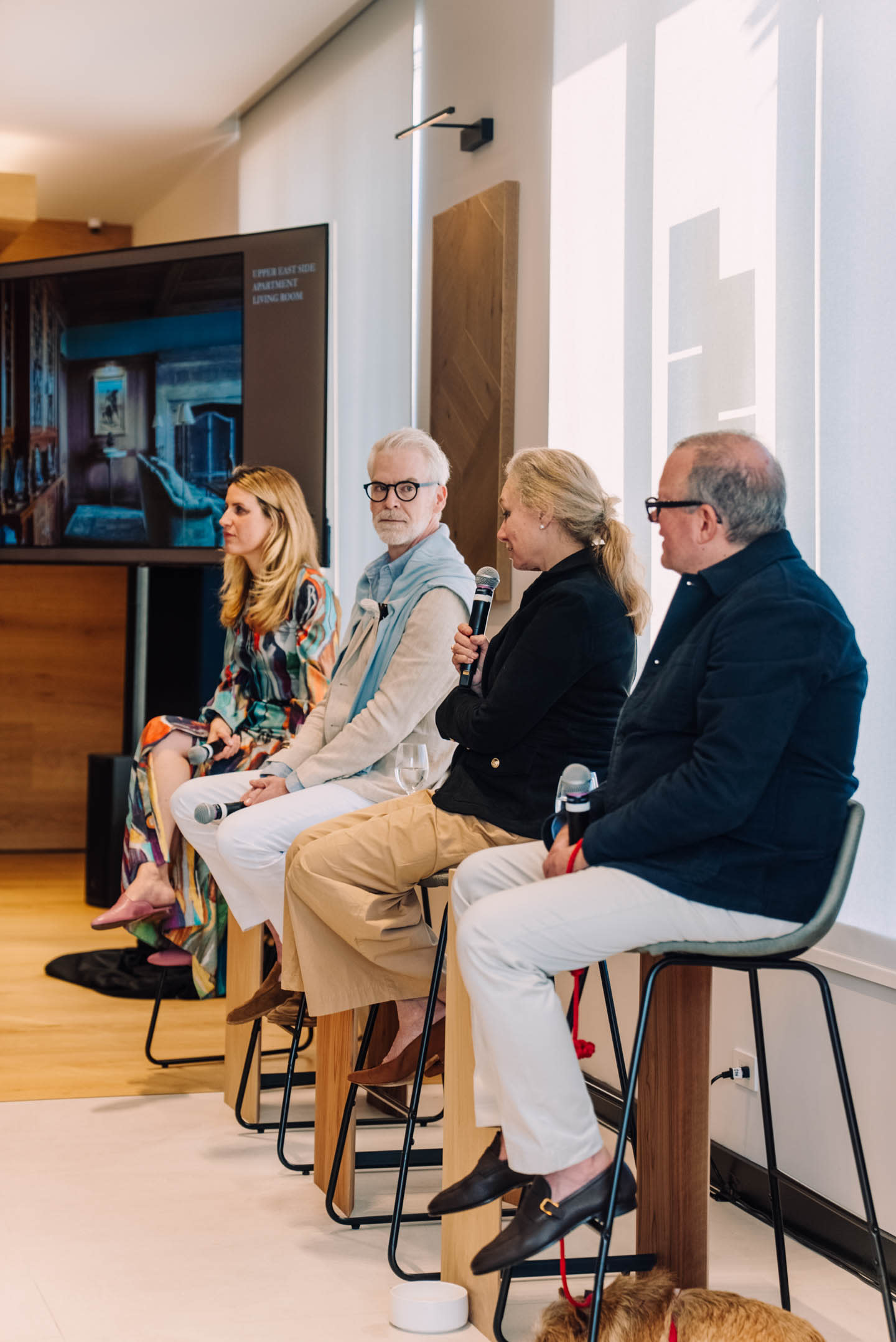
Traveling from New York to Storia Flooring, designers Alex Papachristidis and Jesse Carrier along with architect Anne Fairfax spoke about the various Manhattan interiors each has crafted—and what makes for a luxurious Big Apple interior.
Customized finishes. For Papachristidis, who referred to Versailles as his “mothership,” New York City decorating often entails exquisite elements such as magnificent hand-painted wallpaper, contemporary European furniture and blue-chip art.
Classical architecture coupled with elegant materials, particularly richly burnished wood. This pairing characterizes Fairfax’s work, whether it be the magnificent private library overlooking Central Park she discussed or the spacious townhouse she designed for actress Liv Tyler.
Highly photogenic interiors. Unforgettable highlights of Carrier’s portfolio included an Upper East Side dining room appointed with Chinese wallpaper, antique furniture and a spring green-lacquered ceiling.
The biggest takeaway? Design is serious business in the city that never sleeps.