It’s not an uncommon Manhattan real estate refrain. Proud old town house gets chopped up, added onto and otherwise bastardized over the years to meet the needs of a city in a constant state of evolution—until someone comes along with the wherewithal to love it back to life. For the owner of this particular 1840s Greek Revival, meeting architect John B. Murray at a book fair was the key to reloading the past grandeur of his new abode. “This was an opportunity to recreate a state-of-the-art contemporary home while staying true to its 19th-century feel,” says Murray. “That was what really intrigued the homeowner—the notion that the architecture could be brought back with a sensibility toward 21st-century living.”
Crucial to the client’s dreams for coaxing the dilapidated multifamily back to a stately private residence was injecting a modern sensibility in terms of brightness. “He made it very clear that he treasured natural light and wanted to look for any and all opportunities to enhance it,” recalls the architect, who collaborated closely with colleague Tim Middleton on the renovation. Fortunately, an unusual south-facing, double-lot garden afforded ample opportunity to rework the home’s rear fenestration for maximum illumination. Floor-to-ceiling sliding doors and windows now span the first and second stories, sun-drenching the interiors while drawing in views of a verdant urban oasis. Indoors, a series of skylights fit with discrete motorized blackout shades—notably, a central pane notched within the living room coffers and another in the primary bedroom—add impactful layers of diffuse sunshine from overhead, and new mahogany weight-and-chain windows throughout draw the eye outside and to the light.
Home Details
Architecture:
John B. Murray and Tim Middleton, John B. Murray Architect
Interior Design:
Michelle R. Smith, Studio MRS, LLC
Home Builder:
Mark Dobbin, Highline Construction Group
Gutting the unsalvageable interiors and composing a custom program for the residence gave Murray the chance to build back through a modern lens in other ways, too. Take the garden level, whose floor was lowered for additional ceiling height before being recast as a charming kitchen and dining room fit with rustic wood beams, a cobalt-blue range and a cozy, woodburning fireplace. Or the graceful oval stairwell the architect finessed in lieu of prerequisite scissor stairs despite the building’s width constraints. After negotiating with the Landmarks Preservation Commission, he even finagled a vertical addition hidden from street view to accommodate a penthouse home office. The project proved a highly complex transformation—one whose success Murray credits to the meticulous execution of general contractor Mark Dobbin and team, as well as designer Michelle R. Smith’s vivid vision for the interiors.
“I had a three-word thesis: Italian Yacht Cathedral,” shares Smith of her inspiration. “So, polished burl woods and ornately carved pieces next to soft items upholstered in Loro Piana stripes. If it didn’t fit the mantra, it wouldn’t work.” This connective design tissue carries effortlessly across the public and private domains (see: the burl-wood bed frame in the primary that amicably converses with its coffee bar counterpart in the dining area). The resulting assembly—led by Smith’s refined, antiques-forward approach—walks the tightrope of au courant yet appropriate for the age of the house, while eschewing any prescriptive time stamps. “I wanted the design to feel now , not pretending to be from a period it is not,” she notes.
From a lifestyle standpoint, the client had a premier request, and perhaps an unsurprising one given his meet-cute with Murray: that every space have two-to-three comfortable spots to tuck in with a good book. Smith responded in kind, outfitting rooms with deep armchairs, plush sofas and kick-up-your-feet ottomans wrapped in fabrics chosen to patinate with pride. “We used a lot of silk velvets in this house. I told the client they become more beautiful with wear and imagined that process would take a few years, but I think they were worn in by month three,” the designer recollects. “Many things make this project special, but what is most unique is the client’s appetite for revision; for moving things around, using every room and re-evaluating.” It’s a fitting modus operandi for a storied New York home with a long lineage of reinvention.
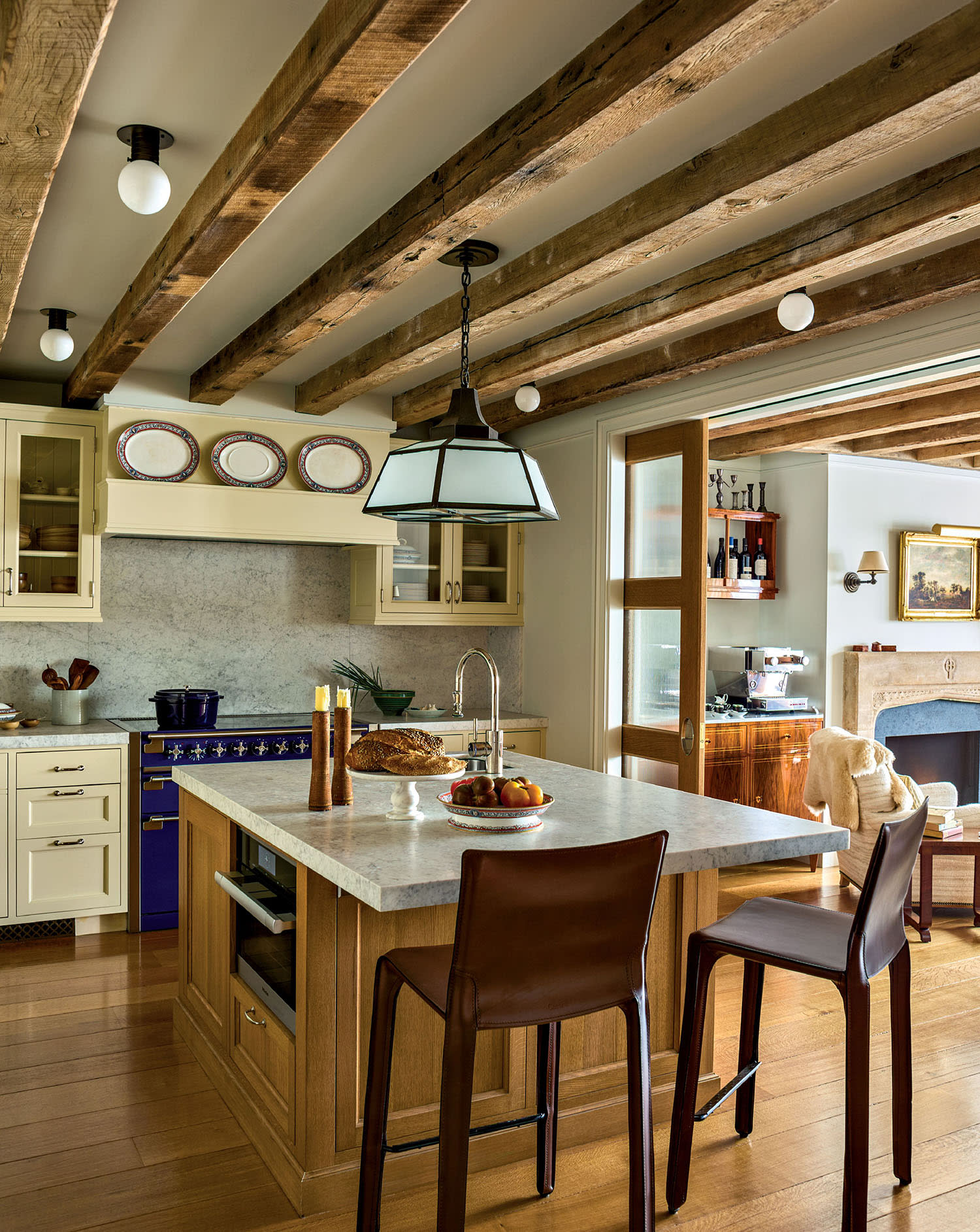
The cozy kitchen includes an AGA range, Miele steam oven and Waterworks faucet. Cassina stools pull up to an island topped with polished Calacatta Gold countertops from BAS Stone. Remains flush mounts and a Charles Edwards pendant provide lighting.
Tour The Home:
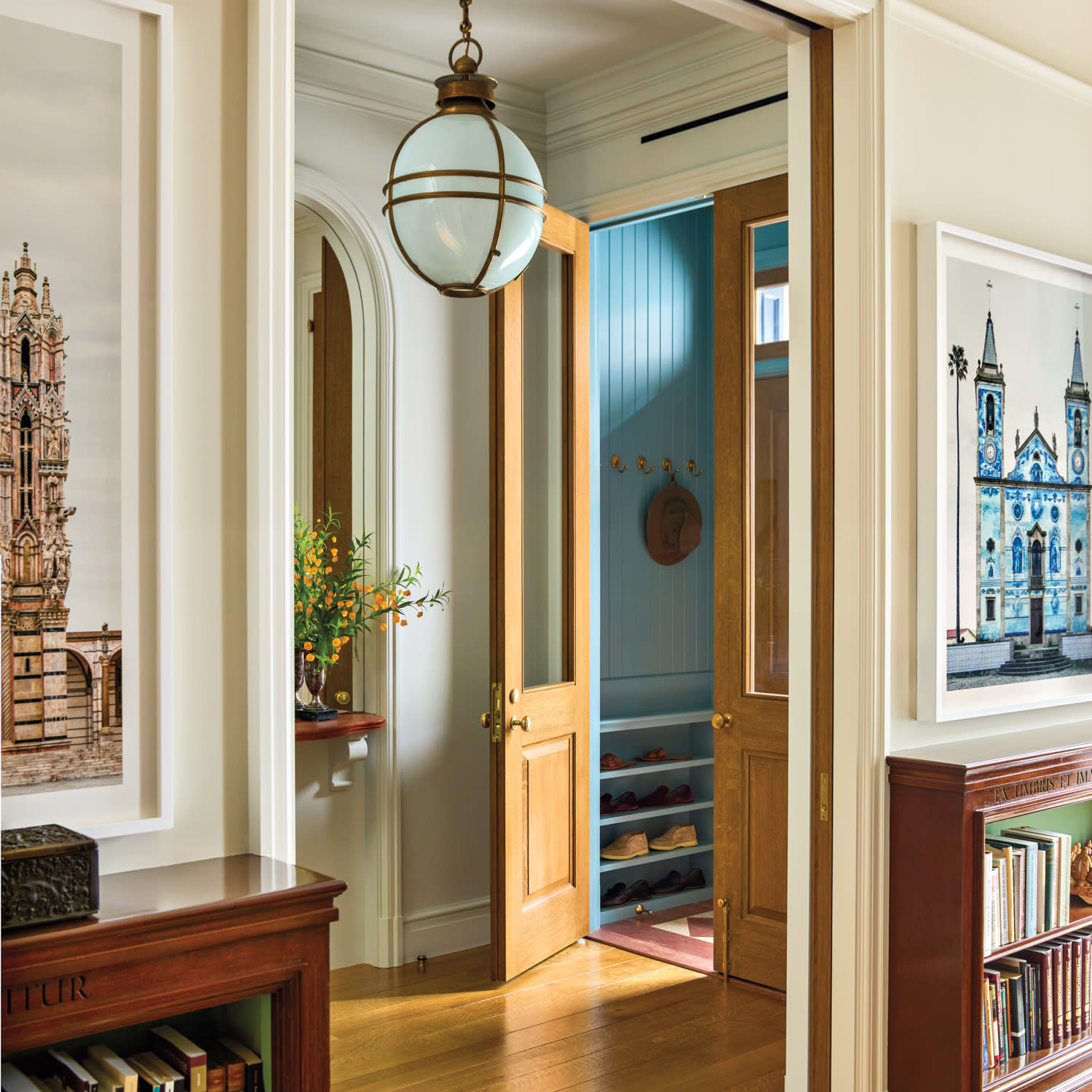
A Jamb pendant illuminates the stair hall off the entry vestibule. The adjoining library’s mahogany bookshelves fabricated by Minzner & Co are inscribed with meaningful quotes.
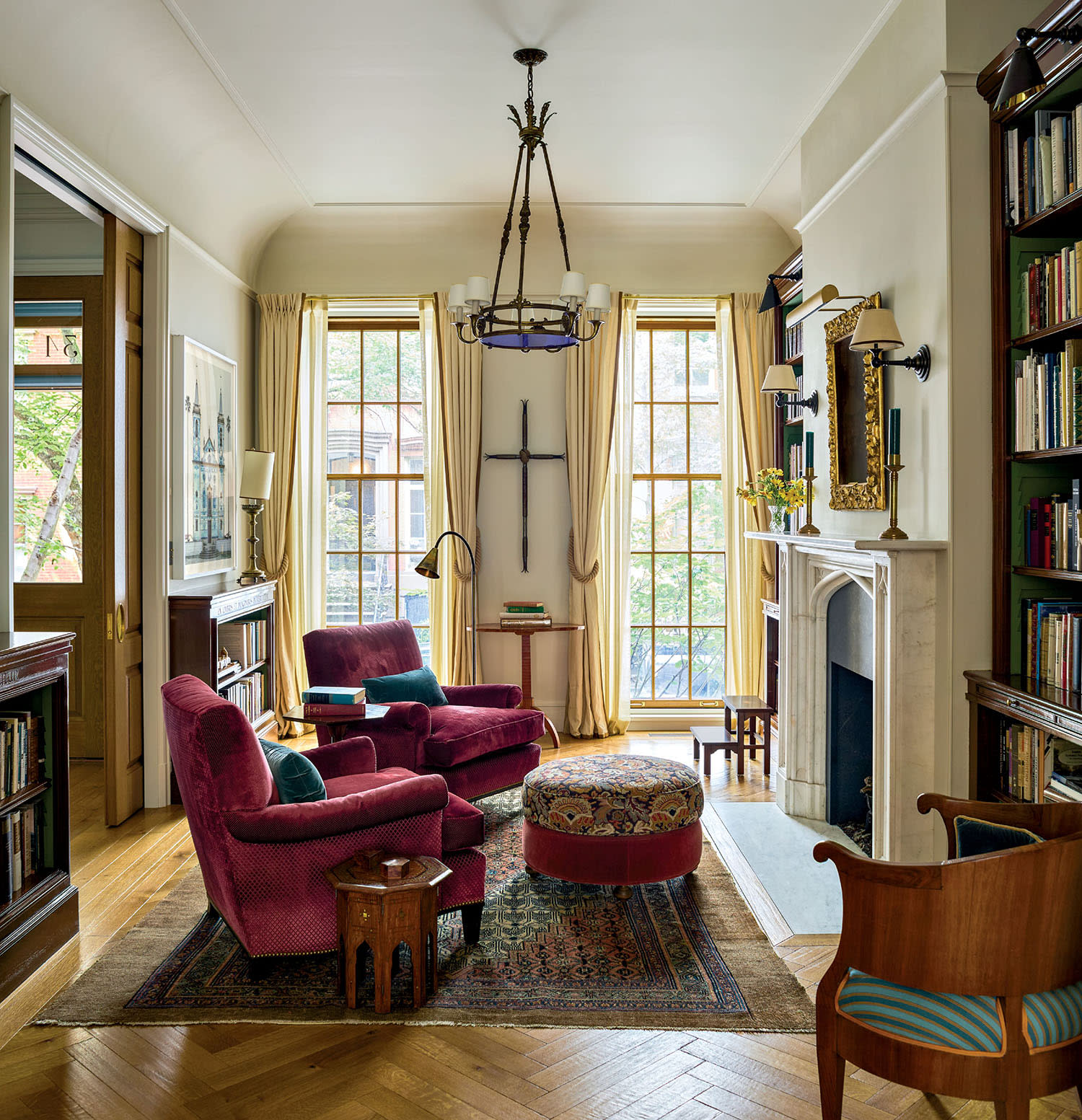
Chairs by Jonas upholstered in a Chelsea Textiles velvet join an ottoman wearing Watts fabric around a gothic mantel from Ryan & Smith in the library. The chandelier is vintage from Remains. The Norman Campbell cross was purchased at Magen H.
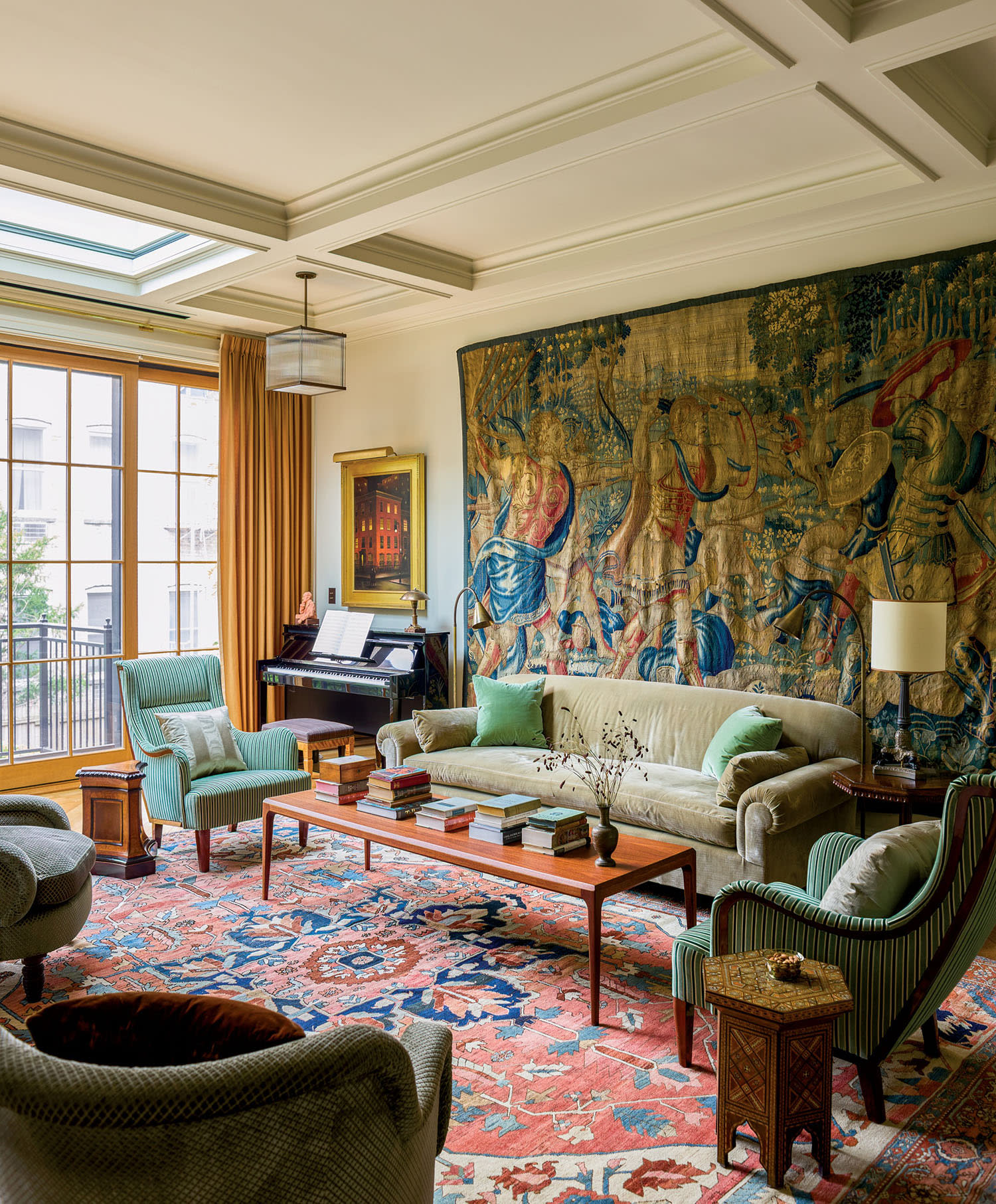
A 16th-century Flemish tapestry from Gerald Bland crowns the living room, where a sofa and chairs by Jonas sport Janet Yonaty and Loro Piana velvets, respectively. Architect John B. Murray notched a skylight, motorized shades and a projection screen within the ceiling coffers.
The cozy kitchen includes an AGA range, Miele steam oven and Waterworks faucet. Cassina stools pull up to an island topped with polished Calacatta Gold countertops from BAS Stone. Remains flush mounts and a Charles Edwards pendant provide lighting.
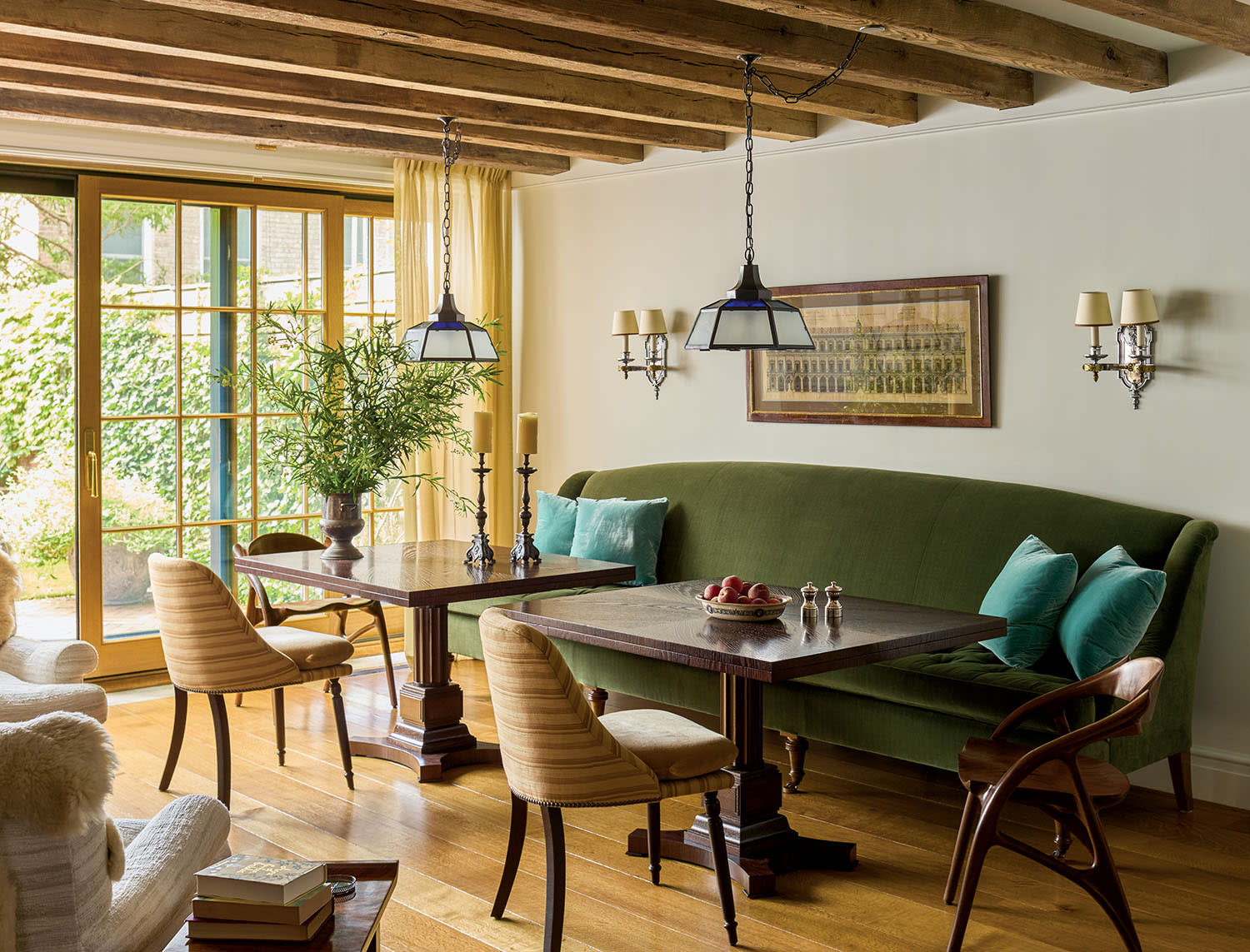
To accommodate everyday intimacy as well as entertaining at scale, Michelle R. Smith designed two dining tables with removable leaves, which were fabricated by Iliad. The end chairs are by Erickson Woodworking and the custom dining chairs are covered with a Rose Tarlow Melrose House fabric.
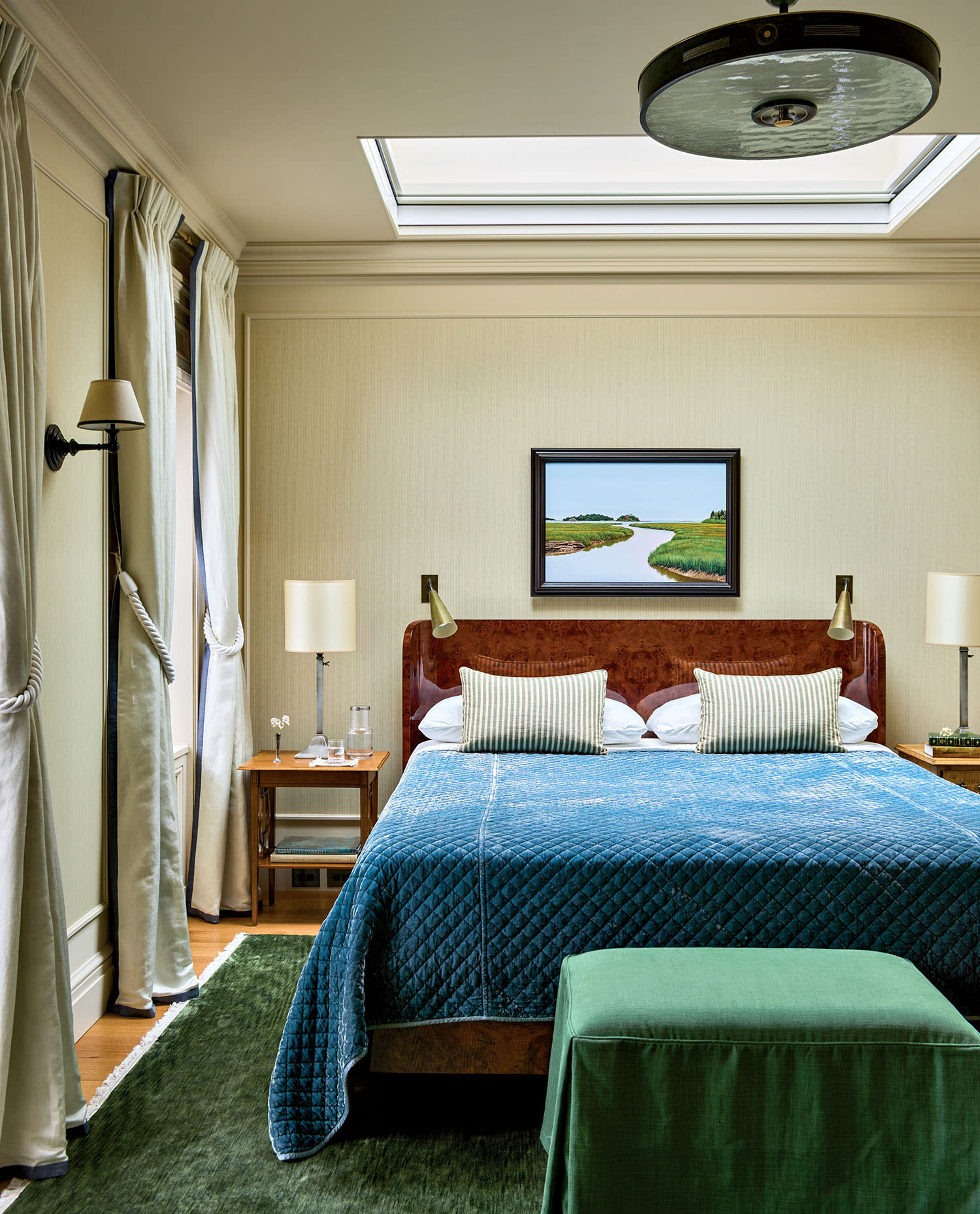
The primary bedroom includes a bespoke burl-wood bed, silk Patterson Flynn rug and curtains of de Le Cuona fabric. The bench is dressed in Pierre Frey linen and the pendant is a vintage find from B4.
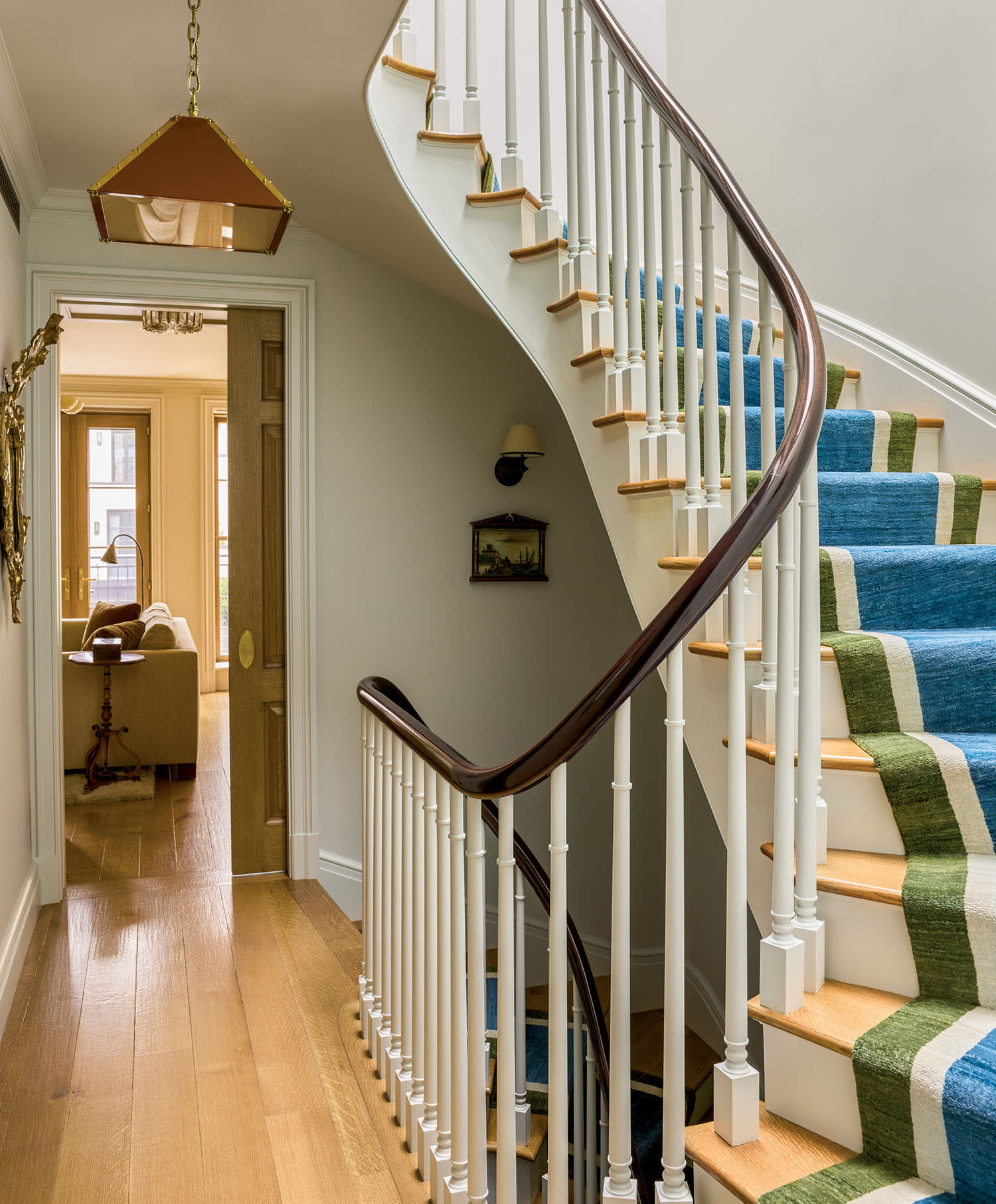
A custom runner by Patterson Flynn and Charles Edward pendant add colorful pops to the second-floor stair hall. Meezan Stairworks crafted the handrail and balusters. The white oak flooring is from I.J. Peiser’s Sons, Inc.
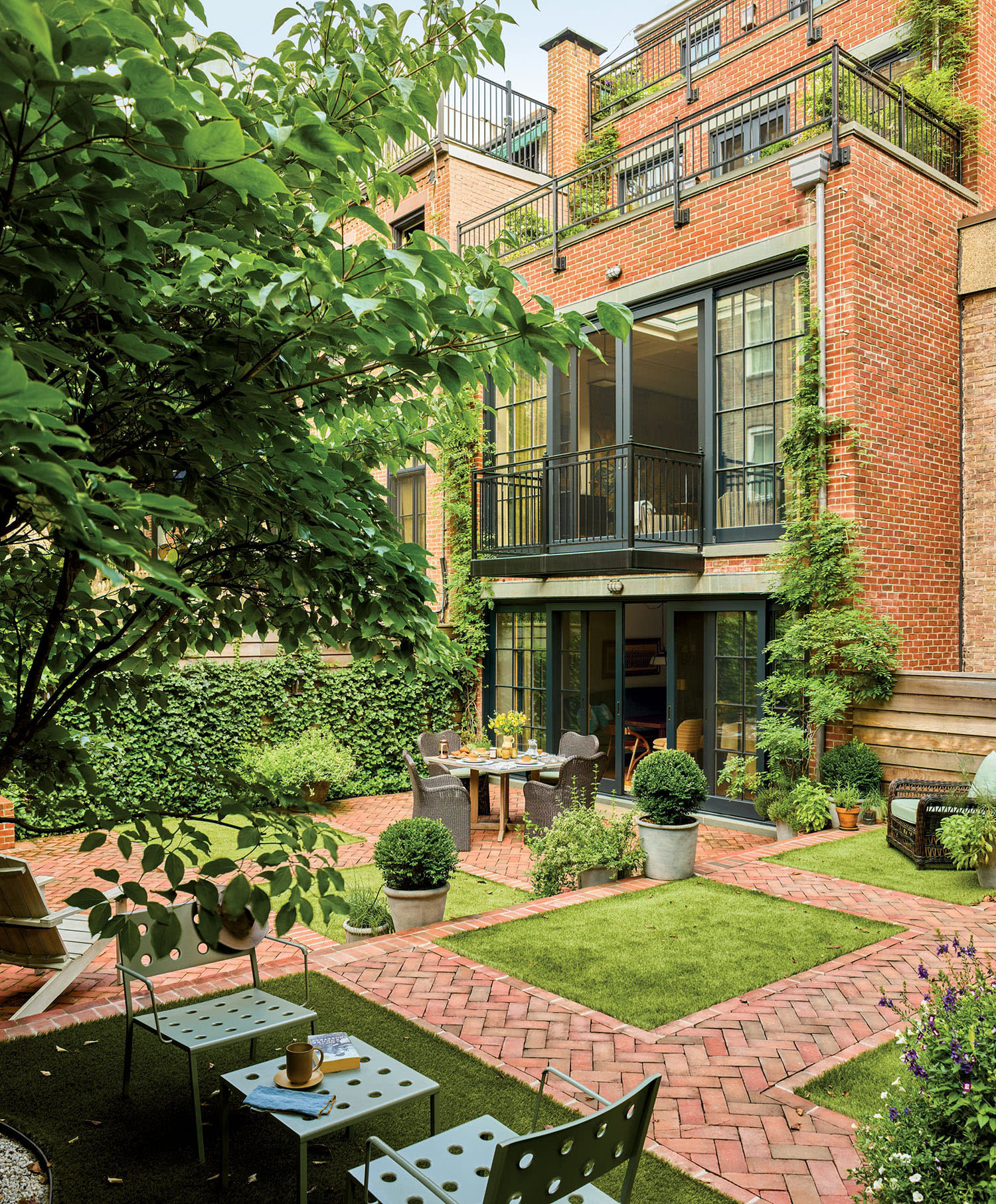
A Hay coffee table and lounge chairs procure an idyllic coffee spot. Boxwoods in Pennoyer Newman planters embellish the garden. The rear façade’s new windows and doors are by Reilly Architectural.
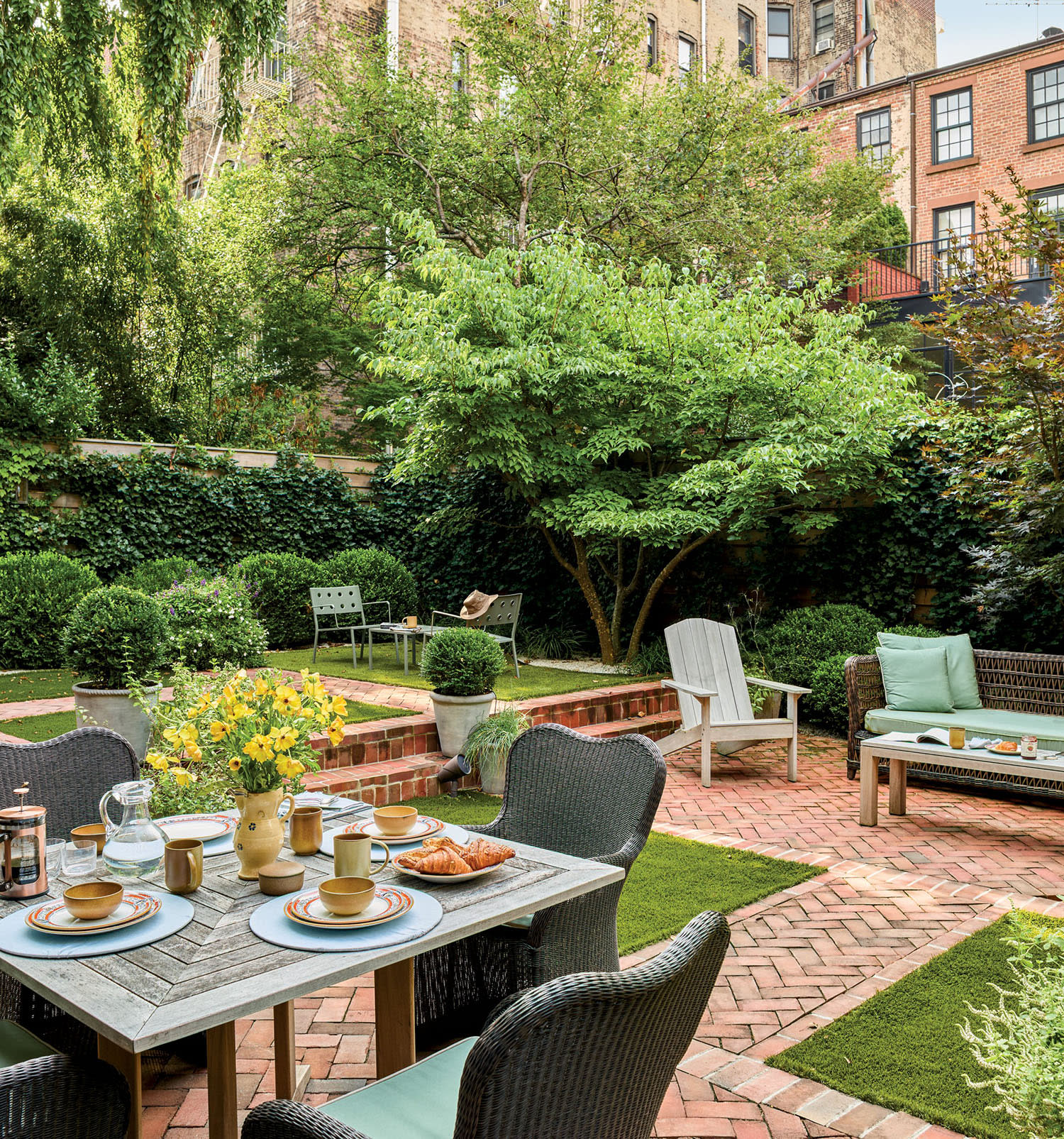
Brick pavers provide tidy delineations in the double-lot garden, which was laid out in collaboration with and installed by Robert Mundell of Holly, Wood + Vine. The sofa and dining chairs are Janus et Cie. The teak table is Westminster.