You can’t judge a book by its cover—and that proved true for the client of architect Paul Bates and designer Liz Hand Woods, who had her eye on a Nashville home. In this case, however, the cover was compelling, but the interiors left something to be desired. The charm-laden 1930s façade, with its stonework and peaked, gabled entryway, looks like it could have been plucked from the Cotswolds countryside of England. “It was well crafted, but plain on the inside with minimal detailing,” Bates says. “The house had been tinkered with over the decades through a series of less-than-ideal additions, which meant the floor plan was not intuitive—it felt like a maze.”
Addressing these challenges would require experience and trust, which the owner had in Bates and Woods: The architect worked on her previous residence in Chicago, and this was the designer’s fourth project with the client. “Paul and I are both based in Birmingham, and we have known each other forever, so we pretty much know what we are going to do from the beginning,” Woods explains. “Not every architect appreciates the details of the interiors, but Paul is a master.” The reimagining, which also involved general contractor Mark Poe, began by improving the circulation and the use of space on the first floor. For instance, Bates transformed a bedroom off the kitchen into a keeping room and reconfigured a breakfast nook into a bar and pantry, allowing easy access between the dining room and kitchen. “The prior flow was choppy,” Woods remembers. “In some cases, you had to walk out to the foyer to get somewhere else; now you can move in a complete circle—perfect for entertaining.”
Home Details
Architecture:
Paul Bates, Paul Bates Architects
Interior Design:
Liz Hand Woods, Liz Hand Woods Associates
Home Builder:
Mark Poe, Mark Poe Builders
Not only do the redesigned rooms now connect with ease, but they do so stylishly, thanks to the addition of interior French doors that allow light to flow across the home. Other rooms benefit from graceful arched openings that help to guide movement between them. “The original doorways were narrow with no sense of presence,” Bates says. “The arches and trim make such a difference in drawing you in.” Additional architectural flourishes, like weathered white oak beams and paneling, restore much-needed character. These enhancements continue upstairs, evident in the primary suite, where French doors lead to the bathroom for a cohesive look.
For the decor, Woods and her client didn’t have to look far. “We culled through her furnishings from previous residences and brought in her favorite pieces,” Woods notes. “Her treasures provided a comforting link to the past but presented themselves in a fresh light. They slowly found their perfect places in the new home, and we reupholstered and tweaked them as needed.” The interiors reflect the designer’s signature deft hand at combining patinated antiques with more streamlined pieces against a primarily neutral palette. However, it’s far from a static black-and-white scheme; nuances that range in shades of whites, grays and blues, along with varying wood finishes and gilded accents, keep the eye moving.
“When it came to the dining room, my client wanted a moody space (or as Paul loves to say, a ‘sexy’ space) for informal gatherings with friends without it feeling too stodgy,” Woods says. “At first, I was a little resistant because this is the first room you see when you walk in the front door, so I didn’t want it to feel too dark or cave-like. We worked to create a good balance.” The deep-gray walls are tempered by creamy upholstered dining chairs, sheer panels, a sisal rug and a modern riff on a classic crystal chandelier.
The client’s extensive art collection fits in seamlessly, including a gallery grouping along one of the dining room walls. “Her home is more sophisticated than what you might expect from a typical Southern cottage,” Woods shares. “She enjoys being stylishly unique, but even more, she appreciates the cozy, welcoming atmosphere we created for her in this new chapter.”
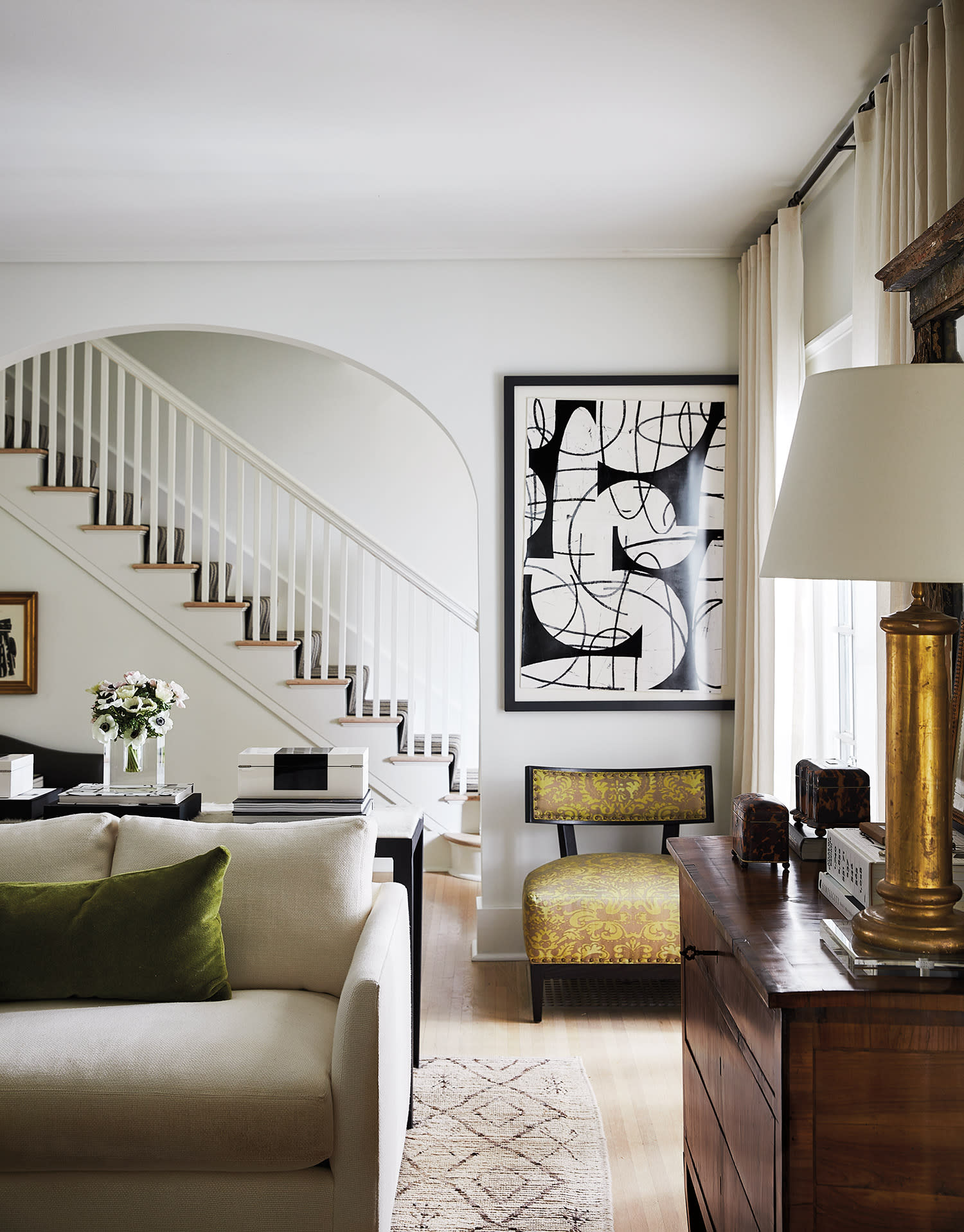
In the living room, a curated mélange of pieces features Verellen’s Thibaut sofa and a Lee Industries chair upholstered in Groves Brothers’ Gene fabric. The Moroccan-inspired rug is from Paige Albright Orientals.
Tour The Home:
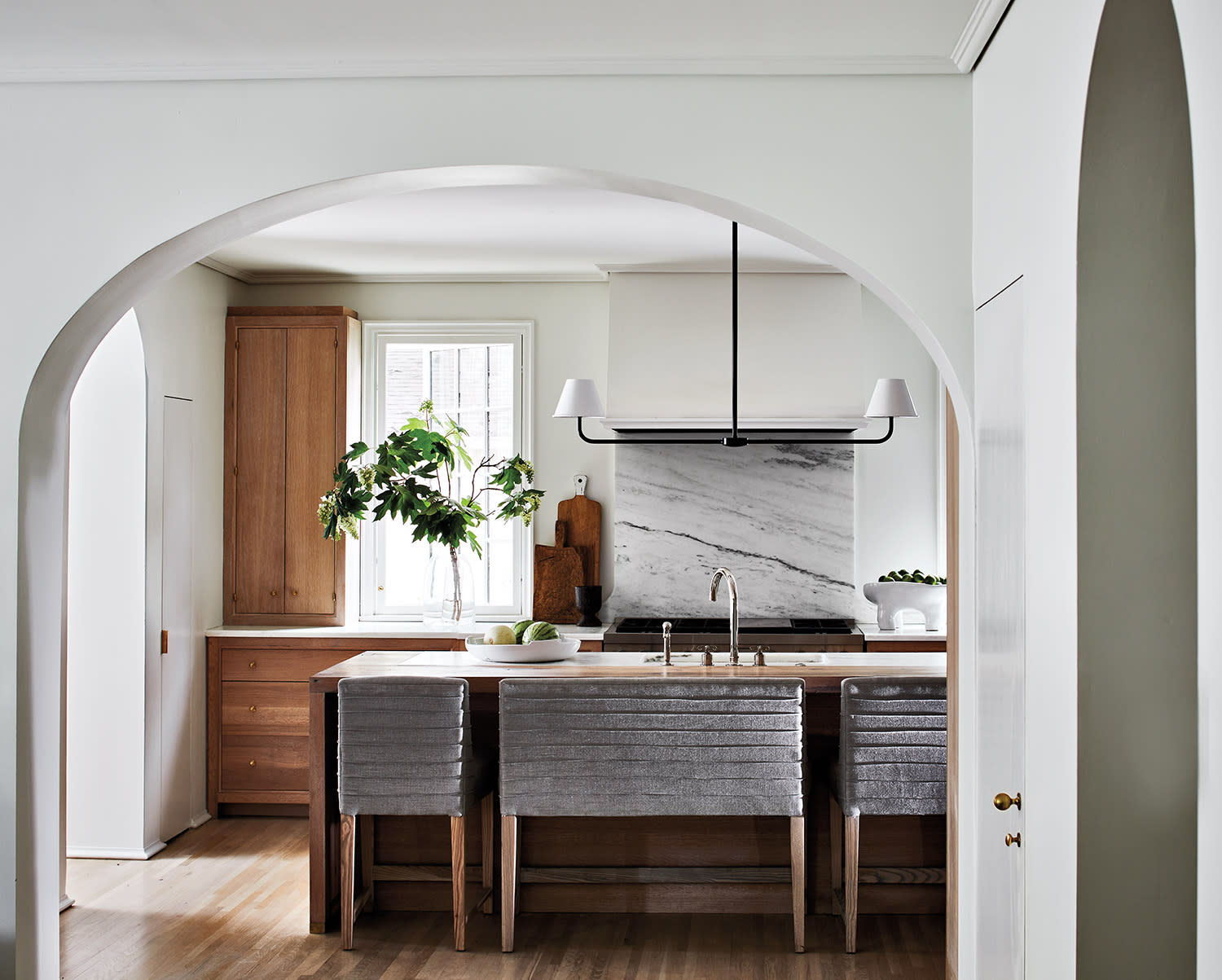
The renovated kitchen is defined by a mix of varied finishes, such as the custom cabinetry fabricated by MDM Design Studio, the marble countertops and backsplash from Cottage Supply Company, and The Urban Electric Co. light fixture. Verellen’s Thibaut counter stools wear a Mark Alexander material.
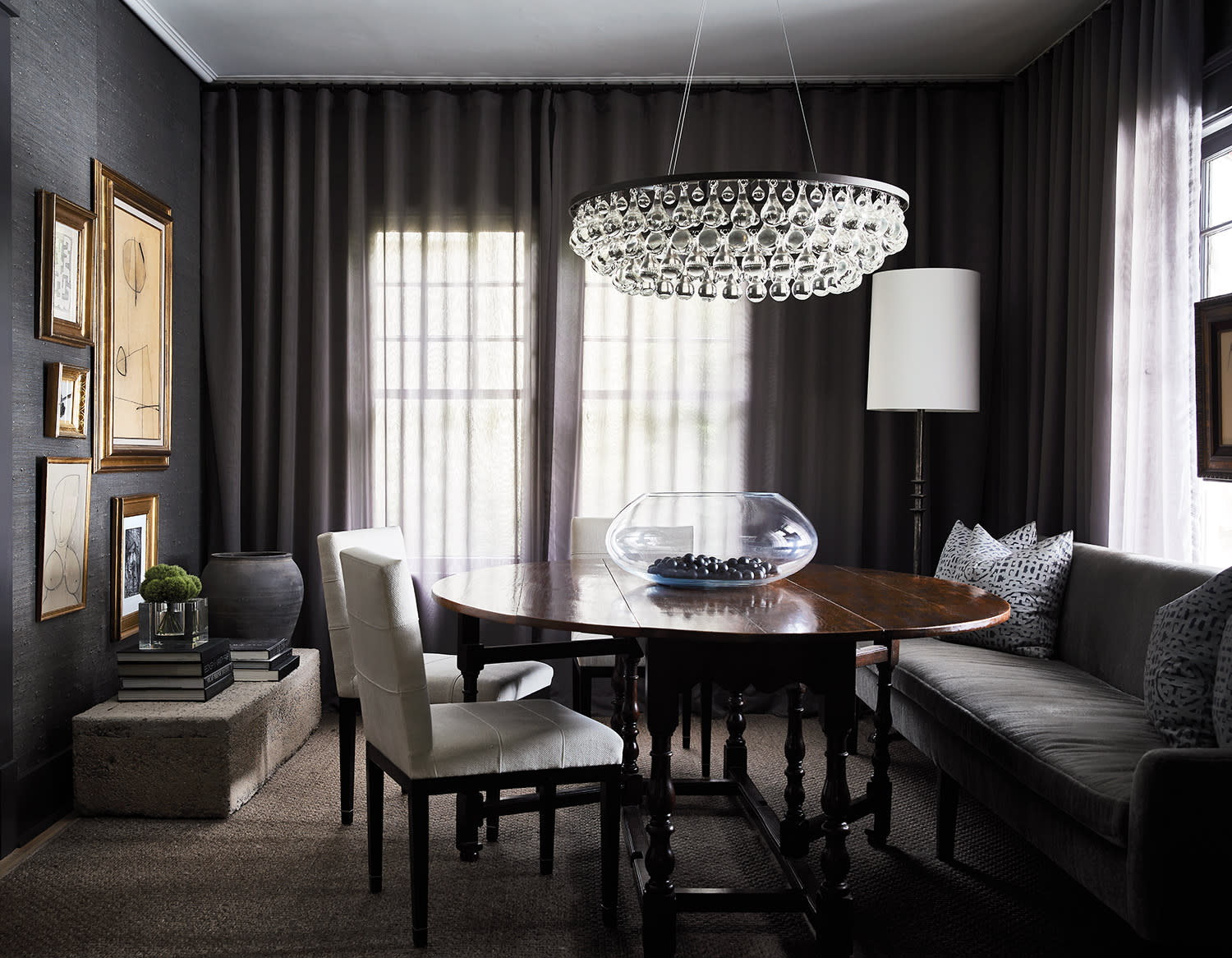
Omexco wallpaper adds depth to the dining room, which is lit by Ochre’s Arctic Pear chandelier from R Hughes. Seating includes Magni Home Collection’s Valentino chairs, in Rogers & Goffigon’s Tuckernuck II fabric, and a custom banquette sporting Savel’s Palazzo mohair.
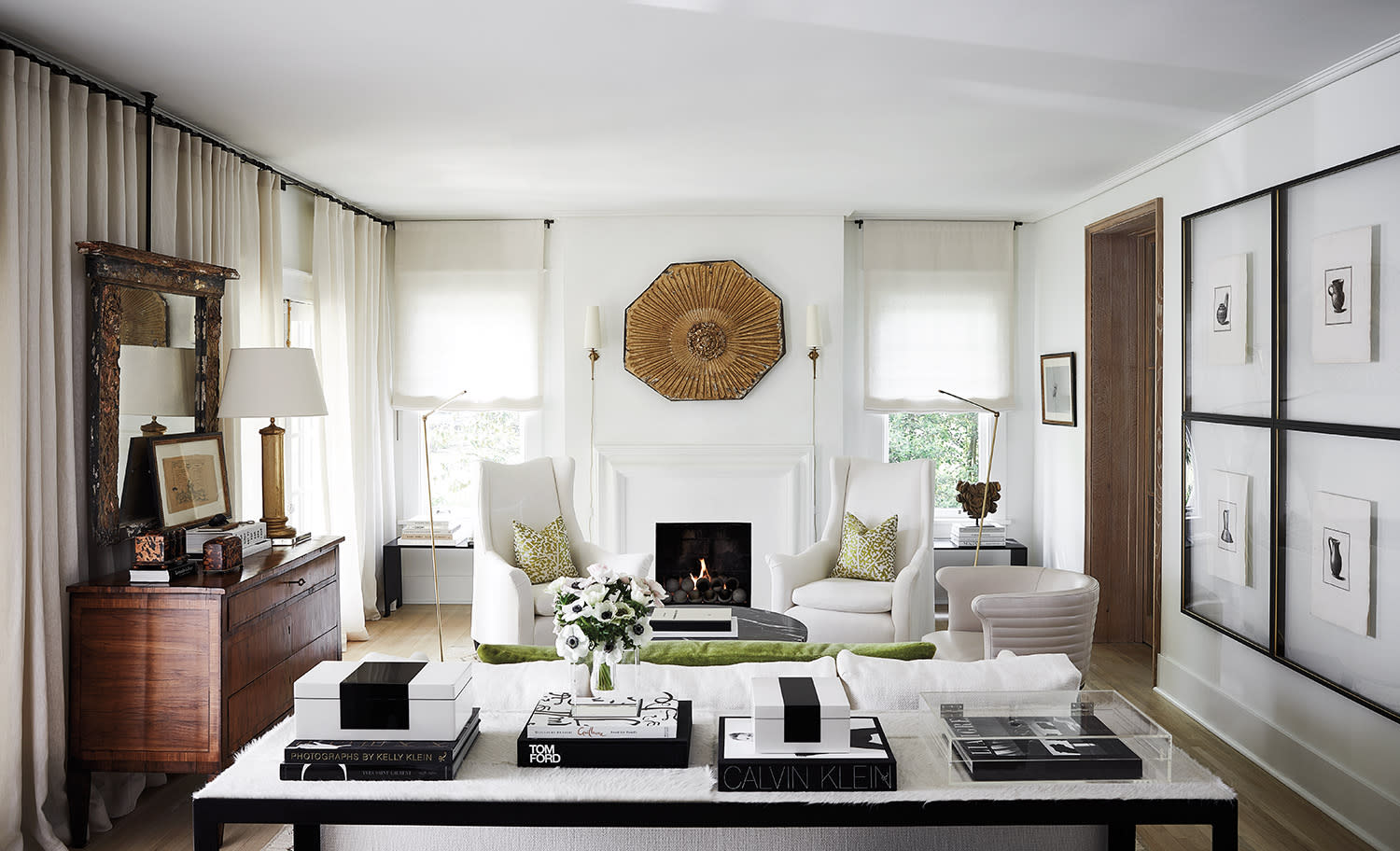
Verellen wingback chairs flank the living room fireplace beside an ivory leather chair by Lee Industries. The drapery fabric is Création Baumann’s Filino linen. The brass floor lamps are by Juniper.
In the living room, a curated mélange of pieces features Verellen’s Thibaut sofa and a Lee Industries chair upholstered in Groves Brothers’ Gene fabric. The Moroccan-inspired rug is from Paige Albright Orientals.
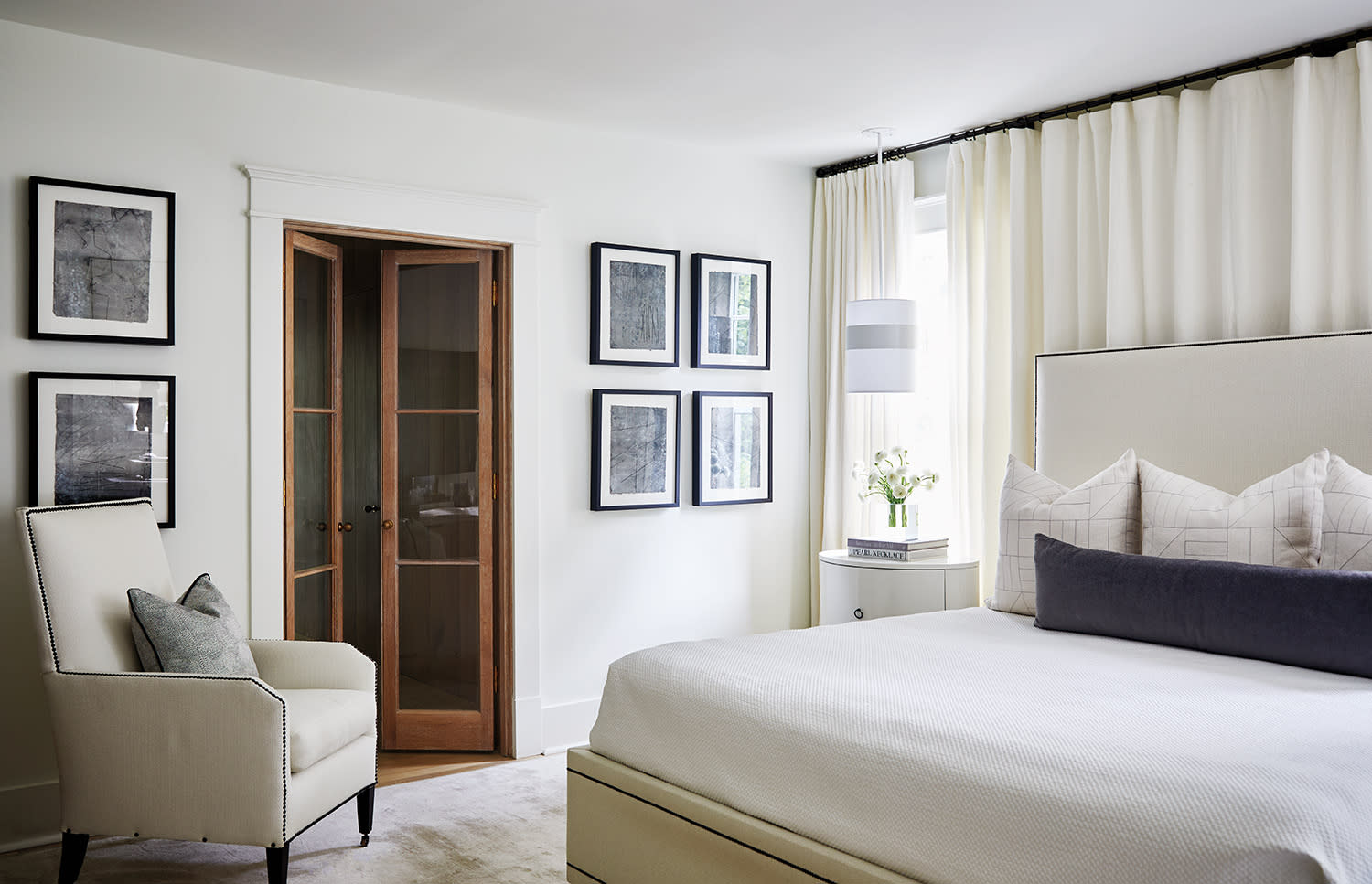
Designer Liz Hand Woods employed Libeco linen for the wall behind the primary suite’s custom bed. The Bamba pendant is by Kevin Reilly. A Lee Industries armchair sits atop a Tibetan rug from Paige Albright Orientals. The mixed-media artworks are by Jane Cooper.