Arizona Design: Where The Indoor-Outdoor Connection Is Paramount
When people picture Arizona, they may envision an arid desert dotted with saguaros, forested mountaintops blanketed in snow, or streams hemmed in by red rock buttes and ponderosa pines. In truth, Arizona is all of these things, and nothing celebrates its dynamic landscape quite like the indoor-outdoor connection. Snowbirds who flock here from Chicago, Canada and the Pacific Northwest want to bring the outside in just as much as California transplants and native Arizonans.
I’ve watched the tastes of incoming residents merge with local traditions, and I’ve documented that evolution for more than 20 years as a writer covering design and architecture in the region. North Scottsdale has sprouted a tapestry of custom Mediterranean and contemporary homes. Arcadia has transformed from a leafy enclave of ranch houses into a coveted zip code sporting farmhouse-inspired estates, often set on double lots. Meanwhile, downtown Phoenix has shifted into a collection of historic neighborhoods studded with renovated bungalows.
There’s something about the desert that seems to encourage—or at least accommodate—this stylistic diversity. Yet there is a through line for all of it: Whether via breeze-blocks, perforated steel or retractable glass walls, Arizona architecture can’t help but engage with its surroundings.

Photo: Ema Peter
“Clients are increasingly interested in improving the way they live and turning their homes into personal resorts.”
—Mark Candelaria
Past Rooted, Future Bound
Arizona has always driven architectural innovation. Among its most prominent touchstones is Frank Lloyd Wright, whose legacy emphasizes human scale and integration with the landscape. “Frank Lloyd Wright is known for designing open floor plans and using natural light as a design element for inspiration,” notes architect Erik Peterson, president of PHX Architecture and the mastermind behind recent renovations at the Arizona Biltmore.
Wright’s influence continues to pave the way for other contemporary visionaries, including architect Brent Kendle of Kendle Design Collaborative. “The tenets of Frank Lloyd Wright’s organic architecture still hold true,” he says. “Today’s architects are simply blessed with more innovations and tools to consider deeper ways of achieving them.”
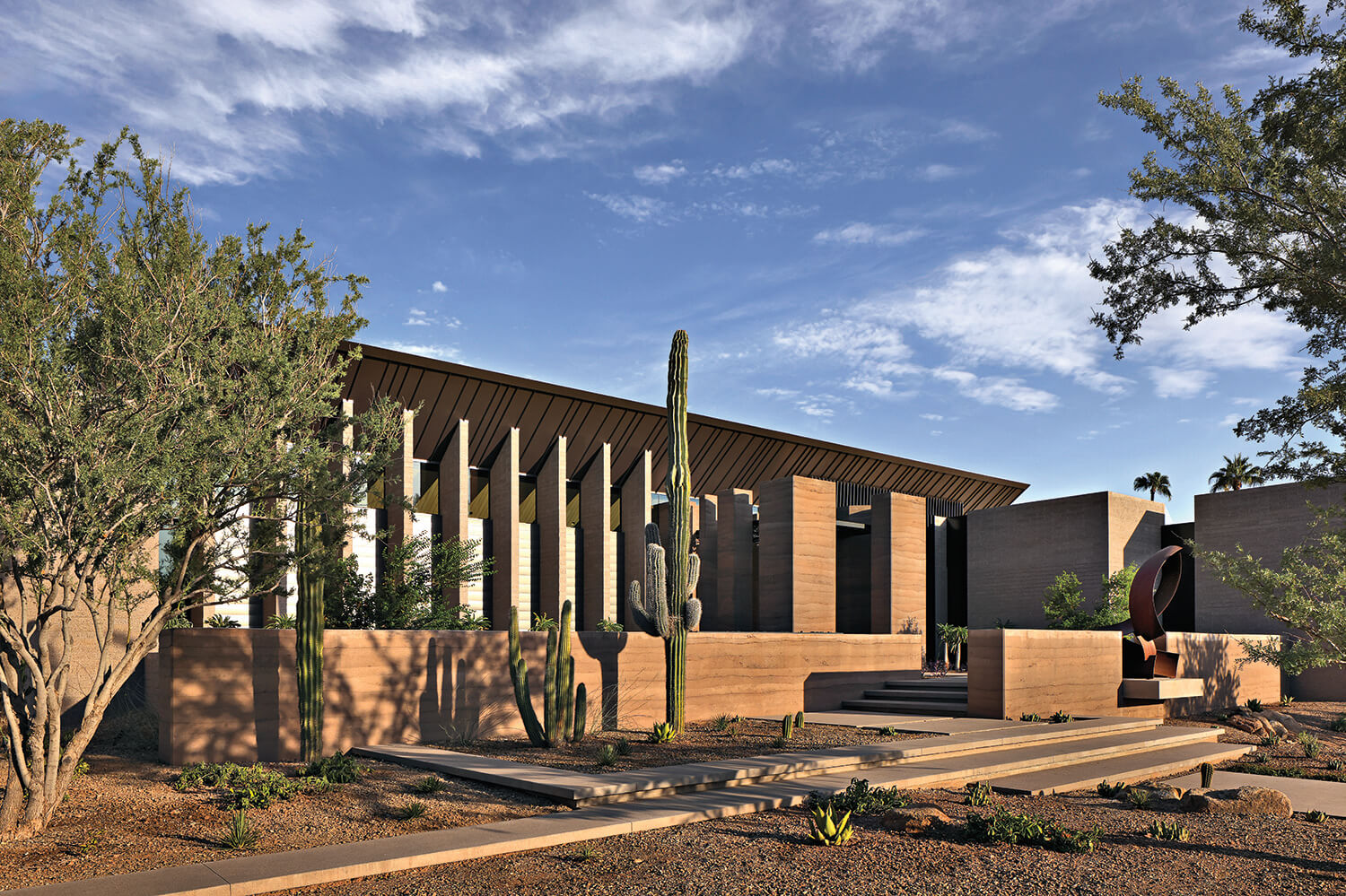
Kendle points to features like automation, and glass and building envelope technologies that let in views and fresh air but block heat and glare. The geode-like home he constructed in Paradise Valley (above right) incorporates such elements, while a cantilevered roof, atrium and terraces create a dynamic interplay between sun and shadow. As Kendle and other architects prove, this region invites designers to push the boundaries of art in architecture.

Photo: Manolo Langis
Materials Made To Last
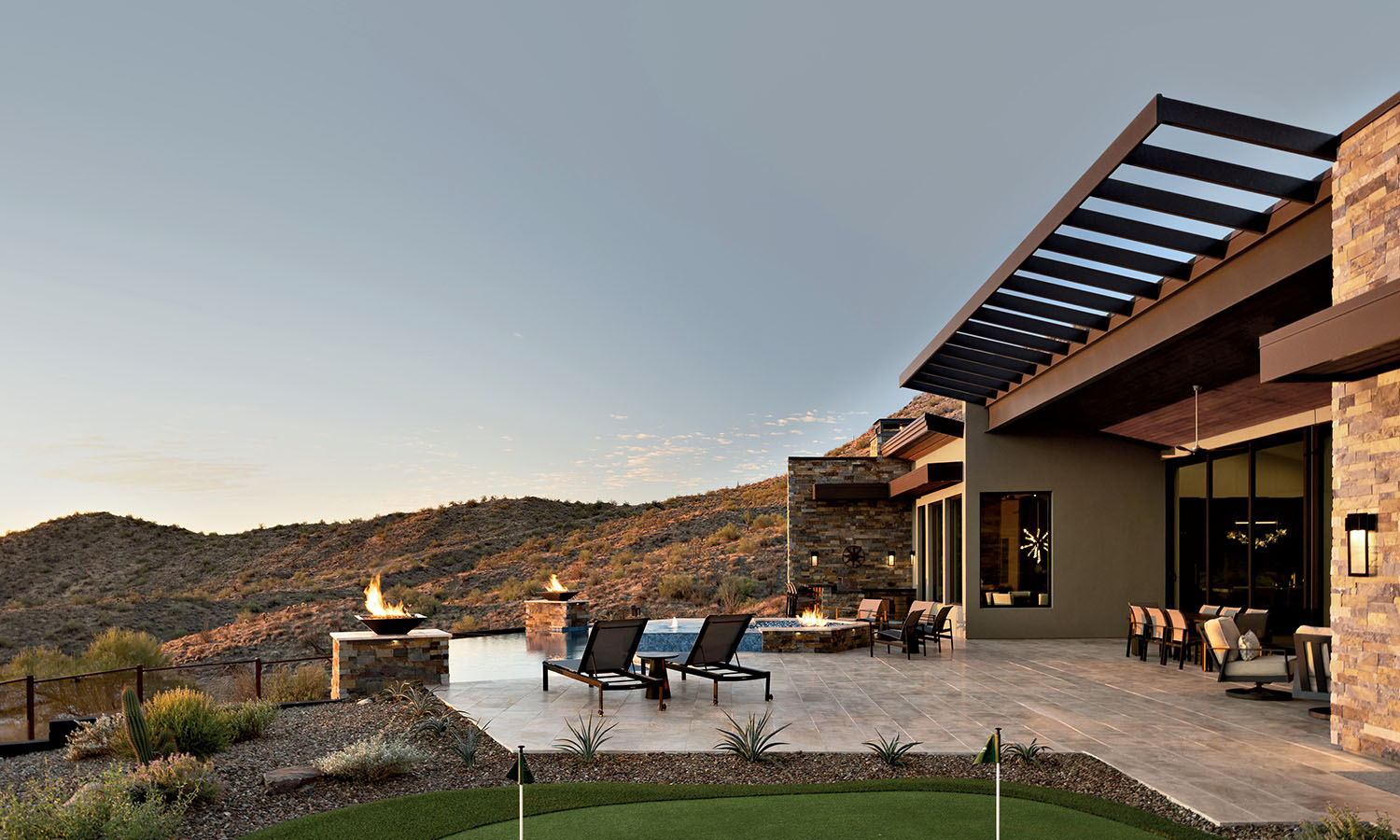
In Arizona, building with stone, wood beams and rammed earth makes as much sense as working with steel, glass and copper, thanks to terrain that is equally varied. The key to making it work lies in layering disparate elements so that they respond to both the site and architectural style. For example, you might see wood beams and plaster paired with newer components like Cor-Ten steel and sandblasted concrete blocks. Indigenous materials like stone can be fashioned to evoke a Mediterranean farmhouse while remaining true to the desert. Or, as seen in the home designed by Oz Architects (following section), a pergola can become a contemporary feature when crafted from steel.
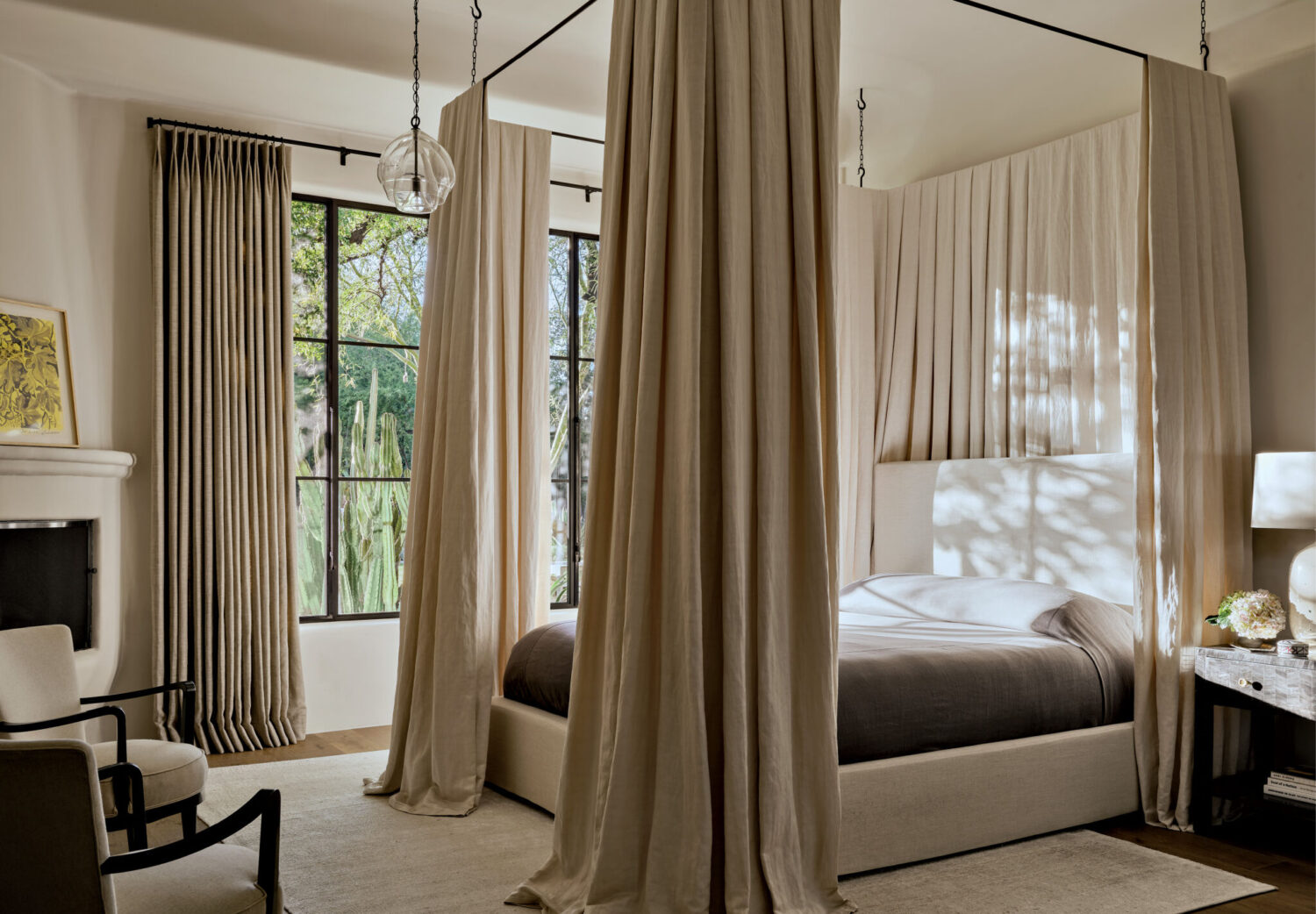
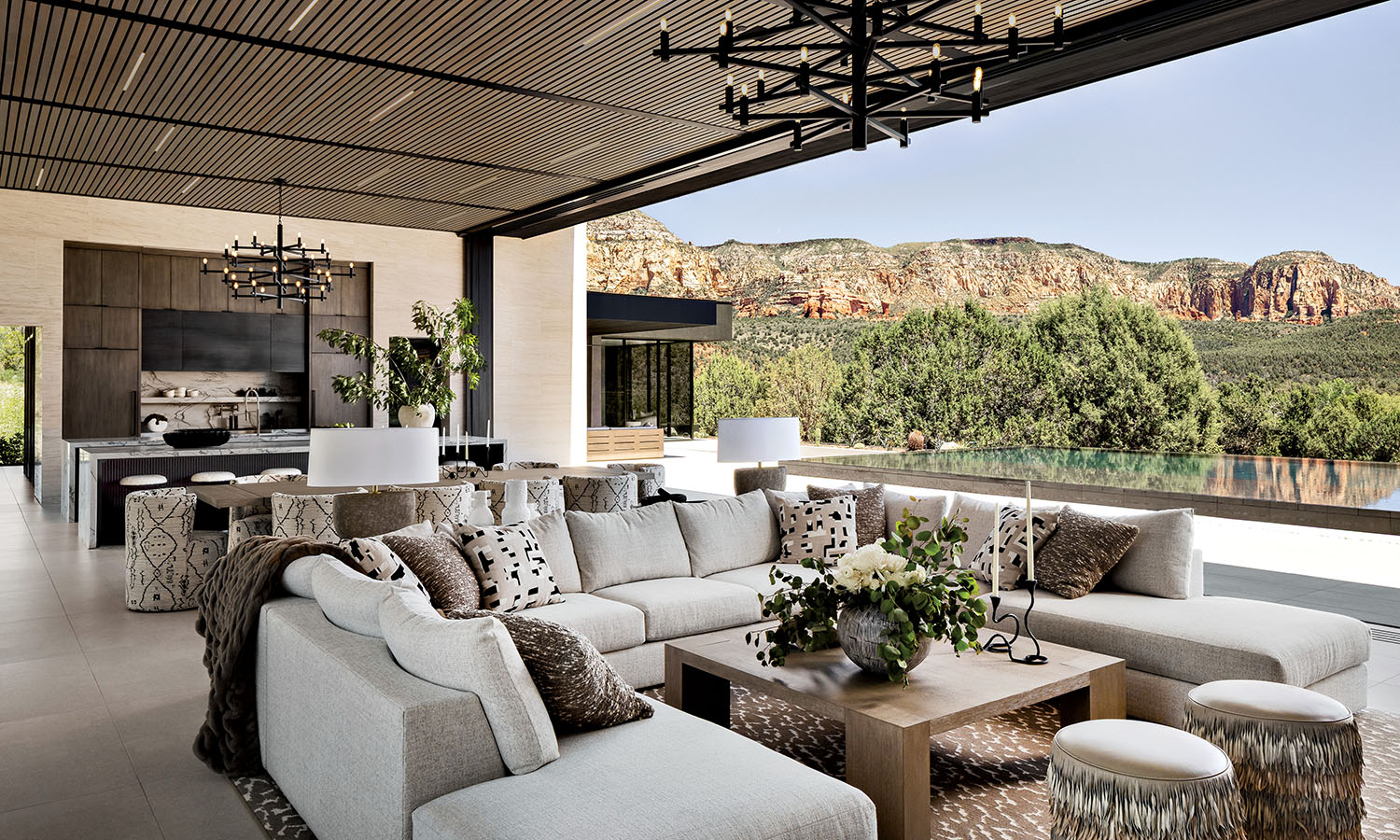
Artful finishes carry these truths inside too, as seen in the Magni Kalman Design home overlooking Camelback Mountain (above and right). Interior materials such as walnut, aluminum and Calacatta Lincoln marble echo the hues and textures just beyond the windows.
All this underscores what interior designer David Michael Miller observes as a singular truth. “I am constantly inspired by the natural beauty of the Arizona landscape and how good design and architecture can live in harmony with it,” he says. Case in point is the project featured at the bottom of this page, which turns a sculptural tree into a family room’s focal point. “We want to be connected to real materials,” Miller adds, “to the natural world.”

Photo: Manolo Langis
“I am constantly inspired by the natural beauty of the Arizona landscape and how good design and architecture can live in harmony with it.”
—David Michael Miller

Photo: Lisa Romerein

Photo: Lisa Romerein
Home As A Sanctuary
For many snowbirds, escaping to the Southwest offers a chance to indulge in resort-style living. That might mean a private theater, a personal putting green or even property management services like those offered by Salcito Custom Homes.
Wellness has become another central aspect of this ethos, which architect Don Ziebell of Oz Architects and interior designer Inga L. Rehmann of Oz Interiors fully embrace. The primary bathroom (featured above, right), for instance, became a veritable spa retreat courtesy of a Japanese soaking tub and an outdoor shower.
Interior designer Stephanie Larsen shares this mindset, incorporating features like infrared saunas, cold plunges and integrated aromatherapy systems. “Today’s clients are craving homes that heal and inspire,” she says. “They want spaces infused with wellness technology.”
Bringing the indoor-outdoor connection full circle are retreat-like exterior spaces. Patios wrapped in shaded alcoves, labyrinths and water features all work to create oases that simultaneously distill vitality and rejuvenation from the natural world.

Photo: Werner Segarra

Photo: Werner Segarra