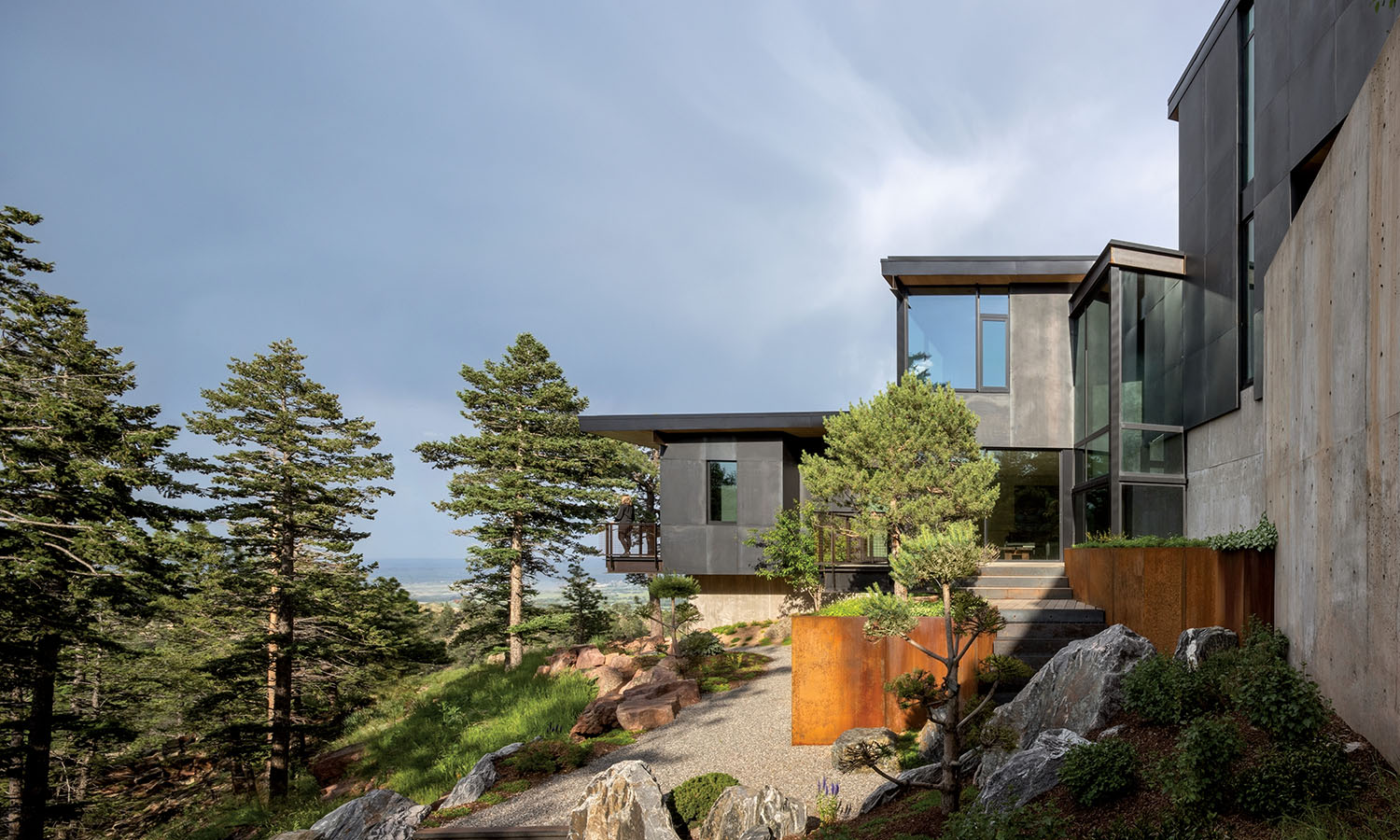
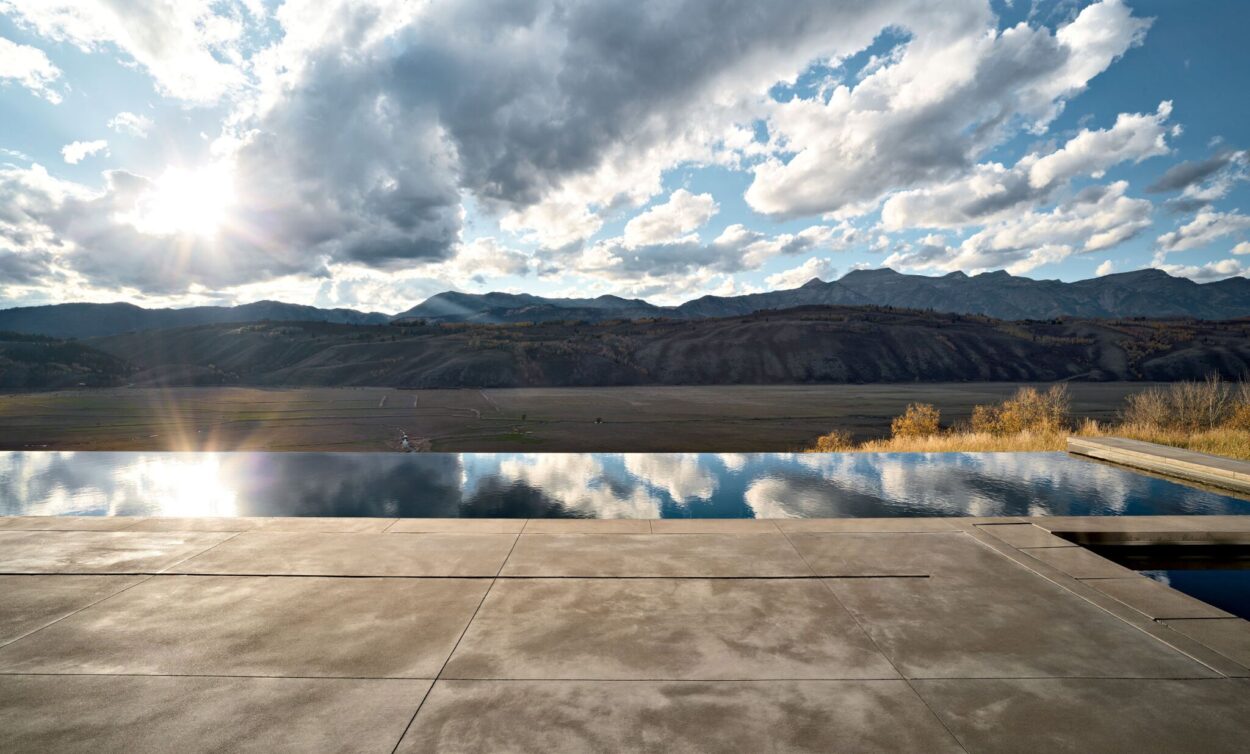
On the remote, steep and often tricky-to-access foothills of Colorado’s Front Range, for-sale plots tend to sit idle, dissuading would-be buyers with the complexities of building in such a spot. But that didn’t stop husband-and-wife architects Andrea and Colin Ostman and general contractor Isaac Savitz from teaming up to tackle a severely sloped seven-acre property with jaw-dropping views and distinctive rock formations on the outskirts of Boulder. “I’ve always had an obsession with difficult, beautiful properties, but I sometimes joke that nobody in their right mind would want to build a house in some of these locations because it’s just so hard,” Savitz says. “That’s also what makes them so special.” Just eight minutes away from downtown Boulder but fully immersed in wilderness, the lot was too singular to pass up. “It’s a gem; it’s like a private island in the middle of a forest,” he describes.
Home Details
Architecture & Interior Design:
Andrea Ostman and Colin Ostman, Follow Architecture
Home Builder:
Isaac Savitz, Silver Lining Builders
Landscape Architecture:
Luke Sanzone and Brian Deck, Marpa Landscape Architecture
Before a shovel even touched ground on the team’s plans, however, they found a like-minded client interested in running with their vision. He loved the conceptualized layout and worked with Savitz and the Ostmans to reimagine and customize every square inch to his liking. The resulting residence descends the north-facing slope, following the grade of the land and spreading the living spaces among three pavilions—one for the main living areas, another encompassing the primary suite and a third housing a media room, guest rooms and a gym. “The site strongly drove the design of this house—we just listened to it,” Colin explains. Varied elevations offer a range of dynamic sight lines: The living area and both the primary bedroom and a secondary bedroom open to sundrenched meadows and bird’s-eye views of Boulder and the Front Range, while the kitchen, media room, office and gym enjoy insulated forest scenes.
Carving in a 700-foot-long driveway just to access the rocky terrain was the first step, a painstaking process that took Savitz and his team over a year to complete. During this time, the Ostmans worked with the homeowner to conceive a rustic yet refined mixture of natural finishes designed to both blend into the surroundings and patina artfully. The façade’s blackened-steel siding and exposed concrete walls disappear into the shadowy pines and rocks, while low-slung rooflines with large overhangs both hug the hillside and shield the home from the elements. “We didn’t want to look up at the ridge and see this monster of a house up there,” Colin quips. “Plus, Colorado’s weather wants a big roof—it’s like a cowboy hat that keeps out the hail and the harsh sun.”
The steel and concrete material palette moves from the outside in, joined by walnut cabinetry and panels, Venetian plaster walls and leather accents, all in moody, atmospheric hues. “Darker colorways draw your eye out to the views, as the walls, floors and ceilings fall to the background,” Andrea explains. Designed to meld with the home’s architectural envelope rather than draw attention, the array of clean-lined furnishings and integrated lighting underscores the effort to allow the surroundings to star. These choices also create a very calm environment, note the architects.
Achieving the home’s stripped-down aesthetic took serious forethought. “A lot of the exposed concrete walls in the house are foundational,” Andrea points out, noting how one—a 30-foot stairway wall with lights cast into the concrete—required particularly meticulous execution. “We had to perfectly plan where each step was going to go at a very early stage, a time when you’re not normally thinking about that,” she recalls. But the ultimate example of the team’s due diligence is the careful preservation of the site’s rock outcroppings. “We all felt it was critical to have the architecture sit lightly on the land, nestled amongst so many special moments in nature,” the homeowner remarks. Integral to that preservation was landscape architect Luke Sanzone, who, with project manager Brian Deck, created Zen-like, split-level gardens and serene water features. “The relief of exposed red bedrock walls and natural lichen-covered rock outcroppings along the ridgelines created natural focal points for the architecture and destinations in the landscape,” Sanzone says.
Inimitable moments like those are exactly what initially lured the design team to imagine a residence tucked within this “difficult” property. “Seeing potential and imagining what could be is always so amazing, but then watching a home actually materialize, right to the end, where someone’s cooking in the kitchen—that’s the best part,” Savitz concludes.