Chicago is a cultural hot spot. We’ve got it all—some of the country’s best bars and restaurants, world-class museums, competitive sports teams and music venues that range from intimate to mammoth. As a lifelong Chicagoan from the South Side, I’ve had the privilege of growing up immersed in this vibrant Midwestern city with all it has to offer.
Stepping out onto Michigan Avenue, it’s immediately obvious that the towering skyscrapers and bodacious views of Lake Michigan eclipse all the city’s temptations. Designers draw inspiration from the area’s rich architectural history and scenic waterfront, whether reworking a historic suburban estate, creating a downtown family home or updating a Frank Lloyd Wright midcentury masterpiece. For the past decade, I’ve had the pleasure of writing about this range of interior design, covering everything from a bungalow in Hyde Park to a manse in Lake Forest.
While no singular style defines Chicago, you’ll still see plenty of natural materials, artful layers and superb craftsmanship. From custom furniture makers and ceramicists to metal fabricators and millworkers, designers can tap into an extraordinary network of skilled artisans. And that collaborative spirit runs through the entire local design community.

Photo: Dustin Halleck
Lakeside Living
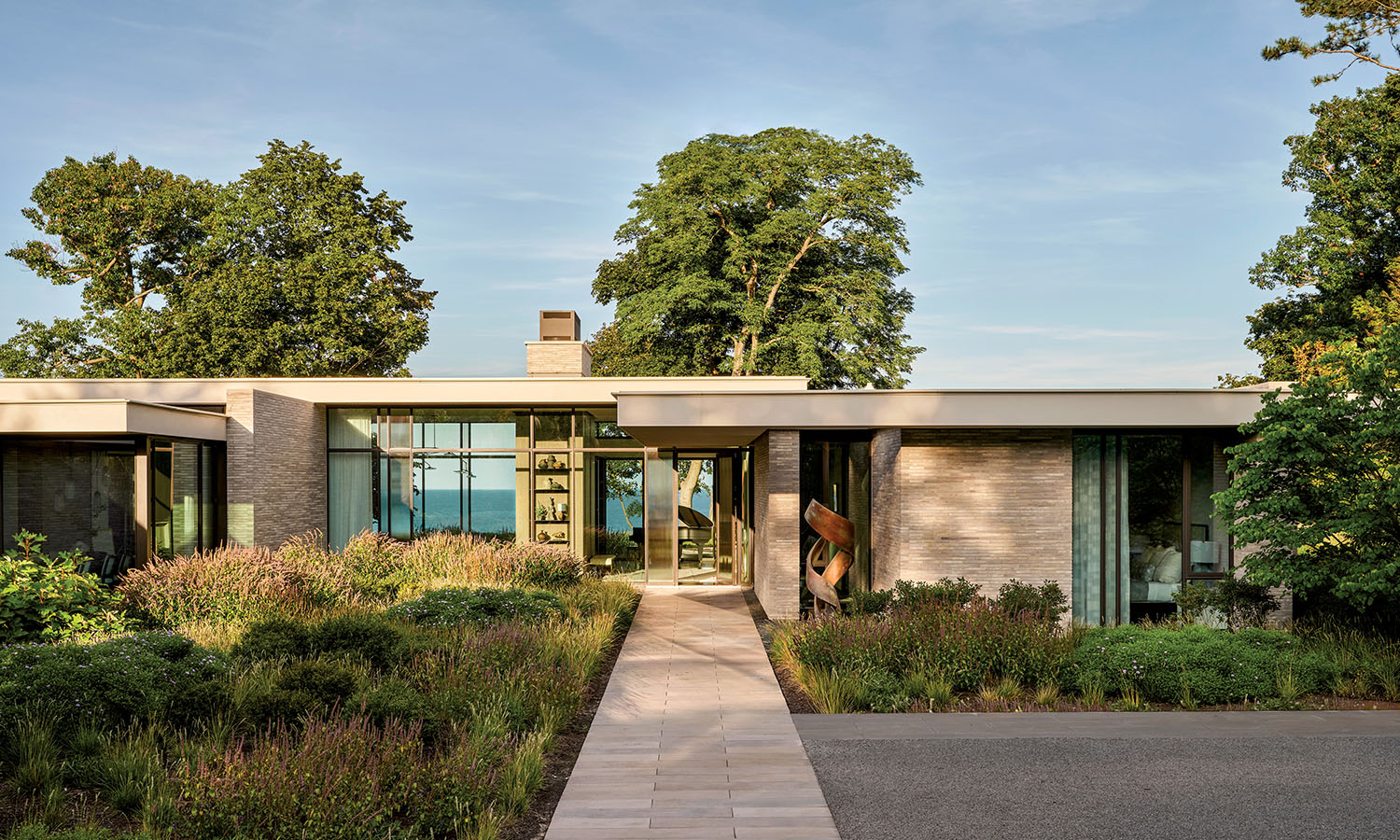
Homes along Lake Michigan are designed to deepen their connection to nature, with light and views taking the lead. Expansive glazing and sophisticated interiors often play supporting roles, allowing the landscape to take precedence. Transitions from inside to outside unfold seamlessly through strategically planned exterior rooms, pathways and furnishings, while sight lines remain uninterrupted.
Architect Larry Booth, interior designer Shea Soucie and landscape architect Douglas Hoerr collaborated on a modern home in Southwest Michigan (right) that flawlessly illustrates this approach to indoor-outdoor living. Standing in front of the house, visitors can see straight through to the lake—and that’s exactly the point.
This emphasis on the outdoors echoes throughout the area. Architectural gestures like cantilevered, glass-railed decks are designed to recede into the landscape and lake beyond, while outdoor fire features—valued by homeowners for both their warmth and ambience—anchor patios as gathering spaces. Each element is calibrated to enhance, rather than distract, from the views. “Luxury in landscaping is less about ornament and more about experience,” Hoerr says. “The goal is to leave our clients wondering where nature ends and the design begins.”

Photo: Steve Hall
“We create with a consistency of character and detail—the calm of a well-designed home.”
—Suzanne Lovell
City Dwellers
Smaller lots demand greater creativity. Chicago designers and residents may be constrained by size, but they make the most of tight spaces by optimizing storage and flow and building up. Scale and proportion are critical in the city, resulting in rooms that feel intentional. Design skews more contemporary and edited with a focus on strong structural statements and refined finishes. Color palettes run the gamut from earth-driven neutrals to more vivid hues.
In this three-story, newly constructed town house in Lincoln Park (below), interior designer Martin Horner of Soucie Horner Design Collective leaned into a transitional style to bring to life a dwelling that tells the story of glamorous family living while reflecting its urban environs. The materials are timeless, evoking the sense of permanence found throughout the city’s architecture: marble mantels, quartzite countertops and seamless backsplashes.
Saturated tones and sculptural pieces simultaneously reflect the cosmopolitan energy. Textiles of leather, wool, velvet and silk contribute warmth. Custom millwork and handcrafted furnishings that share the souls of the makers who created them add character. “We used a lot of deep, bold color,” Horner shares. “There’s a nice balance between the more dramatic aspects of the design and the overall serenity of the house.”
Alfresco rooms continue to be just as important, even in the city. Patios are often furnished with pieces that complement the interiors, effectively expanding the homes despite their compact footprints. “When square footage is at a premium,” Horner notes, “well-planned outdoor space really extends the options for dining, relaxing and entertaining.”

Photo: Dustin Halleck

Photo: Dustin Halleck
Suburban Dreams
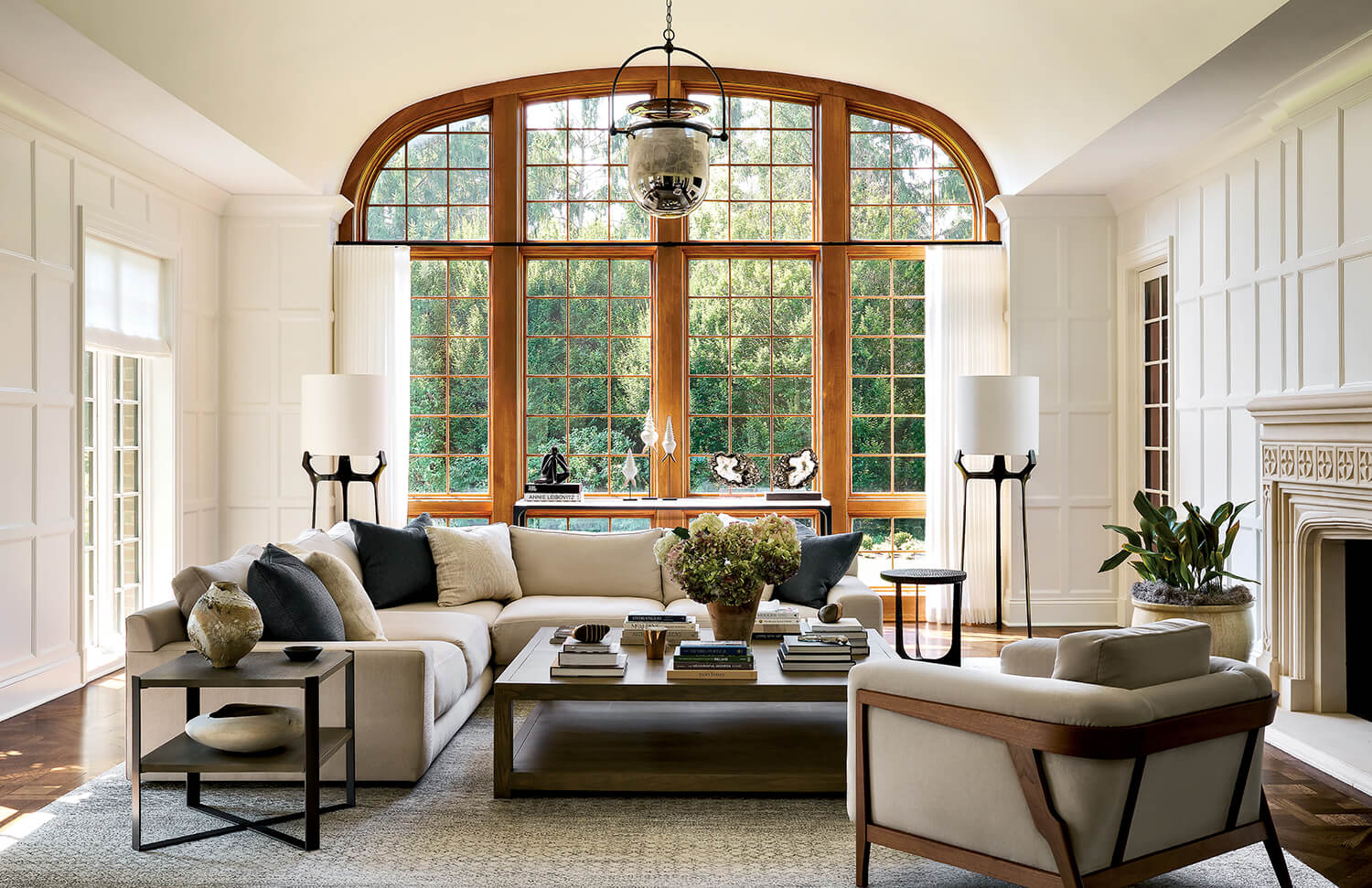
In quiet, residential enclaves, historic architecture boasts craftsmanship and elements that are meant to last: brickwork, carved doors, original millwork and wood floors. Interiors tend to follow suit, with graciously proportioned, architecturally driven spaces that feel layered yet rooted in longevity.
Designer Suzanne Lovell exemplified this eloquently when she took on a 1924 English country manor (right and below) on the North Shore originally designed by architect Ralph Varney. Rather than treating each space as an isolated moment, Lovell worked holistically to consider how proportion, materiality and detailing relate to one another in order to establish a cohesive whole. “We create with a consistency of character and detail—the calm of a well-designed home,” she says.
Existing features are preserved and celebrated while contemporary furnishings, statement lighting and curated textiles bring in pops of color to modernize these suburban abodes. The effect is a dialogue between past and present, where continuity defines luxury.

Photo: Eric Piasecki/OTTO

Photo: Eric Piasecki/OTTO