How Patterns Become Defining Elements In Architecture + Interior Design
Just as some hues are closely linked with specific brands (think Hermès orange or Tiffany blue), certain patterns also have their own associations. Mention green-and-white stripes and The Beverly Hills Hotel’s fabled awning may well come to mind. Colorful dots lined up in rows? Some might think of the “Spot” paintings that minted artist Damien Hirst’s career. Quatrefoils, on the other hand, have medieval connotations, recalling Gothic cathedrals. The point is that pattern can have a lasting impression.
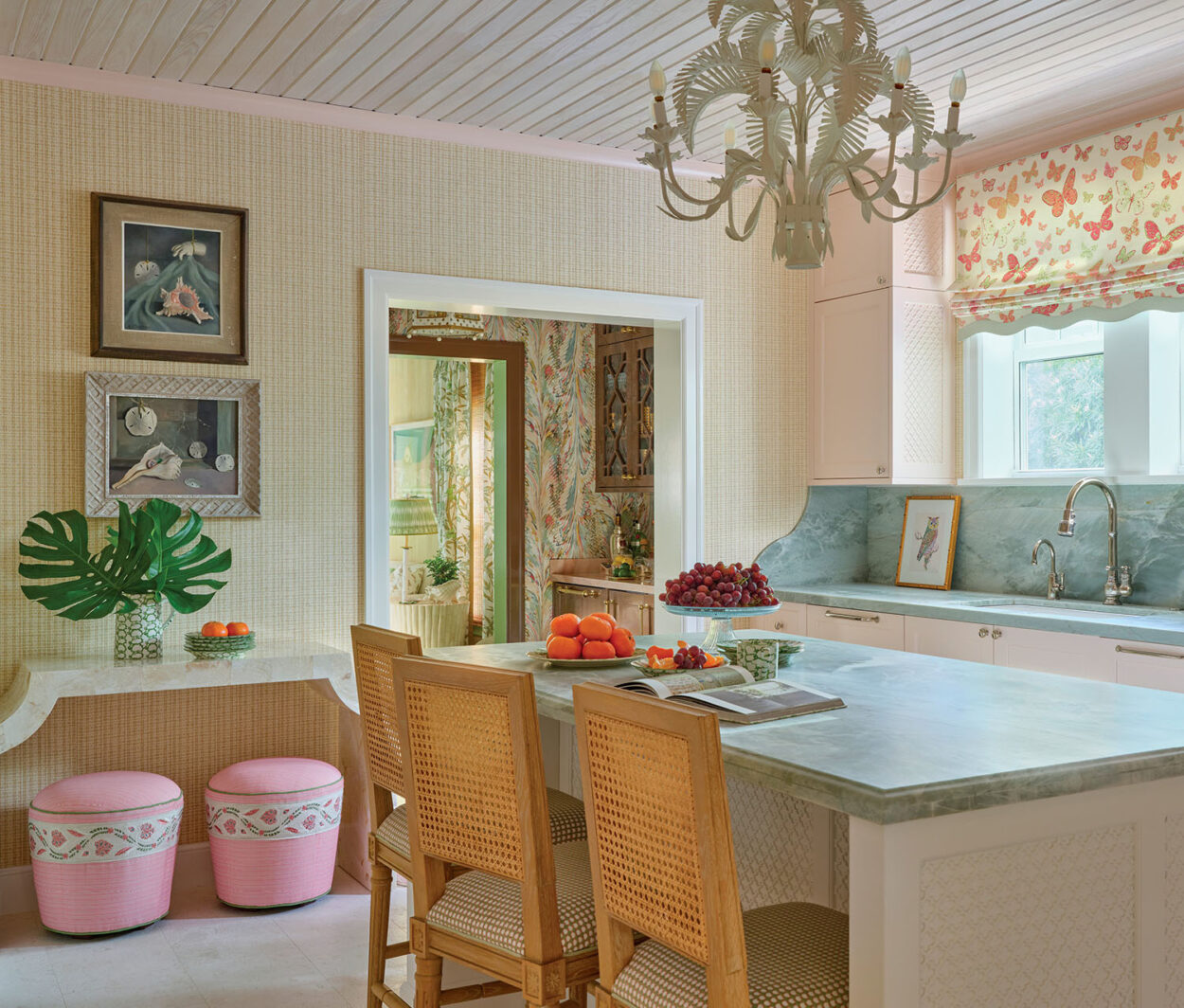
Inside the home, patterned furnishings and finishes can also make a big splash. Floors that have been painted, tiled or carpeted in attention-grabbing motifs create a dynamic effect, with perhaps the most well-known example being the classic black-and-white checkerboard floor. Walls are also prime real estate for gutsy embellishment, such as lattice-print wallpaper that mimics trelliswork. Even ceilings can do with a dose of ornamentation, like a celestial-print paper bedecked with stars. In fact, pattern can be well-suited to almost anywhere inside the home, and sometimes outside of it, too. Whether plaid, houndstooth, polka dots or flamestitch, pattern in its infinite variety is a sight to behold.